Create a Custom LLM Evaluation Harness in Python from the Ground Up
Build a Python LLM harness with golden cases, async runner, judge, and logger for product-specific, repeatable model testing.

Build a Python LLM harness with golden cases, async runner, judge, and logger for product-specific, repeatable model testing.
This guide explains how LLMs hallucinate via probability, decoding, training incentives, and how to detect and reduce false AI answers.
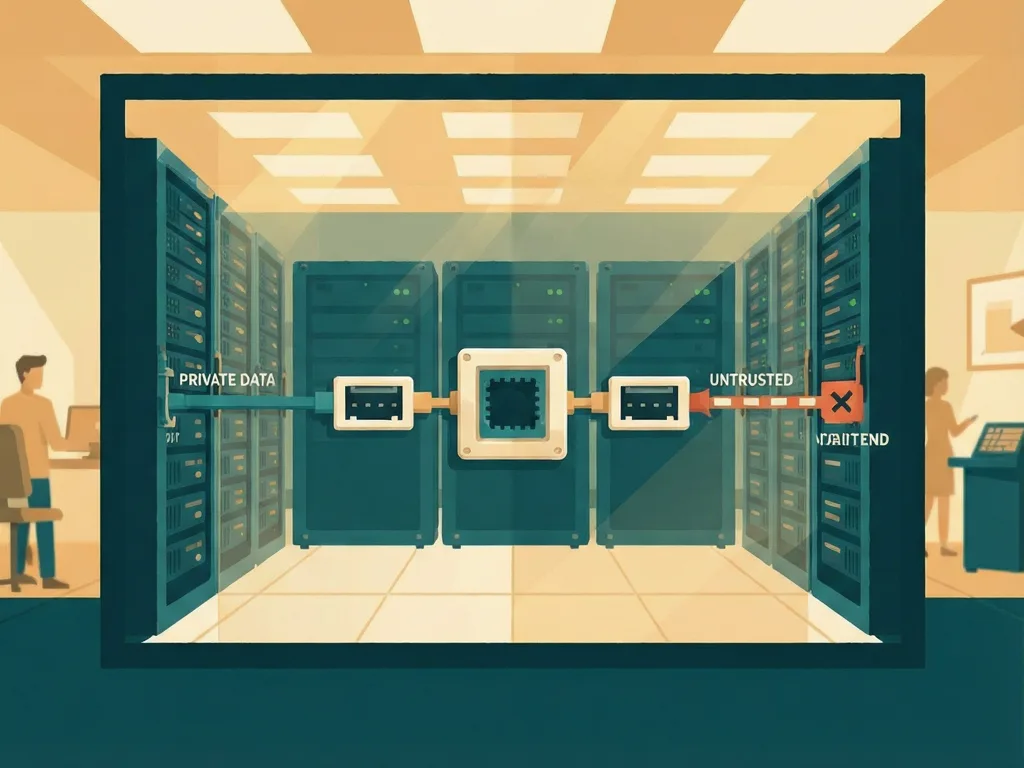
This free course explains AI agent risks via private data, untrusted input, and outbound channels, and how architecture can separate them.
The versioned benchmark tests LLM agents with point-in-time financial data, finding strong evidence organization but weaker investment forecasting.
AI agent token waste usually comes from treating context as state, oversized tool payloads, whole-file retrieval, bloated schemas, uncapped loops, poor caching placement, and large model routing. Fixe…
Real Python tested GPT-6.1 Terra on five Python tasks: turtle drawing, modern idioms, latest release, unrelated edits, and hallucination.
Nandi is a free Apache-2.0 model routing Indian complaints into 53 categories and P1-P3 urgency. It scores 62.5% on real posts but needs human review.
MIT historian Benjamin Lindquist links modern AI hallucinations to mid-20th-century engineering ideas that added randomness to neural networks. Early researchers believed surprise and irrationality co…
Reflection Beam is an open-weight mixture-of-experts model for AWS agentic coding, deployable via SageMaker JumpStart and HyperPod Inference.
The 2-hour freeCodeCamp course teaches secure use of Model Context Protocol by covering risks, OWASP MCP Top 10, enterprise defenses, and governance.
Apertus 1.5 adds multimodal reasoning, 262,144-token context, thinking mode, better tools, and open weights, data, and training details.
AI approval belongs in the store app, not the agent: use review queues, versions, and safe saves.
Speculative decoding speeds up LLM inference by drafting and verifying tokens in parallel for 2 to 3 times faster output while preserving quality.
This guide uses Neo4j knowledge graphs to model payments, precompute edges, and run Cypher queries uncovering five procurement fraud patterns.
TorchNeuron runs Hugging Face models natively on Trainium via PyTorch, supporting eager execution, torch.compile, sharded data and tensor parallelism.
Bedrock Claude outputs are schema-valid JSON, cutting parsing, retries, and validation while supporting agentic workflows, batch, streaming and cache.
NVIDIA NemoClaw blueprints connect agent harnesses, Nemotron models, NeMo observability and OpenShell runtime for secure production AI agents.
OpenAI model names reveal release order, related versions, and expected change, while model size shapes performance, reliability, and cost.
AWS has connected its new sign-in experience to SageMaker Studio, letting developers skip the lengthy account form. Users can authenticate with Google, GitHub, Apple, or Amazon accounts and reach a pr…
PyTorch 2.15 targets Apple silicon Mac users running transformers, diffusers, and ComfyUI. It adds FP8 via float8_e4m3fn, speeds LLM decoding with Metal kernels for F.linear, softmax, and grouped matm…