
Build Specialized Agents on a Stack You Control Using NVIDIA NemoClaw
NVIDIA NemoClaw blueprints connect agent harnesses, Nemotron models, NeMo observability and OpenShell runtime for secure production AI agents.

Key Takeaways
- NVIDIA NemoClaw is a blueprint package—not a competing harness or runtime—that assembles an open, enterprise-ready agent stack around existing agent harnesses.
- It supports three harnesses—OpenClaw, Hermes Agent, and LangChain Deep Agents—and combines them with Nemotron models, NeMo tools, NeMo Relay observability, and OpenShell secure runtime controls.
- NemoClaw emphasizes that production agents require four parts: a reasoning model, an operating harness, tools/skills, and a governed runtime for access and actions.
- Harness tuning can significantly improve cost and performance; LangChain tuned Deep Agents for Nemotron 3 Ultra to reach near-frontier results at roughly 10x lower cost per run than leading closed models.
- The stack supports flexible deployment across cloud, data centers, NVIDIA DGX Spark, and RTX PCs, enabling specialized agents that can also be used by frontier agents for delegated subtasks.
Meta description: NVIDIA NemoClaw blueprints connect OpenClaw, Hermes Agent and LangChain Deep Agents with Nemotron models, NeMo Relay and OpenShell for secure production agents.
Tags: NVIDIA NemoClaw, Agent Harnesses, OpenShell, Nemotron 3 Ultra, AI Agent Runtime
Featured image: Abstract friendly illustration of open blueprints linking three agent harnesses, models, observability tools and runtime policies, with no real people, no logos and no text.
NVIDIA NemoClaw is aimed at developers who already have an agent harness and need a repeatable way to put that agent in front of real enterprise systems. The open blueprints package a selected harness with Nemotron models, NeMo optimization tools and OpenShell runtime controls, giving teams a way to own, customize and run a specialized agent stack rather than treating each piece separately.
An agent needs four parts, not just a model
An agent needs a model that reasons, a harness that defines how it operates, tools and skills that extend its reach, and a runtime that governs what it may access and do. NemoClaw currently supports three harnesses for that stack: OpenClaw, Hermes Agent and LangChain Deep Agents.
OpenClaw can access files and applications, write code, spawn sub-agents and maintain context across sessions. It runs on a user's own machine or server and supports long-running sessions, memory and scheduled tasks. Hermes Agent, from Nous Research, is built to improve as teams use it: corrections and repeated workflows become durable skills that can be reused later. LangChain Deep Agents is a customizable harness for complex multistep tasks, combining planning, file-based context management, memory and delegation to specialized subagents.
Each harness supplies skills, tools, orchestration and memory. The remaining question is how to run those capabilities safely in production.
NemoClaw assembles the stack around the harness
NemoClaw is not a competing harness and is not a runtime. It is a blueprint set that assembles an open agent stack on top of the developer's chosen harness. A blueprint brings together four components: a tuned open harness optimized for NVIDIA Nemotron, Nemotron open models, NVIDIA NeMo tools for optimization and observability, and NVIDIA OpenShell as the secure runtime.
NeMo Relay is part of the observability and improvement layer; it observes agent execution and includes routing capabilities that can help improve throughput, cost and reliability. OpenShell governs access to files, networks, credentials and tools.
If a team is already building with OpenClaw, Hermes Agent or LangChain Deep Agents, a NemoClaw blueprint can assemble the surrounding stack without rewriting the agent logic.
Harness tuning can change cost and performance
Model and harness need to fit. The model does the reasoning, while the harness provides the environment where that reasoning happens. If they are mismatched, the agent may ask for context again, stop too early or loop without progress.
The post highlights LangChain's tuning of Deep Agents for Nemotron 3 Ultra. LangChain adjusted prompts, tools and middleware without retraining the model. Starting from a strong baseline, that harness tuning brought Nemotron 3 Ultra to near-frontier performance at approximately 10x lower cost per run compared with leading closed models. The tuned Nemotron 3 Ultra model profile is available through LangChain on GitHub.
That means developers can use the same optimized profile through the NemoClaw blueprint for LangChain Deep Agents instead of reproducing the tuning work themselves.
Governance and a memory-driven example
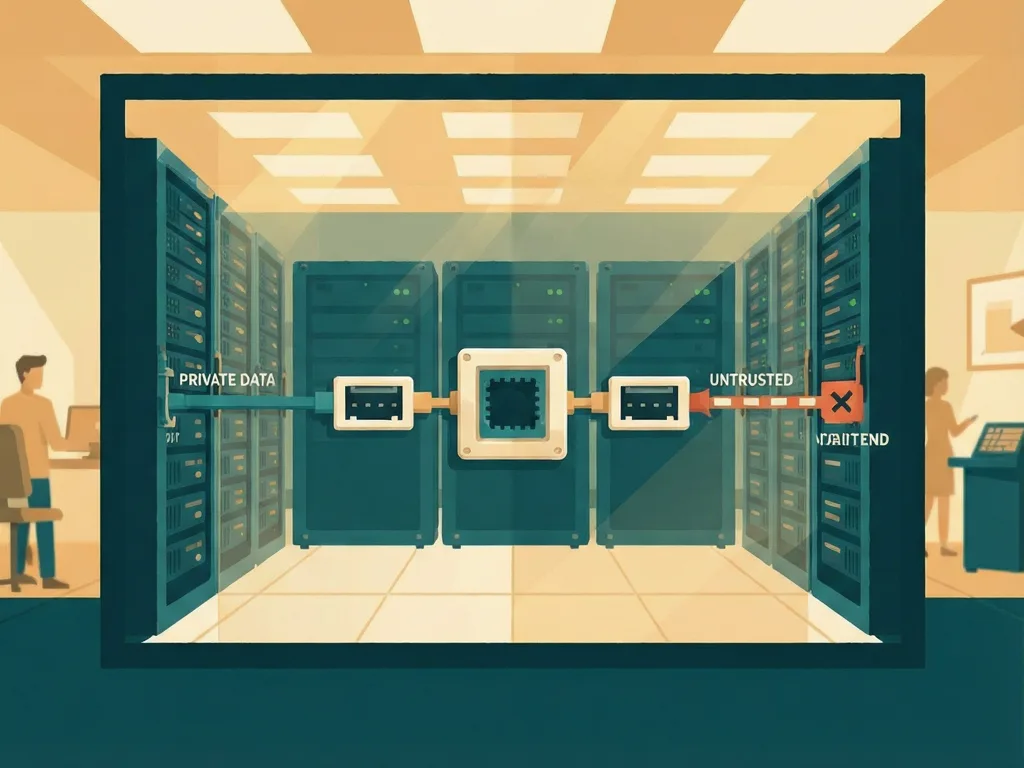
Every NemoClaw reference includes OpenShell, which adds security and policy enforcement around the harness and tools. The OpenShell tutorial covers creating a first policy to prevent data exfiltration to GitHub. More sophisticated policies in the references govern connections across internal tools, sites and communication channels.
The NemoClaw community repository includes a memory-driven Chief of Staff recipe built as a deployable Hermes profile. The agent keeps a persistent, human-readable model of people, projects, priorities and working patterns, so it does not need to rebuild context from scratch for every task.
In that example, OpenShell controls file-system, process and network access and keeps credentials for managed inference and Model Context Protocol connections outside the sandbox. NeMo Relay is integrated into the Hermes session, closing trace spans at real session boundaries such as a new session, reset or expiry, then exporting trajectories for audit and further optimization.
Deployment paths and what to check next
NemoClaw agents can run in the cloud, in data centers, on NVIDIA DGX Spark, and on NVIDIA RTX PCs and workstations. The same stack can support different specialized agents, including a clinical agent for a hospital and a simulation agent for electronic design automation, as long as their tools and skills differ.
NemoClaw-powered specialists can also work alongside frontier agents. Claude, Codex or Cursor agents can delegate domain-specific subtasks to NemoClaw agents running on open models and owned infrastructure.
For teams evaluating the approach, the practical sequence is to choose a NemoClaw blueprint for the existing harness, then customize tools, models and runtime policies. The available next steps include the Deploy Secure Agents with NemoClaw course, a 101-level introduction; the NemoClaw quickstart; the NemoClaw GitHub repository; and guidance on self-evolving agents with Hermes Agent and NemoClaw. Additional resources include open Nemotron models and datasets on Hugging Face, NVIDIA Blueprints on build.nvidia.com, and NVIDIA AI updates through LinkedIn, X, Discord, YouTube, NVIDIA forums and NVIDIA news.
Comments (0)