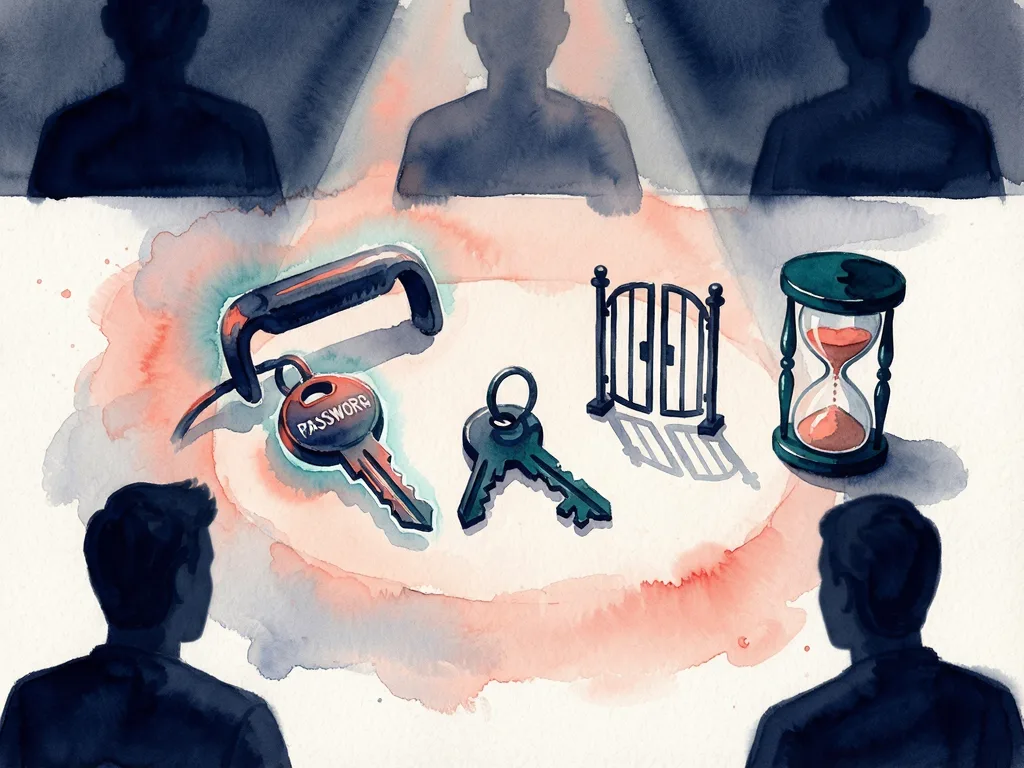
MCP’s Largest Update Helped AI Agents Scale—and Transformed a Prompt into a Password.
MCP's stateless update scales agents but exposes handles in prompts; servers must verify signature, audience, expiry, and caller to block hijacking.

MCP's stateless update scales agents but exposes handles in prompts; servers must verify signature, audience, expiry, and caller to block hijacking.
Apartment search agent uses Weights & Biases Weave to trace 2,500 checks, remove avoidable model calls, and keep matches useful.
Context rot is a gradual LLM decline as prompts grow, driven by transformer attention. Long chats can lose reliability without context engineering.
This episode examines whether model or harness matters more, plus agentic workflows, web scraping, and self-hosting for reliable Python AI tools.
Grokking is when AI models seem to memorize first, then later generalize, challenging simple training curves and suggesting delayed learning matters.
This documentary follows SeaHack in Hong Kong, where more than 250 developers from over a dozen countries raced to build working AI startups in 24 hours. Quincy Larson served as a judge, capturing the…
LFM2.5-24B-A2B is a local reasoning agent with two billion active parameters, fast Apple M5 Max inference, and a 131,000-token context.
Four local AI models translated English to Serbian. Gemma 4 E2B was fastest and passed checks, but still invented words and bent grammar.
AI coding agents have moved beyond AutoGPT-style autonomous loops toward narrower, workflow-aware tools like Claude Code, Codex, Cowork, and OpenClaw. The key insight is that agent value now depends o…
Decoders generate text, but labels, scores, rankings, and structured outputs often need simpler, faster, and cheaper models.
This guide explains building a minimal AI agent in Python: define a goal, store messages, call a model, interpret actions, and stop safely.
GPT-5.5 is retired from ChatGPT but remains available through the API, preserving access while changing memory, projects, and daily workflows.
Low-Rank Adaptation updates frozen LLM layers and vision reads screenshots, improving department accuracy, calibration, and memory handling.
Pollo AI claims GPT-5.6, GPT-6 Astra, and GPT-Image-2.5 power image and video ads, but lacks launch, pricing, access, and performance proof.
GPT-6 guide for startups: pick models by task, tune reasoning effort, improve prompts and skills, coordinate tools, and prepare production workflows.
Diffusion Controller adds a steering damper to frozen models, improving alignment, supporting gray-box access, and unifying image control methods.
CNNs process images with local filters, stride, padding, ReLU, and pooling, sharing parameters to learn spatial features and classify images.
pwasm 0.2a0 is a pure Python WebAssembly engine that the author says Claude Opus 5.5 improved across 42 commits. It now covers nearly the full WASM specification and ships a PyPI wheel containing work…
llama.cpp tuning on a 4GB NVIDIA GPU can double local LLM speed. Full GPU offloading improved Qwen models; KV cache reduced memory with minor cost.
Compo adapts an image editing model to generate posters from a Spatial Canvas, using four bindings for layout, copy, references, and preserved visuals