Meaning-preserving compression enables efficient generative reward modeling through latent-space judging.
LatentGRM compresses rubric reasoning into latent states, making reward judging faster while keeping accuracy and interpretability.

Hands-on reviews of AI apps, assistants and image, video and voice tools: pros, cons, pricing and who each one is for.
LatentGRM compresses rubric reasoning into latent states, making reward judging faster while keeping accuracy and interpretability.
DataVista evaluates 19 multimodal LLMs on 961 data videos, showing top models lag human experts in narrative reasoning.
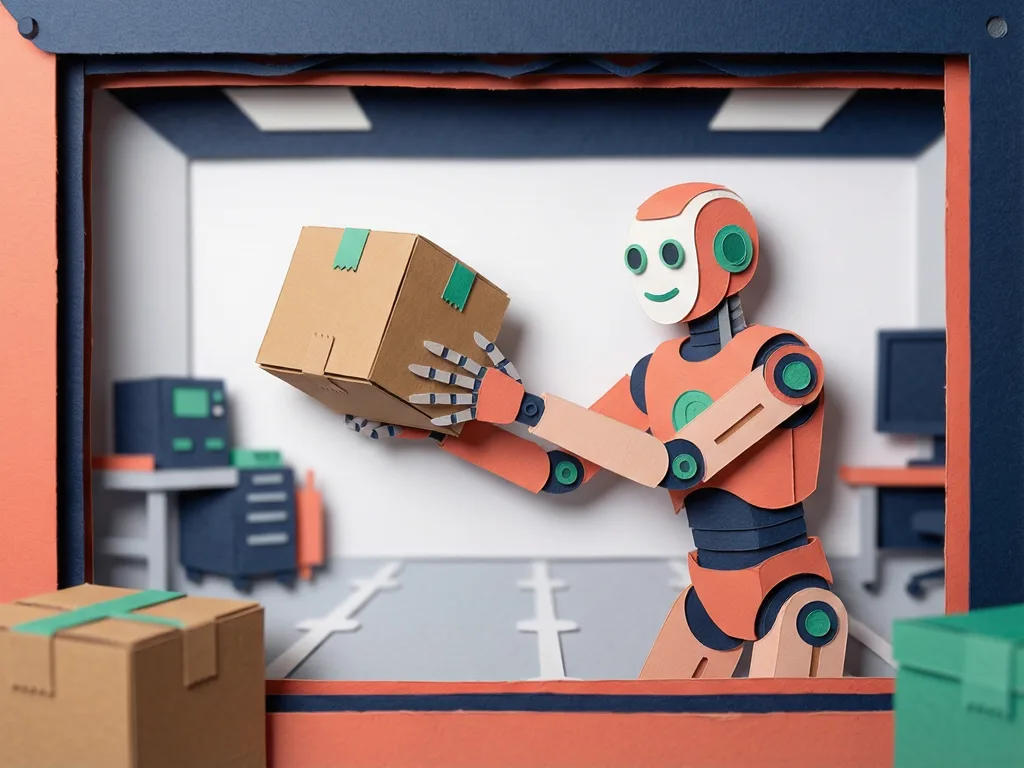
Reflex splits humanoid box catching into state control, dynamics inference, and vision, reaching 85.7 percent in simulation and 65 percent on robots.
AAArena tests AI agents using fixed models to improve game code. Opus5.5 with Claude Code wins six gold medals but misses six leaderboards.
Representation Guidance lets plain Transformers generate pixel images without autoencoders by making synthesis depend on learned representations.
A new embodied benchmark tests continual learning by requiring agents to recombine basic skills for unseen advanced tasks, revealing limited scaling.
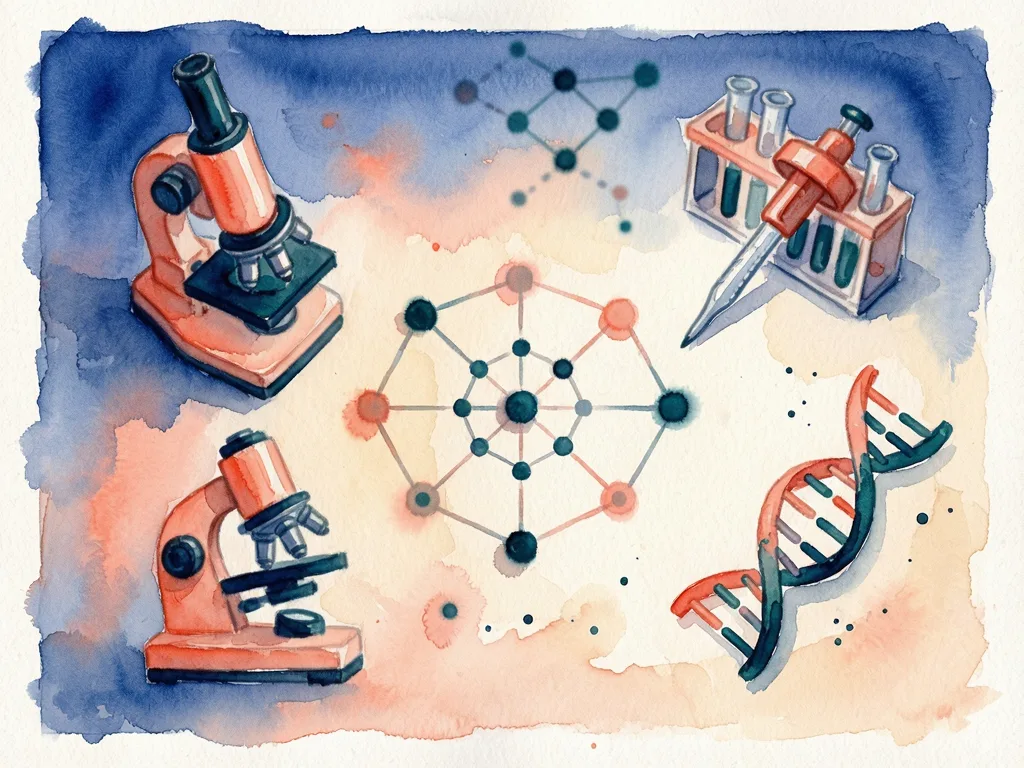
Quine is an experimental AI system for biological discovery, linking models, tools, literature, researchers, and wet-lab validation for research use.
KGMON placed second in KDD Cup 2026 using a compact, inspectable harness with unified SQL access, narrow tools, schema scouting, and evaluation loops.
Claude Haiku 5.5 is live on Amazon Bedrock and AWS, offering fast, low-cost subagent work, effort controls, and pairing with Claude Opus 5.5.
Amazon Web Services updated Amazon Bedrock AgentCore with managed agents, efficient runtime, Strands tools, and new OpenAI models for AI builders.
Eval suites grade visible outputs but miss absent events: skipped checks, unsent alerts, unopened files. Teams should verify side effects.
RAG answered coverage from stale PDFs, missing live deductibles and prior auth, causing an $82,410 bill. Use real-time payer data instead.
The 2017 Transformer paper survives through self-attention and parallel layers, shaping how AI assistants use context and why prompts exceed memory.
RLVR gains live in low-dimensional subspaces; Alpha-Stabler removes intrusive gradients, stabilizing 2,000-step training on 5 LLMs and 6 tasks.
The study shows LLMs can embed incidental details into patient notes, risking clinical reasoning; safeguards are needed before healthcare deployment.
Evaluate Claude Code plugins by mapping permissions, limits, and failure modes. Install from read-only connectors to write-capable tools.
reViT loops one Transformer block, using shared FFN experts for depth, to match DeiT III and DINOv2 distillation with fewer stored parameters.
Pumpire benchmarks 29 baselines for metric point-pair distances using 6,400 frames from 100 scenes, testing scale and cross-view consistency.
A decision-first model can review AI agent tool calls before actions, reducing risk without adding another LLM's cost, latency, or uncertainty.
Station AI agents recovered 62.7% of sub-discoveries in offline ICLR tasks, showing strong experiment loops but weak scientific judgment.