
This study evaluates whether heuristic learning can help AI agents rise to the top in a long-running game agent competition.
AAArena tests AI agents using fixed models to improve game code. Opus5.5 with Claude Code wins six gold medals but misses six leaderboards.
Key Takeaways
- AAArena tests Adversarial Heuristic Learning, where an AI agent improves executable game-playing programs through experience and feedback while the foundation model’s weights remain fixed.
- The evaluation uses 12 historical competition games and 1,920 human-written submissions, with agents competing under a fixed budget and Elo-based rankings.
- Agents follow a human-like loop: understand rules, select opponents, analyze replays, revise strategies, and submit their strongest code within the evaluation budget.
- Opus5.5 with Claude Code won six gold medals across seven tested model configurations, but no configuration topped the other six leaderboards.
- The mixed results show that fixed-model agents can match strong human competitors in some games, yet the method still has clear limits and may require better agent workflows to close the gap.
Meta description: AAArena tests AI agents using Adversarial Heuristic Learning on 12 historical games and 1,920 human submissions; Opus5.5 and Claude Code earn six gold medals.

Tags: AI Agents, Adversarial Heuristic Learning, AAArena, Claude Code, Opus5.5
Featured image: abstract friendly illustration of a digital arena where code blocks compete, no real people, no logos, no text.
A study built AAArena to test Adversarial Heuristic Learning, an approach in which an AI agent uses experience and feedback to improve executable game-playing programs while the foundation model's weights stay fixed. The evaluation used 12 historical competition games and 1,920 human-written program submissions from contest archives. Across seven AI models and their runtime configurations, Opus5.5 with Claude Code earned six gold medals, and no tested configuration topped the other six leaderboards.
What AAArena tests
The idea comes from Learning Beyond Gradients, where Jiayi Weng (@trinkle23897) discusses Heuristic Learning. In that framing, the agent is not trained through gradient updates. Instead, the agent acts as the learner: it takes experience and feedback and directly improves executable structures such as programs.
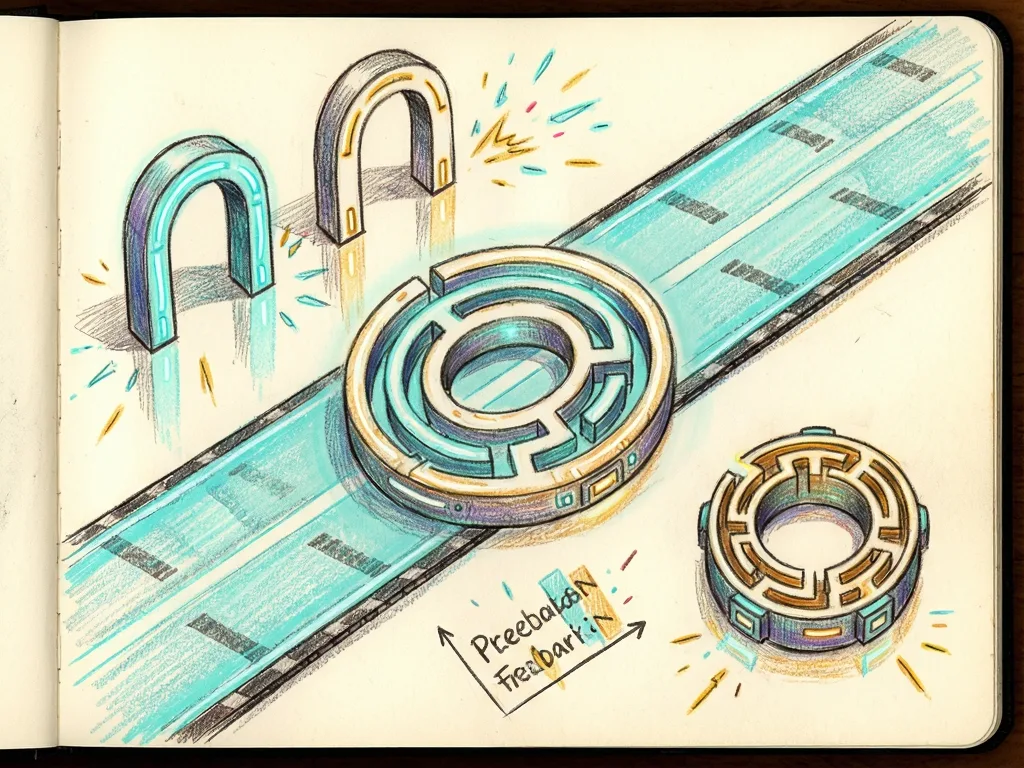
The comparison to a human contest player is useful. A contestant understands the rules, writes a strategy, tests it, revisits losses, finds a weakness, and turns an insight into code. The contestant is the learning engine, converting experience into a stronger program. AAArena replaces that human engine with an AI agent.
Adversarial Heuristic Learning applies the same idea to competitive tasks. In an adversarial setting, one program tries to outperform another. The foundation model's weights remain fixed, so the learning does not happen inside the model. The agent instead understands the rules, selects opponents, analyzes feedback, and generates and maintains the game-playing agent that enters each match.
How agents compete
AAArena was built to answer a practical question: can an AI learning engine actually win? The arena draws on a contest's archives, collecting 12 historical competition games and 1,920 human-written program submissions. Agents compete for leaderboard positions through the same basic process as human players: read the rules, play matches, and improve the code.
Each game provides a common evaluation budget. Agents get 128 units for small matches and 16 evaluations against the full opponent pool. The small-match stage lets an agent select opponents, compete, and inspect replays. The full-evaluation stage returns the current strategy's Elo rating and rank. Elo is a competitive score used to rank performance, so the final result depends not only on playing games but on submitting the strongest code version.
Agents decide when to learn and when to submit. Comparisons use each agent's best official result achieved within the budget. That budget rule matters because it prevents a result from being explained only by unlimited testing. It also creates a tradeoff: more small matches can provide feedback, while more full evaluations can reveal and lock in a rank.

The design gives agents possible advantages over humans. Agents could test more persistently, organize replays systematically, and draw inspiration from different players. But the study does not assume those advantages automatically produce wins. It asks whether they lead to victories through actual competition.
What the results show
Across seven AI models and their runtime configurations, Opus5.5 with Claude Code earned six gold medals. No tested configuration topped the other six leaderboards. The result is mixed. Agents can already match strong human competitors in some games, while the remaining games reveal where their abilities fall short.
For readers, the takeaway is not that a fixed model can now solve every adversarial coding task. The study suggests a narrower capability: an agent can improve a program through an external loop of rule understanding, match selection, feedback analysis, replay inspection, and code maintenance. That loop can be competitive in certain environments, but it still depends on the game, the evaluation budget, and the runtime configuration used to drive the agent.
The six leaderboards without a tested configuration at the top mark the boundary of current results. They show where the Heuristic Learning method, as implemented in AAArena, did not reach the highest competitive rank. The next question is whether better agent workflows can close that gap without changing the underlying model weights.





Comments (0)