
The Omission Bug: Quantifying What the Agent Failed to Do
Eval suites grade visible outputs but miss absent events: skipped checks, unsent alerts, unopened files. Teams should verify side effects.

Key Takeaways
- Automated eval suites often score visible outputs, such as answers or reports, while missing required actions that never occurred, like skipped checks, unsent alerts, or unopened files.
- Absence grading measures whether expected events and side effects happened, using logs, queues, audit trails, or state records rather than only final output artifacts.
- Many evaluations overlook these gaps because they are designed around prompt-output benchmarks, while event-based testing needs heavier infrastructure such as sandboxes, mocks, and call recording.
- Teams can make absence visible by defining what the system owes, not only what it should produce, and then asserting that required actions appear in the full execution path.
- As AI agents perform more tool calls and workflow tasks, reliability requires both output grading and event-based scoring, since a polished response can still hide a failed required action.
Meta description: Learn why eval suites often grade output but miss absence, skipped checks, unsent alerts, and unopened files, and what teams can do about it now.

Tags: eval suites, absence checks, automated agents, software testing, AI evaluation
Featured image: Abstract illustration of scored output boxes beside empty checkmarks, an unopened file, and a silent alert bell, friendly style, no people, logos, or text.
A short piece on Towards AI points out a gap in how automated systems are evaluated: eval suites grade output, but almost none grade absence. The examples are concrete — the skipped check, the unsent alert, and the file never opened. For developers, QA reviewers, product managers, and teams running AI agents, the message is that a high score for visible results can still hide a failure to take a required action.
What absence grading would measure
An eval suite is a set of tests or scoring rules used to judge a system’s response. In a simple case, it checks whether a model returns the right answer, whether generated code passes tests, or whether a report contains expected fields. That is output grading. Absence grading asks the opposite: did something happen when it was supposed to happen? A skipped check may leave no test result. An unsent alert may leave no message in a queue. A file never opened may leave no read log. The absence itself is the failure.

Why eval suites tend to overlook what did not happen
This matters because many evaluation systems are built around artifacts. They need something to score: a string, a file, a test status, a token count, or a pass/fail result. When the correct behavior is an event that should appear somewhere, the evaluation becomes closer to observability — collecting logs, metrics, and traces from the system. If the required event never occurs, there may be nothing to score. A suite can mark the visible output as acceptable while still missing the silent obligation behind it.
Many AI eval suites are designed around prompts and expected outputs, because that matches benchmark data. They are easier to build when the expected answer is a short text or structured object. Event-based expectations often require a sandbox, mock services, and a way to record calls. That infrastructure is heavier, so many suites leave it out.
Software testing already has related ideas. Negative tests check that a system rejects bad input or avoids harmful behavior. The issue raised here is narrower: it is not only that the system did the wrong thing, but that it failed to do the right thing at the right moment. In automation, that can mean a validation routine that was never called, a warning that was never queued, or a data source that was never accessed. Those failures can be hard to notice because they often produce no visible artifact.
How teams can make absence visible
For readers, the practical lesson is to list what the system owes, not only what it should produce. A spec might say: if the upload fails, send an alert; if the model uses sensitive data, run a check; if the workflow depends on a file, read it before generating a response. Each of those creates an expected event. An eval suite that grades only the final answer may still pass a run where the alert was not sent or the file was not opened.
Imagine a support assistant that returns a polished answer but never creates a ticket when a policy says it should. The final reply may look good, but the workflow fails.
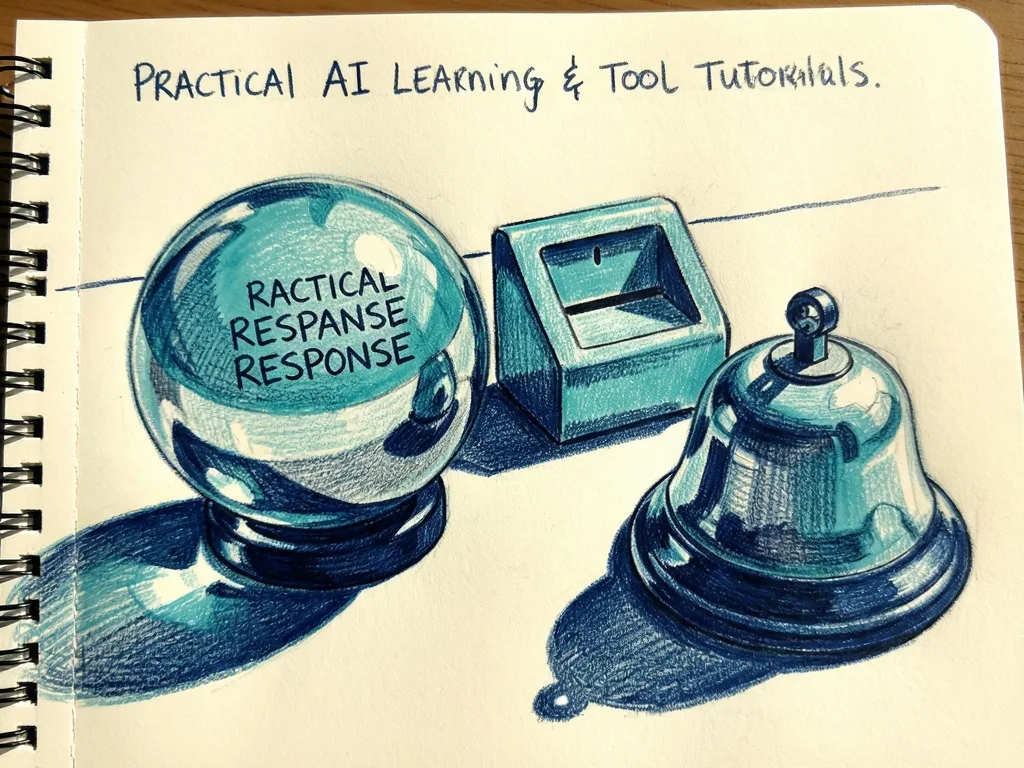
Teams can make absence visible by checking side effects. Instead of asking only what the system returned, ask what must be present in the logs, queues, audit trail, or state store. A skipped check can be caught when the test asserts that a validation event exists. An unsent alert can be caught by verifying that a notification was emitted. A file never opened can be caught by checking that the workflow recorded a read attempt. None of this requires a new model benchmark; it requires the evaluation to look at the whole execution path.
This does not mean existing eval suites are useless. It means they answer a narrower question. Output grading still tells a team whether a system is producing the right visible result. Absence grading tells them whether the result was supported by the actions that were supposed to happen around it.
What the gap means for readers
The gap is likely to grow as agents do more than answer questions. Agent systems can call tools, schedule tasks, open files, send messages, and run background checks. If evaluation only grades the final reply, it can reward a helpful sentence while ignoring a missing action. The short piece on Towards AI does not provide benchmark numbers or a product roadmap, so the uncertainty is real: how widely eval suites grade absence cannot be measured from this prompt alone. But the question is useful for anyone building reliability checks.
Readers should watch for evaluation frameworks that include event-based assertions, trace-based scoring, and failure cases where the correct output is an action that leaves no user-facing artifact. The important shift is not to abandon output grading. Output remains necessary. The next step is to ask whether the suite also grades the things that were supposed to happen but did not.

Comments (0)