
Claude Haiku 5.5 is now available through Amazon Web Services.
Claude Haiku 5.5 is live on Amazon Bedrock and AWS, offering fast, low-cost subagent work, effort controls, and pairing with Claude Opus 5.5.

Key Takeaways
- Claude Haiku 5.5 is now available on Amazon Bedrock and Claude Platform on AWS as a fast, low-cost model for high-volume subagent tasks, costing about 75% less than Claude Haiku 4.5 for most tasks.
- It is Anthropic’s most capable Haiku model for coding, tool use, computer use, and agentic workflows, and the first Haiku with effort controls to balance cost and intelligence per task.
- Haiku 5.5 pairs with Claude Opus 5.5: Opus handles planning and hard reasoning, while Haiku executes well-defined tasks quickly, often with many parallel subagents for routing, classification, summarization, code review, and small changes.
- Users can start in the Amazon Bedrock console, use the Anthropic Messages API or AWS Invoke/Converse APIs, and access it through multiple AWS regions and inference profiles with AWS data residency, IAM, CloudTrail, CloudWatch, and Guardrails support.
Anthropic Claude Haiku 5.5 Arrives on Amazon Bedrock and Amazon Web Services

Meta description: Claude Haiku 5.5 on Amazon Bedrock and Claude Platform on AWS offers fast, low-cost subagent work. See when to use it and how to start today.
Tags: Claude Haiku 5.5, Amazon Bedrock, Claude Platform on AWS, AI subagents, Anthropic
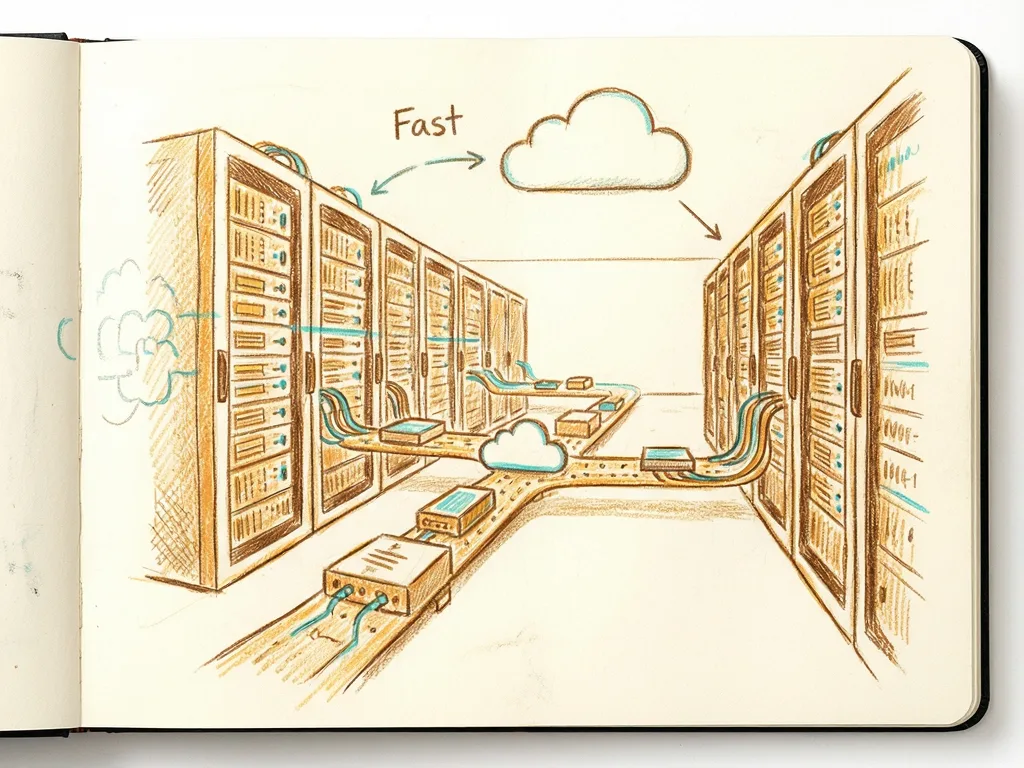
Featured image: A friendly abstract illustration of a small fast model routing tasks to a larger planning model, with soft cloud shapes and no text or logos.
Today, Anthropic made Claude Haiku 5.5 available on Amazon Bedrock and Claude Platform on AWS, bringing the speed and efficiency leader in the Claude 5.5 family into AWS environments. For teams evaluating Claude Haiku 5.5 on Amazon Bedrock, the model is positioned for subagent roles and workloads that need low cost at high volume, with a cost about 75 percent lower than Claude Haiku 4.5 for most tasks.
What makes Claude Haiku 5.5 different
Anthropic describes Claude Haiku 5.5 as its most capable Haiku model across coding, tool use, computer use, and agentic tasks. It is also the first Haiku model with effort controls, so teams can tune cost against intelligence for each task instead of applying one setting to an entire workload.
The model is aimed at quick, repeatable work at scale. In coding workflows, it can act as a subagent that routes requests, reviews code, and classifies long documents. In knowledge work, it can pull key information from small-to-medium documents, perform initial scans, and answer quick questions over a knowledge base. In interactive applications, it is fast enough for simple conversations that need quick, helpful answers. It also covers traditional natural language processing tasks such as classification, summarization, and text generation at production volume and cost.
Claude Haiku 5.5 also handles agentic coding and multi-step tool use, and it supports high-resolution images. For repetitive browser and desktop tasks, it can serve as a computer-use subagent while keeping costs manageable at scale. In development workflows, it fits quick iterations on user interface and user experience changes, as well as small, specific code base changes across multiple files.
How it pairs with Claude Opus 5.5
Claude Haiku 5.5 pairs with the recently announced Claude Opus 5.5. The pairing divides work: Opus 5.5 plans the work, breaks down complex problems, decides the approach, and takes on the hardest reasoning, such as release debugging, security review of large pull requests, and long analyses that end in a finished report.
Claude Haiku 5.5 carries out well-defined tasks quickly and at scale, including routing requests, classifying and summarizing, rewriting long documents, and applying small, specific changes across many files. As a review subagent, it can check the order of operations and high-level direction so Opus 5.5 can spend its tokens on the hardest reasoning. Because it is fast and cost efficient, many Haiku subagents can run in parallel.
Getting started on Amazon Bedrock
To try the model, open the Amazon Bedrock console, choose Test, then Playground, select Claude Haiku 5.5 as the model, and run a prompt. For programmatic use, call the model with the Anthropic Messages API against bedrock-runtime through the Anthropic SDK, or use the Invoke and Converse APIs on bedrock-runtime through the AWS Command Line Interface and AWS SDK.
Before building, you need an active AWS account with Amazon Bedrock access, the AWS Command Line Interface installed and configured, Python 3.10 or later, Boto3 installed with pip install boto3, the Anthropic SDK installed with pip install anthropic, and the Amazon Bedrock Token Generator for Amazon Bedrock authentication installed with pip install aws_bedrock_token_generator. You also need AWS Identity and Access Management permissions for bedrock:InvokeModel and bedrock:InvokeModelWithResponseStream.

The AWS SDK for Python example uses the InvokeModel API with modelId global.anthropic.claude-haiku-5-5, region_name us-east-1, and a request body containing anthropic_version bedrock-2023-05-31 and max_tokens 4096. Because Claude Haiku 5.5 may return a thinking block before the text block, the example selects the text block rather than using a fixed index. The Converse API example uses the same model and sets inferenceConfig maxTokens to 4096. An Anthropic SDK example uses base_url https://bedrock-runtime.us-east-1.amazonaws.com/anthropic, a token from provide_token with region us-east-1, model global.anthropic.claude-haiku-5-5, and max_tokens 1024.
You can explore the Getting Started notebook for more examples, and monitor usage, performance, and costs through Amazon CloudWatch and AWS Cost Explorer as demand grows.
Availability, cost, and who should use it
Claude Haiku 5.5 is available today on Amazon Bedrock through US Geo CRIS (us.), EU Geo CRIS (eu.), AU Geo CRIS (au.), JP Geo CRIS (jp.), and Global CRIS (global.) inference profiles on bedrock-runtime. In AWS GovCloud (US), it is available on both bedrock-runtime and bedrock-mantle endpoints. The Amazon Bedrock documentation lists the full set of supported AWS Regions, and Amazon Bedrock pricing provides pricing information. The model is also available through Claude Platform on AWS in North America. Users can try it in the Amazon Bedrock console, in Claude Platform on AWS, or through the Getting Started notebooks on GitHub.
Amazon Bedrock retains data inside AWS infrastructure under Regional data residency. It works with controls teams may already use: AWS Identity and Access Management for access, AWS CloudTrail for audit, Amazon CloudWatch for monitoring, and Amazon Bedrock Guardrails. Usage is billed through the AWS account. Claude Platform on AWS provides the native Anthropic platform experience through the AWS Management Console, using the same APIs, features, and console experience as working with Anthropic directly, while unifying billing and authentication with AWS.
Claude Haiku 5.5 is the better choice when the job is high-volume, quick, and repeatable: routing requests, classifying documents, summarizing, rewriting, scanning knowledge bases, making small multi-file code edits, or running many parallel browser and desktop subagents. It is less suitable as the sole model for the hardest reasoning tasks, where Claude Opus 5.5 should plan and make judgment calls, including release debugging, large pull request security reviews, and long analyses that end in a finished report.
The source announcement credits Aamna Najmi, a Senior Specialist Solutions Architect for Generative AI focused on Anthropic models and operationalizing and governing generative AI systems at scale on Amazon Bedrock, who helps independent software vendors solve challenges, embrace innovation, and create new business opportunities with Amazon Bedrock; Dani Mitchell, a Senior Specialist Solutions Architect for Generative AI at AWS working on go-to-market for Anthropic on Amazon Bedrock, who helps enterprises worldwide design and deploy generative AI solutions with Anthropic models to build scalable, production-ready applications; Alfredo Castillo, a Senior Specialist Solutions Architect for Generative AI at AWS focused on Anthropic model go-to-market on Amazon Bedrock, who works with Financial Services customers to design and scale generative AI solutions across distributed systems and turn generative AI experiments into production workloads, and who is passionate about family and endurance sports; and Sofian Hamiti, a technology leader with over 12 years of experience building AI solutions and leading high-performing teams to maximize customer outcomes, who is passionate about empowering diverse talents to drive global impact and achieve their career aspirations.






Comments (0)