
Trainable Vectors Reveal the Geometric Structure of RLVR in Large Language Models: Learning to Steer, Steering to See
RLVR gains live in low-dimensional subspaces; Alpha-Stabler removes intrusive gradients, stabilizing 2,000-step training on 5 LLMs and 6 tasks.
Key Takeaways
- Alpha-Stabler is a plug-and-play framework that stabilizes RLVR training by removing intrusive principal-subspace components from activation gradients while preserving useful low-variance control directions.
- The study tests the framework on 5 LLMs and 6 verifiable-reward tasks, reporting stable training through 2,000 steps and improved RLVR gains.
- Vector steering reveals that RLVR improvements are often carried by a compact low-dimensional activation manifold rather than broad high-dimensional changes.
- The effective control directions lie outside the dominant variance patterns of activations, and their geometric alignment may help predict capability transfer across tasks.
Meta description: Alpha-Stabler stabilizes RLVR training by removing intrusive activation gradients; tests on 5 LLMs and 6 tasks show gains through 2,000 steps.

Tags: RLVR, vector steering, Alpha-Stabler, large language models, reinforcement learning
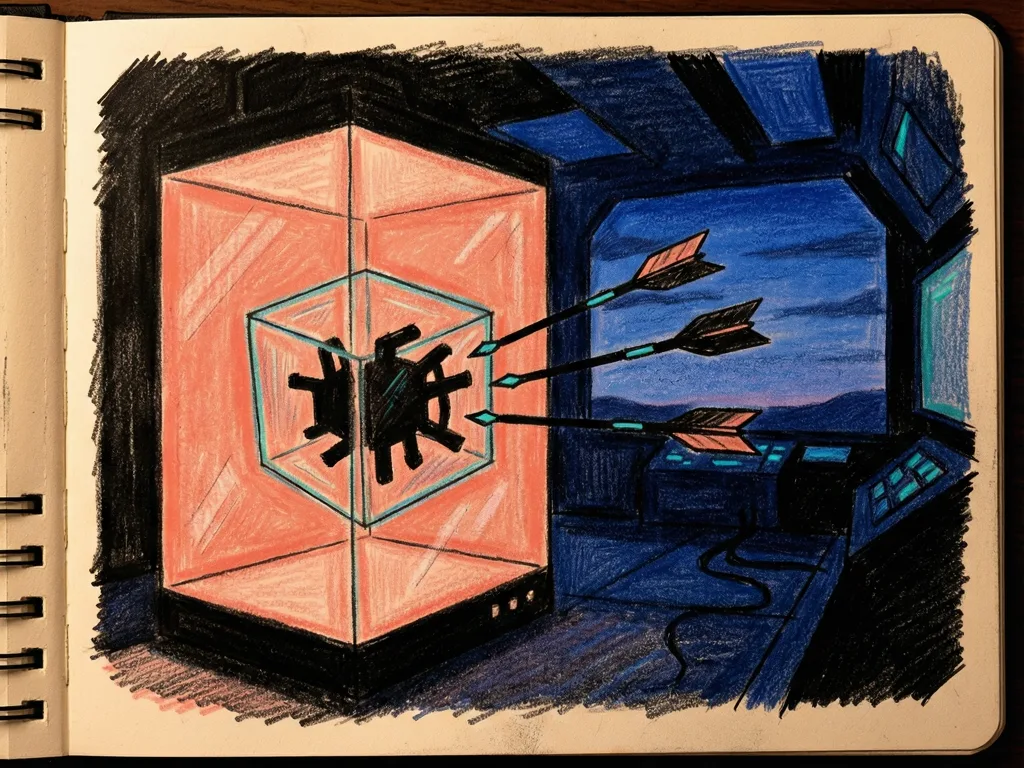
Featured image: Abstract, friendly illustration of low-dimensional activation manifolds and gradient steering, no real people, no logos, no text.
For researchers and engineers tuning large language models with reinforcement learning with verifiable rewards (RLVR), Alpha-Stabler is a plug-and-play framework that aims to make training more stable without changing the base reward design. A new study reports the framework after analyzing RLVR updates on 5 LLMs and 6 verifiable-reward tasks, and says it can stabilize training for 2,000 steps while improving the gains obtained from RLVR. The code is available at https://github.com/caiyuchen-ustc/On_Policy_Vector_Training.
RLVR is a common way to improve reasoning in large language models because rewards can come from automatically checkable signals rather than subjective feedback. The difficulty is that updates spread across huge parameter and activation spaces, making it hard to identify which internal changes actually cause better reasoning. This study treats the problem geometrically. Instead of asking only how much the loss falls, it asks where the model's internal activations move during RLVR training.

What the Study Found About RLVR Geometry
Using vector steering, the researchers inject small activation-space directions to test whether those directions can reproduce RLVR gains. Vector steering is a simple way to probe causality: change a few directions and see whether behavior changes. They find an effective manifold, a low-dimensional set of directions that carries much of the benefit. The capacity needed to reproduce gains can be very small, but not arbitrarily small. At extremely low capacity, the number of injected directions and how those directions depend on the input become limiting factors. The needed capacity also changes with the layer depth where activations are modified.
Another finding is separation. The directions that matter for control do not mainly sit in the dominant variance directions of activations. They lie in the low-variance complement of the activation principal subspace. The principal subspace can be thought of as the most common patterns in activation space; the complement contains less common directions. The learned geometry is largely consistent across training configurations for the same task and base model. Across tasks, alignment of these geometries correlates with capability transfer.
The practical meaning is that RLVR gains are not always caused by broad, high-dimensional changes. They can live in a compact subspace, but that subspace has limits. If a compression or steering method removes too many directions, it can lose the input-dependent detail needed to reproduce the original improvement. Injection depth matters because the same geometric idea can behave differently at different layers.
How Alpha-Stabler Uses This Insight
Alpha-Stabler has two parts. The Predictor monitors principal-subspace intrusion, which occurs when training pushes activation updates into the dominant subspace, as an early warning that collapse may be approaching. The Controller acts during backpropagation. It removes the principal-subspace component of activation gradients while preserving the orthogonal complement. In practice, that means the framework tries to keep the useful low-variance control signal while blocking movement into directions associated with instability.

Across the reported experiments, the approach stabilizes training for 2,000 steps and consistently improves RLVR gains. The study describes the method as plug-and-play, so it can be added to existing RLVR pipelines as a training-time control mechanism. It does not present itself as a new reward model or a replacement for RLVR itself.
Why This Matters for Model Builders
For teams already using RLVR, the main value is diagnostic. If training collapses, the finding suggests looking not only at reward spikes or loss curves, but also at whether updates are intruding into dominant activation directions. For teams comparing tasks, geometric alignment may help predict when one task's training can transfer to another.
For teams building post-training systems, the result points to a more concrete design rule: stable RLVR may require protecting low-variance activation directions while limiting movement in high-variance directions. That is a narrower goal than simply reducing gradient norm or adding more regularization. It gives engineers a specific signal to monitor and a specific component of the gradient to control.
The study supports the findings on 5 LLMs and 6 verifiable-reward tasks. It does not provide benchmark scores or universal settings, so teams should treat Alpha-Stabler as a framework to validate on their own reward pipelines. The released code lets researchers test the Predictor and Controller components directly.



Comments (0)