
I Revisited “Attention Is All You Need” in 2026—and Barely Anything Still Holds Up.
The 2017 Transformer paper survives through self-attention and parallel layers, shaping how AI assistants use context and why prompts exceed memory.

Key Takeaways
- The 2017 “Attention Is All You Need” paper made the Transformer pattern scalable and foundational for many modern AI systems, though not every AI tool is built on it.
- Two ideas from the paper remain durable: self-attention, which lets each token connect with other tokens, and a stackable, parallel architecture that made training large models practical.
- Self-attention explains why chatbots can link recent messages, instructions, and context, while the context window explains why they can appear to forget older details.
- For readers and builders, the useful questions are whether a system uses Transformer-style attention and how large its context window is, since these factors shape capability, cost, and reliability.
Meta description: A clear look at the 2017 paper behind every AI model, the two ideas that survived, and how attention explains why chatbots track context today.
Tags: AI history, transformer, attention, large language models
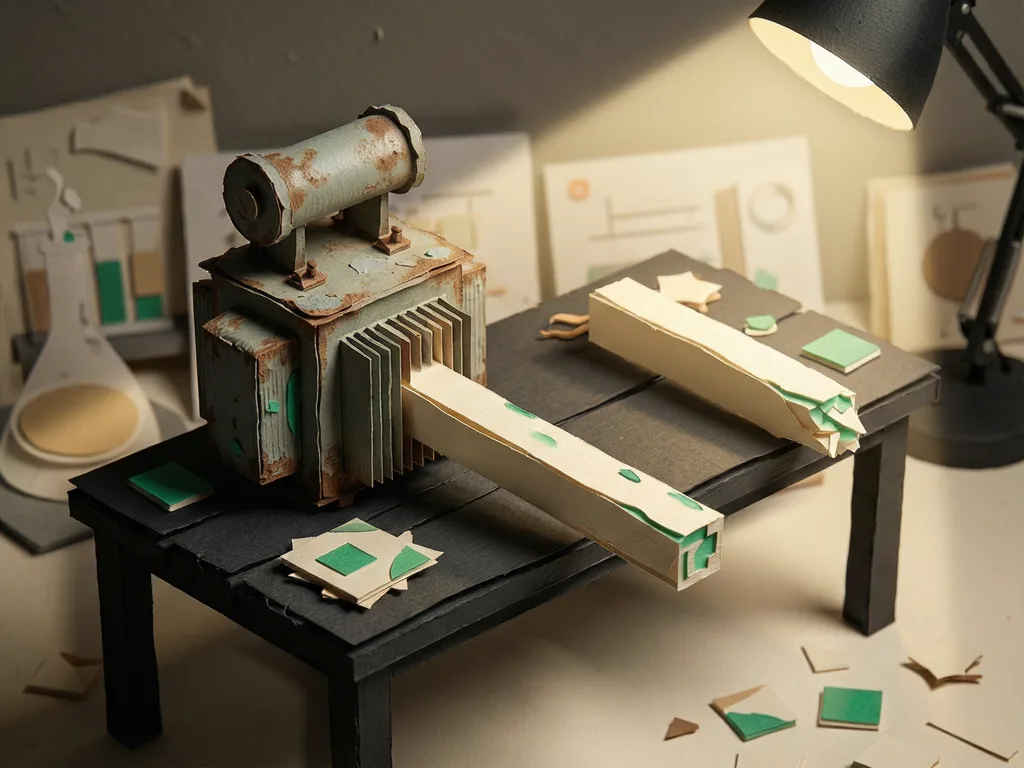
Featured image: Abstract illustration of connected nodes forming a soft wave, with two highlighted pathways and a small clock, friendly colors, no people, no logos, and no text.
If you want a plain-language map of why many modern AI assistants feel able to keep track of your conversation, the starting point is the 2017 paper behind every AI model. This article gives you the two ideas that have carried forward from that work and the one mechanism that most directly explains why your recent messages can influence the answer you receive.
What the 2017 paper changed
The paper, Attention Is All You Need, introduced the Transformer, a design that replaced the token-by-token processing used by older recurrent models with a structure built around attention. In the simplest terms, the model reads a sequence of tokens, which can be words or word pieces, and lets each token gather information from the rest of the sequence.
The claim that this paper is behind every AI model is a shorthand. In practice, it is foundational to many large language models, image models, speech systems, and multimodal tools, while other AI systems still use different methods. That nuance matters because the paper's real influence is not that it ended all previous designs, but that it made a new design pattern easy to scale.
The two ideas that made it
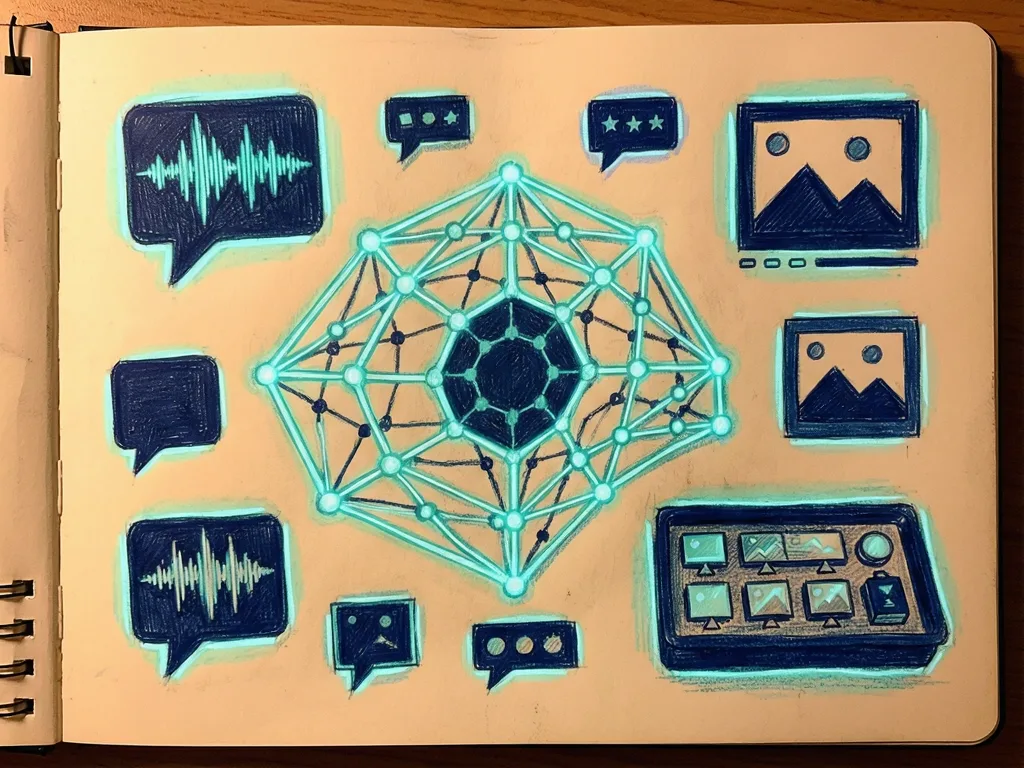
Two ideas from the paper have proven durable.
The first is self-attention. Instead of forcing a model to read a sentence strictly from left to right and carry a compressed memory forward, self-attention allows every token to compare itself with every other token. That comparison decides which earlier words, numbers, or image patches should matter most at a given moment. For a reader, this is the idea behind the feeling that an AI can look back in a prompt and connect one part to another.
The second is the Transformer's stackable, parallel architecture. The model is built from repeated layers that process many tokens at the same time. That parallelism made training much more efficient than older sequential approaches and helped larger models become practical. The paper also used positional encodings so the model could still understand order, but the main long-term contribution was this reusable pattern: attention plus layers plus parallel training.
The one idea that explains your experience
The idea that most directly explains why your chatbot or writing assistant behaves as it does is self-attention. When you send a message, the model does not store your conversation in a human-like memory. It represents your text as tokens and uses attention to weigh relationships among them. A pronoun can be linked to a noun earlier in the prompt, an instruction can be connected to a requested format, and a recent question can be related to a longer paragraph above it.
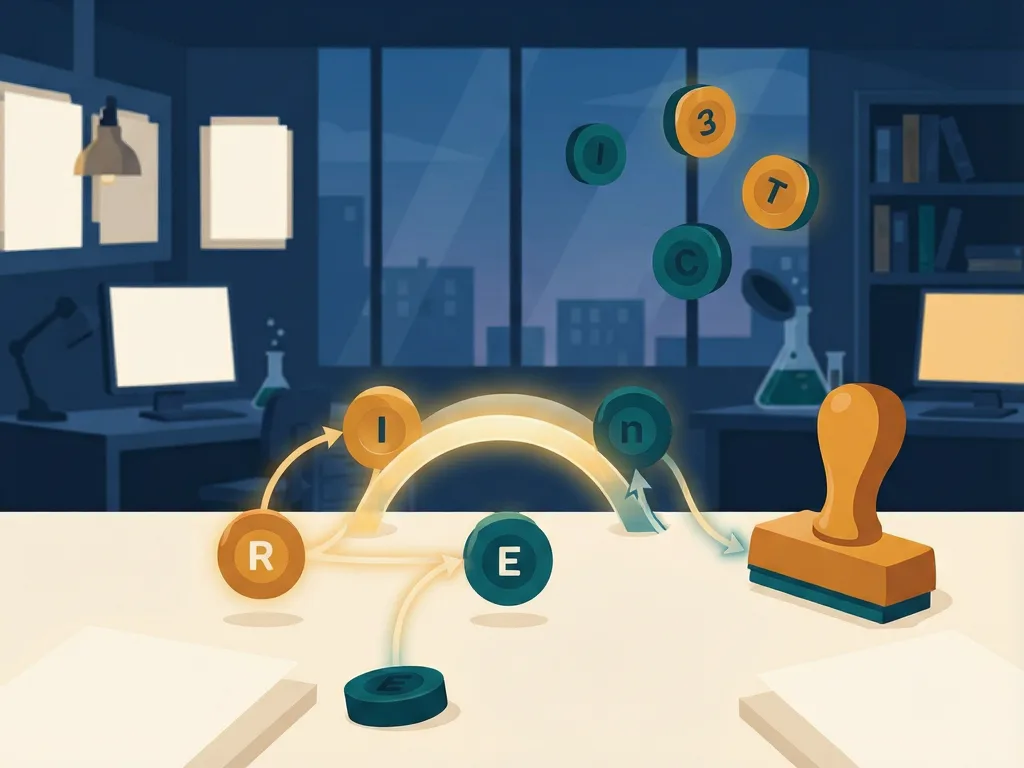
This also explains a familiar limitation. Attention is bounded by the context window, the amount of text a model can process at once. If details fall outside that window, or if the prompt becomes too long, the model may appear to forget. That is not a bug in the ordinary sense; it is a consequence of the 2017 design still shaping modern tools.
What this means for readers
For non-experts, the useful takeaway is not that every AI tool must be judged by the same paper, but that two questions help separate hype from structure. Does the system use an attention-based Transformer, or is it built on something else? Does the task depend on long context, and if so, how large is the context window? Those questions are more practical than vague claims about intelligence.
For builders, the paper's legacy is still visible in model size, training cost, and the way products handle prompts. The architecture made it easier to train large models on large datasets, but it also brought costs that are now central to AI debates: compute, energy, data, and safety trade-offs.
What to watch next
The Transformer remains a dominant pattern, but it is no longer the only path. Researchers have explored alternatives that reduce the cost of long sequences, mix attention with other memory mechanisms, or move beyond language-only training. Still, the two surviving ideas from the 2017 paper continue to shape how many modern AI models are built and how they behave.
That is the practical value of returning to the original work: it gives readers a stable reference point. When a new product says it can remember your instructions, search your documents, or summarize a long report, the 2017 paper behind every AI model helps explain why that capability feels natural now. It does not explain every improvement, but it explains the core reason your recent words can still matter in the answer.

Comments (0)