
How Diffusion Controller Streamlines and Unifies AI Image Generation
Diffusion Controller adds a steering damper to frozen models, improving alignment, supporting gray-box access, and unifying image control methods.
Key Takeaways
- Diffusion Controller is a lightweight steering network that improves prompt alignment in diffusion-based image generation without retraining or destabilizing the base model.
- It reframes denoising as a continuous control problem, applying small corrections toward target attributes or styles while using guardrails to preserve natural image quality.
- The method works with both open models and closed/gray-box models, using intermediate denoising signals and side adapter training paths such as PPO and reward-weighted loss.
- On Stable Diffusion v1.4, Diffusion Controller outperformed LoRA and other baselines on human preference metrics, especially in complex prompt-matching evaluations.
- Users can tune prompt alignment versus image quality at inference time through a single guidance-strength parameter.
Meta description: Google Research introduces Diffusion Controller, a lightweight steering network for better prompt alignment in image models, even closed-source ones.
Tags: Diffusion Controller, text-to-image, Google Research, prompt alignment, Stable Diffusion
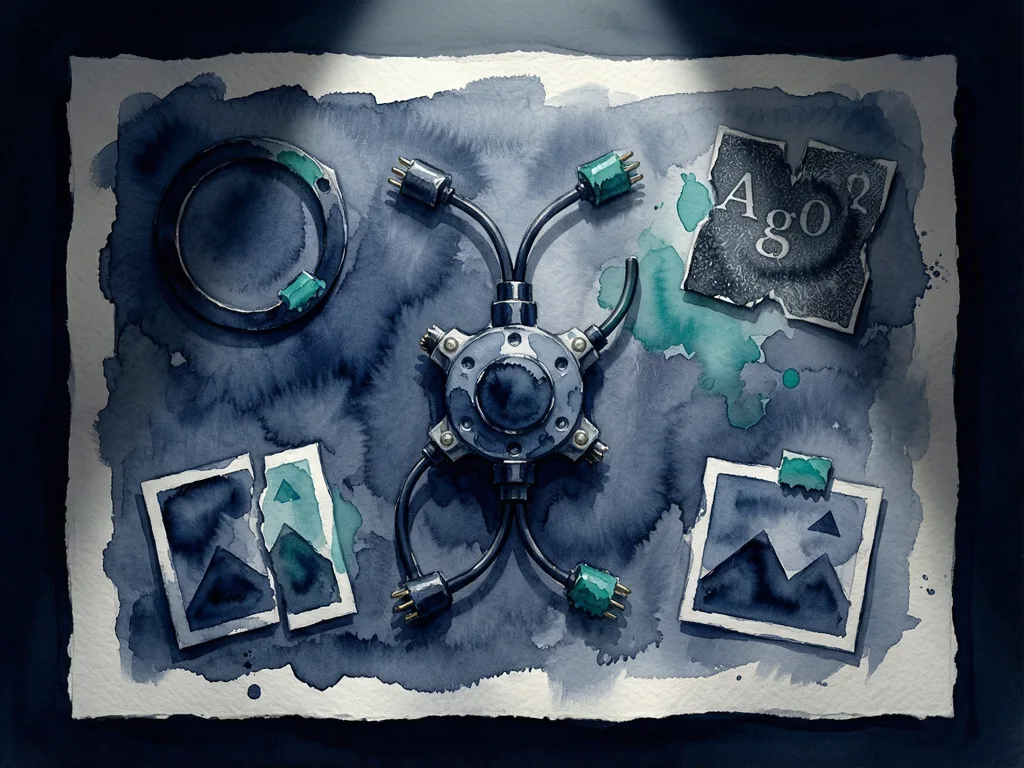
Featured image: abstract friendly illustration of a small steering damper attached to a frozen diffusion backbone, with no people, logos, or text.
On September 29, 2026, Chih-wei Hsu and Moonkyung Ryu, Software Engineers, Google Research, introduced Diffusion Controller, a lightweight steering damper network that improves prompt alignment in image generation. For teams and creators using text-to-image tools such as Nano Banana, Stable Diffusion and Flux, the practical promise is closer matching of written requests to final pictures without retraining or destabilizing the base model, even when access to the model is restricted.
Why image-model control is fragile
Diffusion image models start from noise and remove it step by step until a picture emerges. That stepwise process makes control both powerful and unpredictable. A prompt such as "a lizard wearing sunglasses" can produce a convincing lizard that omits the sunglasses, or a forced correction can twist the face, scales and proportions. The post describes the same tension across tools like Nano Banana, Stable Diffusion and Flux: stronger prompt following and natural image quality often compete.
The announcement says the field has handled this through disconnected methods. Inference-time techniques such as classifier-free diffusion guidance adjust how strongly the text prompt influences generation. Fine-tuning methods such as LoRA, reward-weighted regressions and policy gradients change the model's behavior more directly. Because those tools have been treated as separate fixes, engineers lack one mathematical language for comparing them, which turns alignment-versus-quality decisions into guesswork.
A control layer over a frozen generator
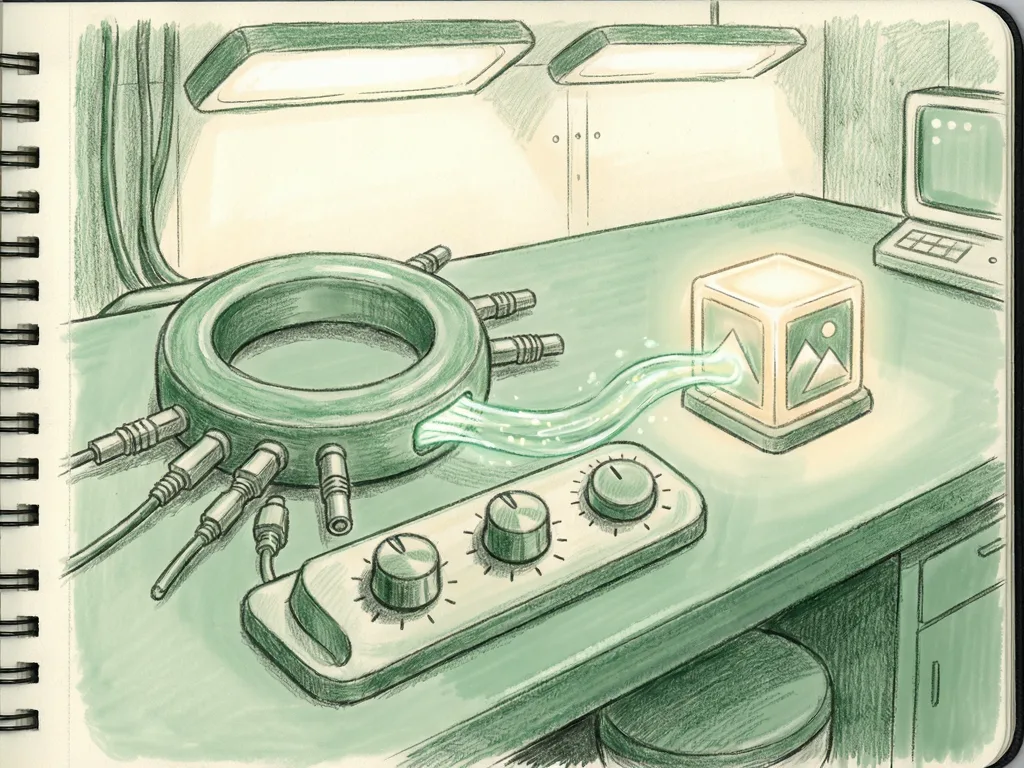
Diffusion Controller reframes denoising as a continuous control problem. The base model remains frozen, while a small added network acts as a steering damper attached to it. The damper observes the image as it is being cleared of static and injects small corrections that favor a user-defined target, such as a requested attribute, a style or contextual alignment. The post describes a penalty guardrail that prevents the model from distorting the lizard's natural scales and proportions just to add sunglasses.
The authors report that the lightweight add-on network outperformed the industry standard for matching human preferences. In the fully unlocked version, meaning a fine-tuned model with white-box, unrestricted access to alter internal model weights, Diffusion Controller achieved a 90% win rate over the baseline model.
Two practical training paths
To turn the control idea into a usable tool, the team describes two fine-tuning methods based on a final reward score. The first is policy gradient training, specifically PPO. It makes incremental adjustments and includes a clipping rule that acts like a speed limiter, preventing erratic changes during training. The second is reward-weighted loss, or RWL. It is a direct optimization path that heavily rewards generations with high scores, giving the system a clearer route toward the kinds of images users want.
Working with open and closed models
The steering damper is meant to address a common business constraint: many leading image-generation models are corporate secrets, often described as black-box or gray-box systems. Full fine-tuning requires white-box access to internal weights, which many teams do not have. The reported Diffusion Controller network can operate with gray-box access by using the intermediate reverse mean, an internal signal from the denoising process, and a side adapter stream that combines the base model's knowledge with a small correction.
The post evaluates four structures: Diffusion Controller, the gray-box steering damper using the intermediate reverse mean and side adapter stream; Diffusion Controller-Naive, a simpler version without either of those; Diffusion Controller-J, a white-box version that trains the damper and base model jointly; and Diffusion Controller-S, a white-box version that trains them separately. The announcement also includes visual comparisons of base models, LoRA and Diffusion Controller outputs, plus a schematic showing the frozen backbone passing the intermediate reverse mean to the side network.
Results on Stable Diffusion v1.4
The experiments used a Stable Diffusion v1.4 backbone across three regimes: supervised fine-tuning, or SFT; reward-weighted loss, or RWL; and PPO. Performance was measured with HPS-v2, the standardized Human Preference Score, also shown as HPSv2 in figures and written as HPPS-v2 in one results passage. The framework was reported to excel in both white-box and gray-box environments, outperforming corresponding baselines and achieving a better quality-efficiency trade-off.
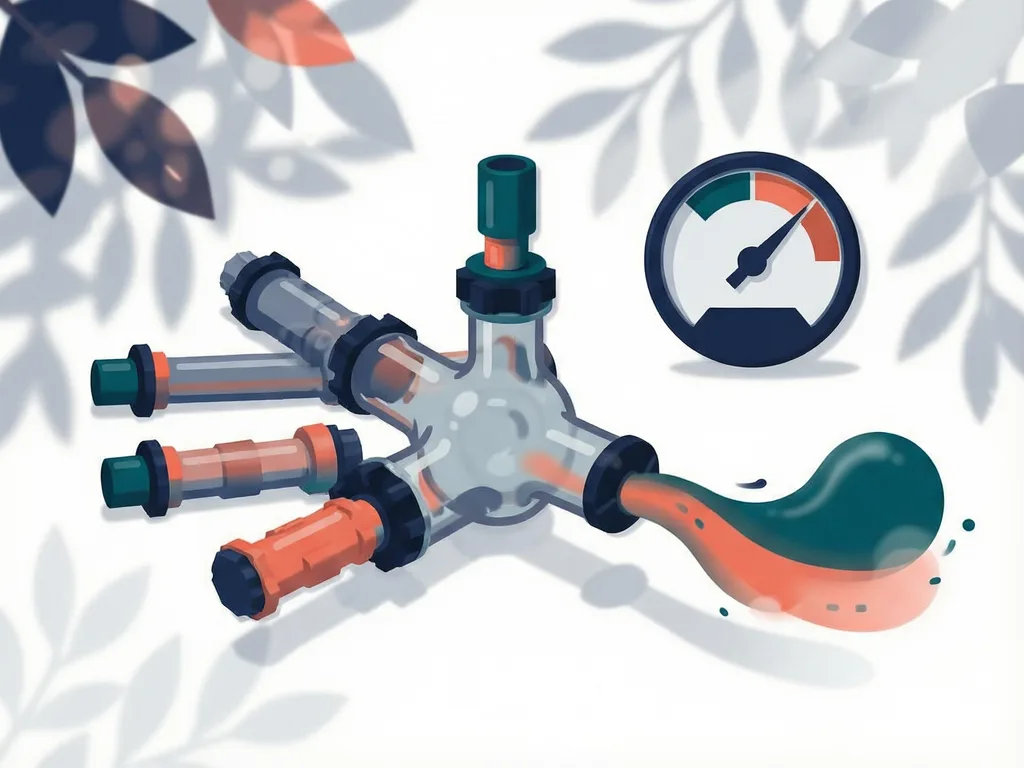
In the SFT and RWL tracks, the gray-box Diffusion Controller steering damper outperformed LoRA, the state-of-the-art parameter-efficient white-box approach, on HPS-v2 win rates while modifying significantly fewer internal model layers. In human evaluation panels, Diffusion Controller recorded the best subjective quality and prompt-matching results across complex, multi-attribute test prompts. End-of-training win-rate comparisons also pair the gray-box damper with Diffusion Controller-Naive, and the white-box J and S variants with LoRA; standard deviation is shown for HPS-v2 win rates, and a separate human-evaluated win rate is shown for PPO.
Runtime tuning and practical limits
A central feature is a single inference-time guidance strength parameter. Instead of choosing one fixed level of control, users can raise or lower the strength of the control constraints while generating images. The post says this lets prompt alignment be tuned on the fly without breaking baseline image stability or causing the visual distortions that can appear with overly aggressive guidance.
For readers, the value is not a new image model but a possible control layer for models already in use. If the approach works as described, teams may be able to improve prompt following in existing products without rebuilding the whole generator. The announcement does not provide pricing, deployment cost, latency or a list of supported model families beyond the named examples, so teams would still need to test the method against their own prompts, styles and safety constraints.
What comes next
The authors frame Diffusion Controller as a bridge between pure mathematics and modern creative tools. Because the control layer is separated from the model's core engine, they say future developers can use it beyond text-prompt matching. Immediate next steps mentioned include advanced personalization tools, safety mechanisms to help mitigate harmful content generation, and adapting the steering damper to control complex next-generation video models.
The post is labeled Algorithms & Theory and Machine Intelligence, includes a paper link, and acknowledges co-authors and collaborators from Google Research, Google DeepMind and academia. Related posts in the same feed are dated September 24, 2026 ("Automating coherent long-form video generation"), September 18, 2026 ("MilleMiglia: A realistic instance generator for middle-mile logistics"), and September 17, 2026 ("The future of practice: Enabling teachers to create learning interactives with generative UI").





Comments (0)