
The Rise of AI Agents: From AutoGPT to Claude Code
AI coding agents have moved beyond AutoGPT-style autonomous loops toward narrower, workflow-aware tools like Claude Code, Codex, Cowork, and OpenClaw. The key insight is that agent value now depends on workflow fit, permissions, verification, and human review rather than raw model intelligence. Benchmarks often miss real-world usability factors, while the practical sweet spot for agents lies in fast-to-verify tasks like boilerplate, migrations, and test scaffolding.
Key Takeaways
- AI coding agents have shifted from AutoGPT-style autonomous loops toward more workflow-aware tools such as Claude Code, Codex, Cowork, and OpenClaw.
- Agent usefulness now depends less on raw model cleverness and more on workflow fit, verification, permissions, and human review.
- Benchmarks can overstate real-world autonomy by ignoring retries, context usage, repo constraints, security, maintainability, and unexpected side effects.
- Agents are most useful for small, fast-to-verify tasks like boilerplate, migrations, test scaffolding, refactors, and diff summaries when paired with tests and CI guardrails.
- Teams should treat agents as supervised junior contributors, not fully autonomous developers, and avoid relying on them when production changes cannot be safely reviewed.
Meta description: See how AI coding agents moved from AutoGPT loops to Claude Code, Codex, Cowork, and OpenClaw, and where agents help today for developers, teams, and builders.

Tags: AI coding agents, Claude Code, Codex, AutoGPT, agent workflows
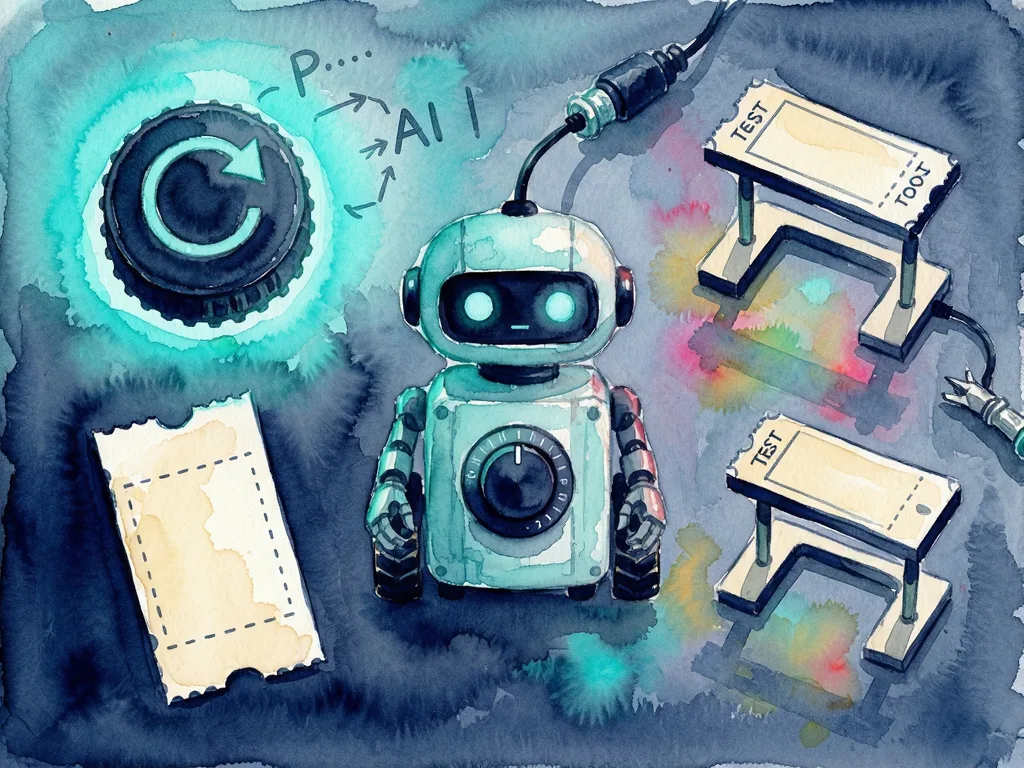
Featured image: Abstract friendly illustration of interconnected workflow nodes and code symbols, no people, logos, or text.
AI coding agents are no longer just a demo that loops forever. A Towards AI article traces the shift from AutoGPT-style autonomous loops to tools such as Claude Code, Codex, Cowork, and OpenClaw. For developers, technical leads, and builders, the practical takeaway is that agent value now depends less on raw model cleverness and more on workflow fit, verification, permissions, and human review. The article also points to a gap between benchmark scores and the messy reality of shipping code.
Why AutoGPT-style loops disappointed
AutoGPT became an early reference point for autonomous agents: a system that could take a goal, plan steps, call tools, and repeat until it seemed done. The idea was exciting because it suggested a machine could act like a junior developer without constant prompts. The reality was messier.
Long loops can drift from the original task, lose track of repository constraints, invent missing files, or spend tokens on actions that create more problems than they solve. In a controlled demo, an agent that tries many steps can look impressive. In a real codebase, the same behavior can be expensive, hard to audit, and difficult to stop cleanly.
The early wave did not fail because autonomous agents were impossible. It failed because the surrounding controls were immature. Teams needed safer permissions, clearer task boundaries, better memory, and a way to verify each step before it reached production.

What the newer tools signal
The names in the source point to a different model: narrower, workflow-aware agents rather than open-ended loopers. Claude Code and Codex are associated with coding workflows where the assistant can read files, run commands, or produce diffs inside a defined environment. Cowork and OpenClaw extend the conversation into collaborative or specialized tooling, though readers should check current product details before relying on them.
The common pattern is that useful agents are anchored to a task, a repository, a test harness, or a permission boundary. That matters because code work is rarely a single answer. It is a sequence of small, checkable moves: propose an edit, run tests, review a failure, adjust, then ask a human to approve.
This is a healthier design than pretending the agent can plan and execute a whole feature without supervision. The best tools make the human’s role easier: clearer changes, smaller scope, visible logs, and faster verification.
The benchmark blind spot
Benchmarks still matter. They show whether a model can produce a working patch on a known task. But they often miss what makes agents usable in production.
A benchmark may measure final correctness, not how many retries were needed, how much context was consumed, how many files were touched, or whether the agent broke an unrelated dependency. It may reward code that passes a small test suite while ignoring style, security review, maintainability, or the team’s existing architecture.

The source’s framing suggests the same lesson: scores can overstate autonomy when the task is short and isolated. For real engineering, the more useful questions are: can the agent operate inside the repo without surprising changes, can it explain its actions, and can it fail safely when it does not know enough.
Where agents are useful now
The practical sweet spot is where output is fast to verify. Agents can help with boilerplate, migrations, test scaffolding, refactors with clear boundaries, summarizing a diff, or translating one API pattern into another. They can also be useful when paired with linting, unit tests, type checking, and continuous integration, because those checks turn a vague “maybe correct” answer into a pass or fail signal.
They are less useful when the task is ambiguous, safety-critical, or dependent on tribal knowledge that has not been written down. A good rule is to treat an agent as a fast junior contributor who needs a senior reviewer: give it a small ticket, a clear definition of done, and a safe sandbox.
This also changes how teams should measure value. The question is not only whether the agent generated code. It is whether it reduced review time, lowered mechanical effort, and produced changes that fit the project’s constraints. If the agent creates more debugging than it saves, it is not useful yet.
Who should use it / who should skip it
Use this pattern if your team has tests, version control, review requirements, and a way to limit permissions. It is also worth trying when repetitive code work is slowing developers down, because the value comes from reducing mechanical effort, not replacing judgment.
Skip it, or at least slow down, if you expect a fully autonomous developer, if production changes cannot be reviewed, or if your codebase lacks guardrails. For now, the shift from AutoGPT loops to Claude Code, Codex, Cowork, and OpenClaw is best read as a maturation story: agents are becoming more useful when they are less magical.



Comments (0)