
AI Has Turned Integrations into the Vendor’s Responsibility.
AI report says Model Context Protocol servers shift integration work to vendors; hooks, kits, and skills shape 2026 agent tooling.
Key Takeaways
- The updated AI Agent Development Tools report reframes integration from API-heavy “integrability” toward “enterprise-readiness,” with Model Context Protocol (MCP) becoming a standard vendor responsibility.
- MCP moves much of the integration burden to service providers, who must publish and maintain servers exposing tools, resources, and prompts while agents mainly authenticate and discover capabilities.
- Valid schemas are not enough; skills and refreshed API standards such as OAuth 2.1, OpenAPI 3.1.1, GraphQL, gRPC, HTTP/3, Arazzo, and OpenAPI Overlays help agents use integrations reliably.
- Security is shifting toward non-human callers, requiring fine-grained authorization, token binding, replay protection, rate limiting, and behavioral analysis for high-volume agent traffic.
- Hooks and SDKs add deterministic control points around the agent loop, letting security and platform teams enforce policy before or after tool calls, shaping integration in 2026.
Meta description: The second iteration of the AI Agent Development Tools report says Model Context Protocol servers shift integration work to providers while hooks and kits shape 2026.
Tags: AI agents, Model Context Protocol, agent integrations, hooks, software development kits

For developers, security teams, and vendors tracking agent integrations, the second iteration of the AI Agent Development Tools report delivers a clear change: the report replaces integrability with enterprise-readiness. The shift signals a move away from 2020-style integration platform as a service thinking. In the report's framing, Model Context Protocol has gained enough traction that every vendor offers a server. Providers load tools, definitions, schemas, and access rules. An agent mostly needs to authenticate to a server and then use what it discovers.
This matters because the report describes vendor briefings where agent products said they integrate with the buyer's chosen agent tool. They did not describe that work mainly as APIs. They used hooks, software development kits, and Model Context Protocol. The old Zapier example of fetching a user record from MongoDB is no longer the center of the conversation.
Model Context Protocol Moves Configuration Work to Server Providers
In the older API world, the client carried most of the work. A provider exposed functions through endpoints and documented them. The API consumer then handled authentication flows, retries, data mapping, and breaking changes. Because each new system-to-system connection repeated that cost, integration platform as a service tools grew up to absorb it with visual wiring.
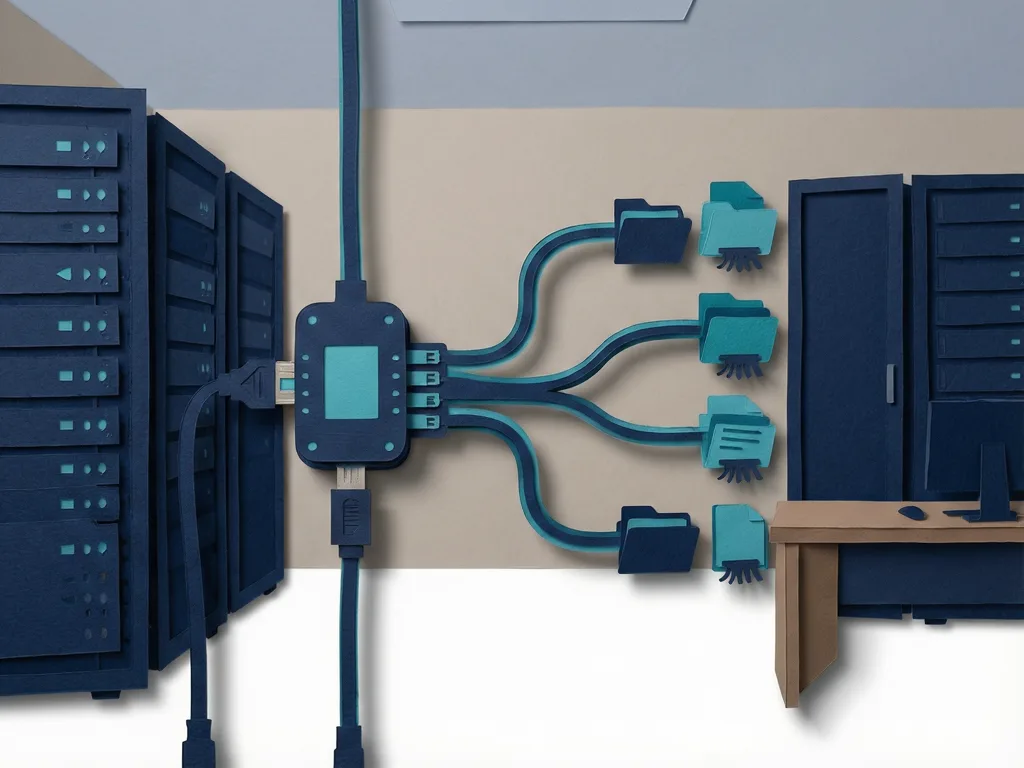
The newer pattern changes the division of labor. A provider publishes a Model Context Protocol server. A host application starts a client for that server and holds the connection, locally through standard input and output or remotely through a streamable Hypertext Transfer Protocol transport. The server exposes capabilities through a standardized protocol: tools for actions, resources for context, and prompts for templates. The client then decides when to call those capabilities.

That gives consumers a simpler path: discover what is available and let the model choose the right call. But it puts the difficult part on publishers. Providers must keep servers current against a fast-moving specification, manage discovery, and secure transport. The report notes that recent revisions made the protocol stateless with per-request capability discovery, and features can be deprecated between versions. If a service wants to be usable by agents, it now stands up and maintains a server.
Skills and Updated APIs Fill the Gaps
Publishing a valid schema is not enough for competent tool use. A Model Context Protocol server can expose a clean tool definition, and a model can parse it, but the agent still may not know the workflow: which tools to call, in what order, what provider conventions to follow, and how to handle edge cases. The report highlights skills as one answer. Skills are typically Markdown files loaded into the model's context at runtime. They instruct the agent on how to operate a specific integration. Some server providers now include skills templates as part of the product.
Underneath Model Context Protocol, the older API layer is also changing. The report describes Model Context Protocol as an API wrapper. It recommends OAuth over its HTTP transport, and the specification formally points to OAuth 2.1 as the mechanism for clients to obtain scoped access to servers. That authorization model works because APIs are getting refreshed.
The surrounding API layer has its own updates. GraphQL has had a specification refresh, gRPC is used for high-performance internal microservices, and HTTP/3 or QUIC offer faster transport. OpenAPI 3.1.1 reached full JSON Schema alignment. For agents, that alignment matters because a model can parse a specification more accurately. New standards such as Arazzo and OpenAPI Overlays can describe multi-step workflows and layer policy onto specifications without rewriting them.
Security is also moving toward non-human callers. The report lists proof-of-possession demonstration, token binding against replay, rich authorization requests for fine-grained scopes, financial-grade API profiles, dynamic rate limiting, and behavioral analysis aimed at agents that can generate thousands of requests per second.
Hooks, Software Kits, and the 2026 Balance
The second part of the integration story is control. Hooks are deterministic scripts run by a harness at fixed points in the agent loop: session start, prompt submission, before a tool call, after a tool call, and turn end. If an agent tries to call a tool, a hook can first send a post request to a service and receive a yes-or-no verdict. It can also run a local shell script or binary, such as Python or Bash, passing context through standard input and returning exit codes.
Hook configuration lives in a JavaScript Object Notation file inside the project, and the harness communicates with the hook over standard input and output. The report points to Claude Code hooks as an example. They can fire in three cadences: once per session with SessionStart and SessionEnd, once per turn with UserPromptSubmit, Stop, and StopFailure, and on every tool call with PreToolUse and PostToolUse.

These hooks are typically owned by security or platform teams. They add deterministic policy to a non-deterministic agent flow, create a centralized audit trail that streams every tool call to a Security Information and Event Management system, and allow an operator to stop an agent process during a run if the model behaves badly.
The other trend is bundling. Even though many providers now publish Model Context Protocol servers, a growing share of integration work in serious agent applications is embedded in application code through software development kits. The Claude Agent SDK is the clearest example. It can register a Model Context Protocol server in three ways: as a local process using standard input and output, as an HTTP or Server-Sent Events service for cloud-hosted servers and remote APIs, or as an in-application server defined directly inside the application.
The in-application option avoids a separate server process. Developers define custom tools in the same codebase as the agent, and those tools connect when the software development kit processes the initial request. Subagents extend the same logic. Developers can compose agent instances through an agents parameter or Markdown files in `.claude/agents/`, isolate their context, run them in parallel, and restrict each agent's tools. A documentation reviewer, for example, can receive only Read and Grep and be prevented from touching other capabilities.
The report's larger conclusion is that integration is now a coding concern. Decisions about what to embed, how to compose agents, and which tools to allow have moved onto the application developer's desk. In the report, that shift was reflected by moving integrations under a codability theme.
Looking toward 2026, the report warns against treating Model Context Protocol as the only path. Some developers and vendors focus only on servers and skills while ignoring APIs. Providers will likely need to support several avenues at once. The absolute number of Model Context Protocol tool calls may grow, but the share compared with APIs, hooks, and software development kits may become more balanced. Economics also play a role: not every tool call is worth a token-heavy path, and simpler API calls may remain preferable.
The report closes with a practical option: n8n is listed as a source for API integrations, a software development kit, Model Context Protocol servers, or hooks.


Comments (0)