
MovieRoll is a systematic framework for rolling out long-form videos.
MovieRoll combines streaming fine-tuning, distillation and HieraKV cache compression to produce longer AI videos with stable quality, memory savings.

Key Points
- MovieRoll is a base-to-distilled framework for streaming long-form video generation, addressing quality drift beyond training length, self-generated history management, and cache-memory growth.
- MovieRoll-Base uses Window-wise Teacher Forcing to train multi-step generation with richer denoising signals while preserving causal streaming structure.
- HieraKV compresses hierarchical KV caches by keeping full history in shallow layers and only sink/recent history in deeper layers, reducing memory use by up to 78% without sacrificing quality.
- MovieRoll-Distilled applies CuLT-DMD long-rollout distillation to create a few-step generator efficiently, using gradient averaging to avoid memory blow-up during long training.
- On HeliosBench, MovieRoll maintains strong quality up to 60 seconds, showing practical progress toward scalable, low-memory streaming video generation.
Researchers behind MovieRoll have introduced a base-to-distilled framework for streaming video generation that holds quality well beyond the length of the clips it was trained on. The work targets three linked problems in long-form AI video: drift once a model runs past its training horizon, the difficulty of handling self-generated history, and the growing cost of cache memory as a stream gets longer. MovieRoll chains streaming fine-tuning, long-rollout distillation and long-horizon inference into one pipeline, and reports gains on both quality and memory use.

Two Models, One Pipeline
MovieRoll comes in two forms. MovieRoll-Base is a robust multi-step generator built through streaming fine-tuning. MovieRoll-Distilled is a few-step generator produced by long-rollout distillation on top of that base. Both share the same inference-side techniques for extending generation past the training horizon, which is what lets the framework scale from short training clips to minute-long outputs.
Building the Base With Window-wise Teacher Forcing
The first stage, Window-wise Teacher Forcing (WinTF), establishes the multi-step base. It denoises chunks jointly at progressive noise levels, using bidirectional attention inside each window while allowing causal access to preceding history. That combination gives the model a richer training signal than denoising one chunk at a time, without breaking the causal structure that streaming generation depends on.
HieraKV Cuts Cache Memory by Up to 78%
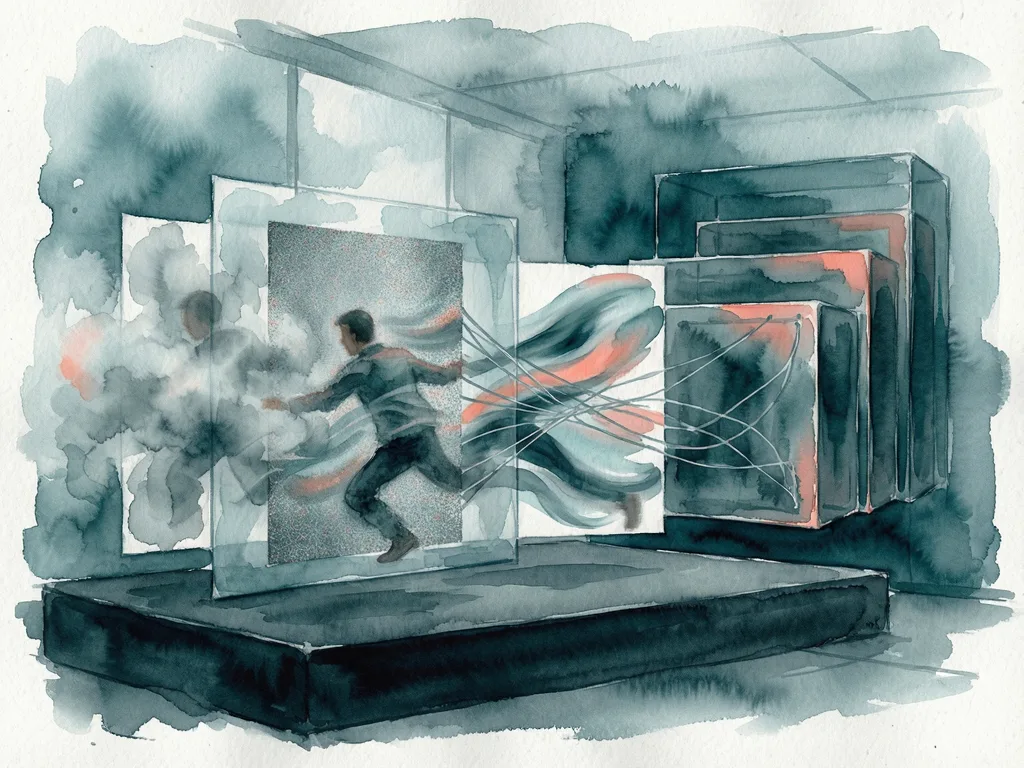
Retaining history is where memory costs bite. Hierarchical KV-cache compression (HieraKV) exploits the layer-wise attention patterns of the model: shallow layers keep the full history, while deeper layers retain only sink and recent history. According to the researchers, this reduces cache memory by up to 78% while improving generation quality rather than trading it away. For anyone running long streams, that is the headline number, since cache growth is the main reason streaming video generation becomes impractical at length.
CuLT-DMD Makes Long-Rollout Training Affordable
On top of the base, cumulative long tuning with distribution matching distillation (CuLT-DMD) turns the multi-step model into a few-step generator. During each long self-rollout, parameters are held fixed and local gradients are averaged before a single update. Each update therefore combines supervision across temporal positions while keeping only one local computation graph in memory. That design is what makes long-rollout training of a few-step generator efficient, since the alternative would require holding graphs for the whole rollout.
Reaching Past the Training Horizon
Two further techniques extend generation beyond the horizon seen in training. KV recomputation bounds the context for both models, capping how much history is carried forward. Guidance annealing (AnnealCFG) reduces guidance toward the clean endpoint to stabilize MovieRoll-Base. Alongside these modeling advances, FBCA attention and PS-VAE decoding support efficient training and streaming output.
Results on HeliosBench
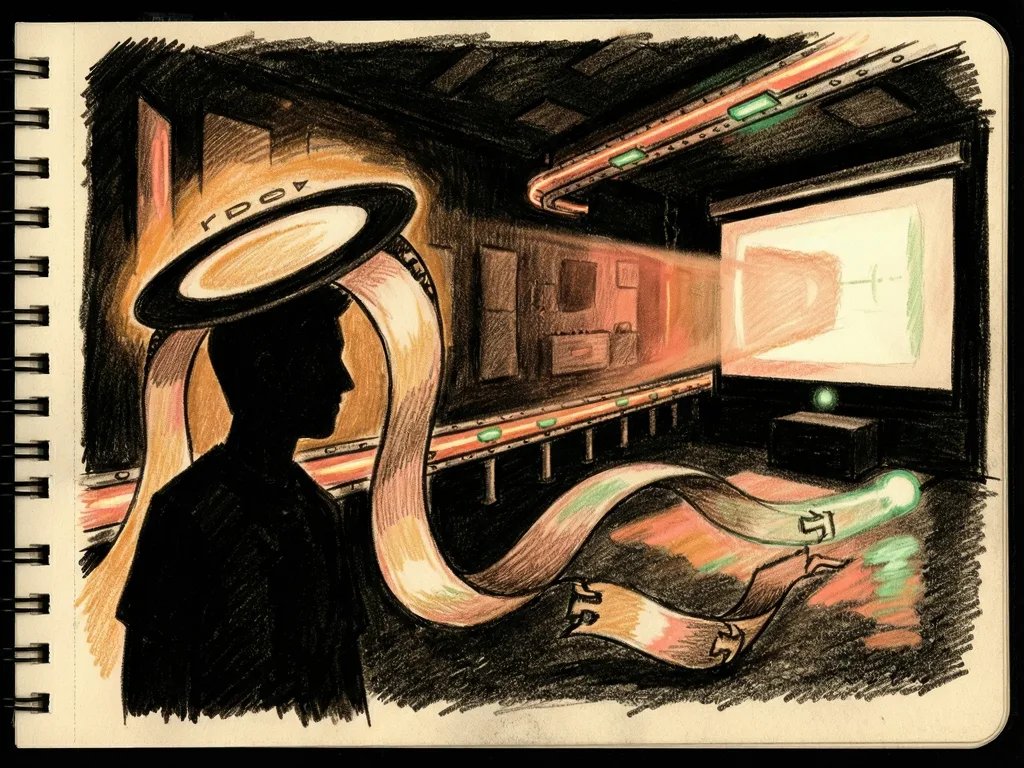
On HeliosBench, MovieRoll-Base remains competitive at 30 seconds after training only on videos of up to 15 seconds, meaning it runs at roughly twice its training length without collapsing. MovieRoll-Distilled achieves the highest total scores among the compared methods across single- and multi-event evaluations up to 60 seconds, combining sustained naturalness with active motion. The framework description does not report per-metric breakdowns, so the ranking should be read as an aggregate result rather than a claim of dominance on every measure.
What This Means for Streaming Video Generation
The practical takeaway is that the two biggest obstacles to long AI video, memory growth and quality decay past the training window, are being attacked together rather than separately. HieraKV's approach of spending full history only where attention needs it is a reusable idea for any transformer-based streaming model with a KV cache. CuLT-DMD's gradient averaging offers a way to train few-step generators on long rollouts without the memory blow-up that usually makes such training infeasible. For readers tracking video generation systems, the interesting question now is how these techniques hold up outside HeliosBench and at longer durations than the 60 seconds evaluated here.



Comments (0)