
Advancing research in the life sciences
GPT-4b micro is a custom AI model developed by OpenAI and Retro Biosciences to engineer proteins. It redesigned Yamanaka factors, improving stem cell reprogramming efficiency beyond natural proteins. The collaboration shows AI can accelerate drug development, support longevity science, and act as a genuine scientific partner, though clinical applications remain years away.
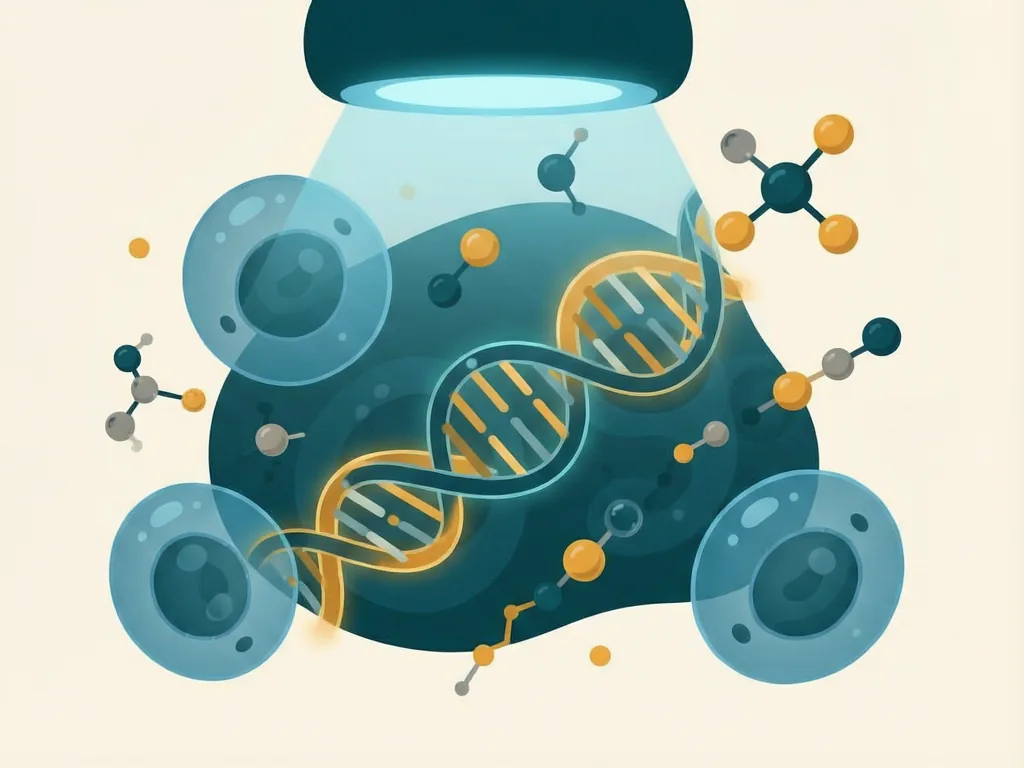
If you've ever wondered whether AI can do more than write emails and generate images, this story is for you. In this article, we'll look at GPT-4b micro, a specialized AI model developed through a collaboration between OpenAI and Retro Biosciences, and explore how it helped scientists redesign proteins that could play a role in stem cell therapy and the broader science of aging.
What Is GPT-4b micro?
Most people know GPT-4 as a chatbot that answers questions or drafts documents. GPT-4b micro is a different beast entirely. It's a custom-built model designed specifically to work with proteins—the tiny molecular machines that carry out nearly every task in our cells.
Rather than being trained to handle general language tasks, this model was engineered to understand the building blocks of proteins, known as amino acids, and to suggest new ways of arranging them. Think of it less as a chatbot and more as a highly specialized design assistant for molecular biology.
The collaboration between OpenAI and Retro Biosciences, a company focused on extending human healthspan, gave researchers access to a tool that could tackle problems traditional lab methods handle slowly and expensively.
The Yamanaka Factor Challenge
To understand why this model matters, you need to know about a breakthrough from nearly two decades ago. In 2006, Japanese researcher Shinya Yamanaka showed that ordinary cells could be reverted into stem cells by switching on just four specific proteins, now famously called the Yamanaka factors.
This discovery won a Nobel Prize and opened the door to regenerative medicine—the idea that we might one day repair damaged organs or rejuvenate aging tissue. The catch? The natural versions of these four proteins are surprisingly inefficient. Only a small fraction of cells actually convert, and the process can be unpredictable.
That's where GPT-4b micro came in. Researchers asked the model to help redesign two of the Yamanaka factors to make them work better.
What the Model Actually Achieved
According to reports on the collaboration, GPT-4b micro suggested modifications to the protein structures that no human team had proposed. The suggestions weren't minor tweaks—the model proposed substantial redesigns of the amino acid sequences.
Early lab results indicated the redesigned proteins performed notably better than their natural counterparts, improving the efficiency of the cellular reprogramming process. This is significant because more efficient reprogramming could make stem cell therapies more practical, more affordable, and safer for real-world medical use.
What makes this noteworthy in the AI research community is that this isn't just pattern recognition. The model appeared to develop something resembling an intuitive understanding of how protein components interact—a task that has challenged biologists for decades.
Why This Matters Beyond the Lab
This collaboration represents a meaningful shift in how AI and biology intersect. Here's why it could matter to more than just researchers:
Faster drug and therapy development. Traditional protein engineering can take years of trial and error. AI-assisted design could compress that timeline dramatically.
A new model for AI companies. Rather than focusing only on consumer products, OpenAI demonstrated that its technology can contribute to fundamental scientific discovery, opening a path for AI to help tackle aging and disease.
Longevity research momentum. Retro Biosciences has ambitious goals around extending healthy human lifespan, and tools like this model could accelerate progress toward that aim.
It's worth noting that this research is still at an early stage. Promising lab results don't automatically translate into approved therapies, and any real-world medical applications would face years of further testing and regulatory review.
The Bigger Picture: AI as a Scientific Partner
The GPT-4b micro project fits into a larger trend of AI models being applied to biological problems. Other research groups have developed protein-structure and protein-design systems, and this collaboration shows that large language model technology can be adapted for molecular science too.
The key takeaway for non-experts is this: AI is no longer just a tool for writing and searching. It's becoming a genuine partner in discovery, capable of proposing solutions in domains where human expertise, while deep, is limited by time and the sheer complexity of the problem space.
Proteins are staggeringly complex—each one is a chain of amino acids that folds into an intricate 3D shape, and small changes can have huge effects. A model that can navigate that complexity and suggest useful new designs is doing something genuinely valuable.
What Comes Next
Neither OpenAI nor Retro Biosciences has announced plans to release this model publicly, and detailed technical information remains limited. The findings reported so far come from early experiments, and much more work is needed before redesigned proteins could reach clinical settings.
Still, the direction is clear. As AI models become more capable in scientific domains, collaborations like this one may become a common way that breakthroughs happen—computers proposing designs, and scientists testing and refining them in the lab.
For anyone following the future of medicine, aging research, or applied AI, GPT-4b micro is a project worth keeping an eye on. It offers a glimpse of a future where the hardest problems in biology get a powerful new set of tools to help solve them.






Comments (0)