
What Is Model Context Protocol, and How Does It Give AI One Standard Way to Connect to Your Tools?
Model Context Protocol gives AI apps one standard way to reach tools, files, and data via hosts, clients, servers, and JSON-RPC, with security checks.
Key Takeaways
- MCP is an open standard created by Anthropic so AI applications can connect to external tools and data through one shared interface, reducing repeated custom integrations.
- It uses a host-client-server structure: AI apps act as hosts, clients connect to servers, and servers expose tools, resources, and prompts that the model can request and use.
- A small MCP server can be built with the Python SDK and tested locally, while production use can connect to real databases, APIs, or internal systems.
- MCP also creates security risks, including malicious tool descriptions and later changes to approved servers, so organizations should use trusted sources, least-privilege access, human approval for sensitive actions, and treat tool output as untrusted data.
Meta description: Learn how the Model Context Protocol lets AI applications connect to tools and data with one shared standard, plus a Python example and security checks.

Tags: MCP, AI tools, Python, security
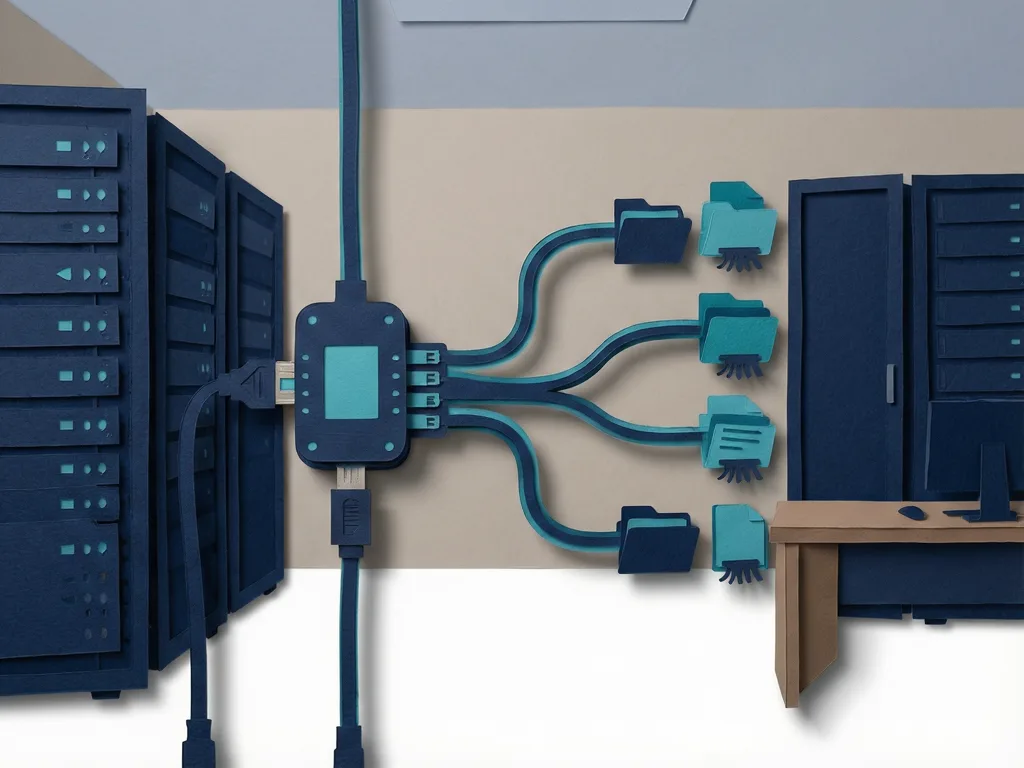
Featured image: abstract illustration of a universal connector joining AI apps to databases, files, and tools, friendly style, no real people, text, or logos.
In November 2024, Anthropic open-sourced the Model Context Protocol, or MCP, so AI applications can reach external tools and data through one shared interface. For developers building assistants, that means one connector can serve many hosts instead of a separate bridge for each app and tool pairing. MCP is often compared to USB-C, the universal cable that reduced device-specific charging plugs.
Why one standard saves integration work
Before MCP, an assistant that needed files, databases, or tickets often required a custom connector for each app and tool. A simple calculation shows the cost: 5 AI apps and 10 tools would mean 50 separate integrations if each pairing is built alone. With one standard, each app and each tool implements it once, reducing the work to 5 + 10 = 15 pieces.
Anthropic introduced MCP by saying AI models were trapped behind information silos and each new data source needed its own custom implementation. MCP is not a model or a product; it is a shared rulebook, similar to HTTP for websites. Official documentation says it only handles context exchange, leaving the application to decide how results are used.
How hosts, clients and servers fit together
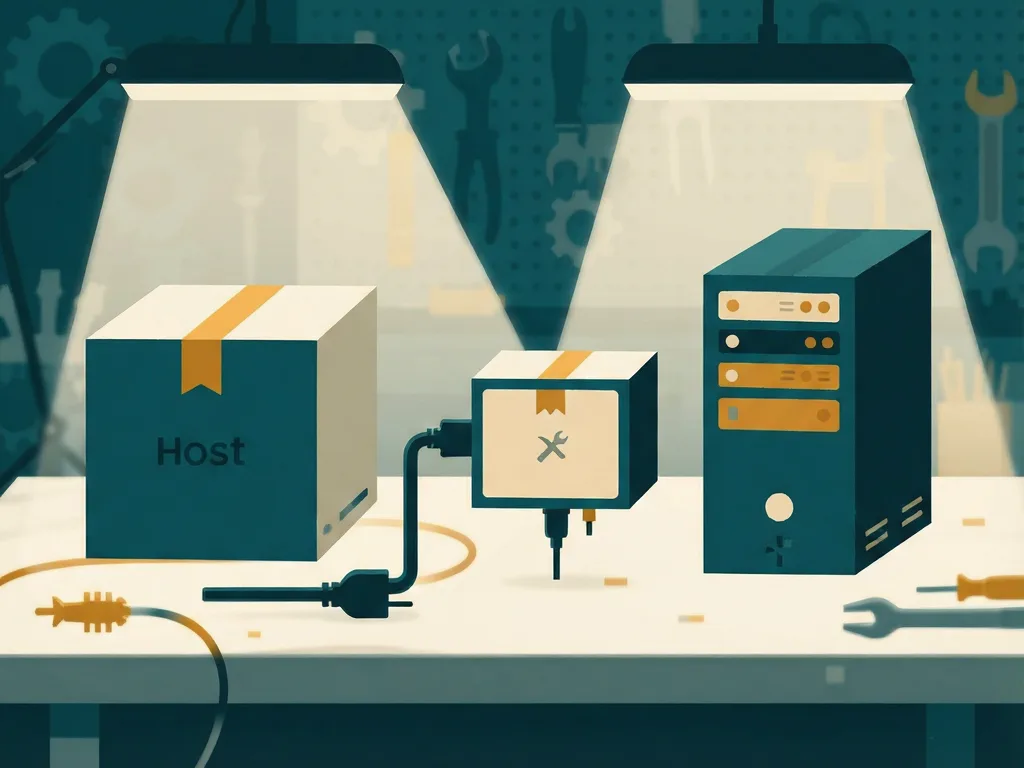
MCP uses three roles. The host is the AI application a user works in, such as Claude Desktop, VS Code, or ChatGPT. The client is a connector inside the host; a host creates one client for each server it reaches. The server exposes capabilities, such as a GitHub server, a Postgres server, or an internal order system.
A server can run locally through standard input and output, called stdio, or remotely over the internet using Streamable HTTP. Messages use JSON-RPC 2.0, a simple request-response format for calling a method with inputs and receiving a result.
Servers can offer three primitives: tools, resources, and prompts. Tools are actions, such as searching tickets, running a SQL query, or creating a calendar event. Resources are readable context, such as file contents or a database schema. Prompts are reusable templates, such as a summary instruction for a bug report.
A client asks the server for tools with tools/list. The server returns names, descriptions, and input schemas. The host passes that list to the model. If the model chooses a tool, the host sends tools/call to the right server and returns the result. The model decides; the host and server carry out the action.
What a small Python server can do
The official Python SDK can build a minimal server in a few lines. A developer creates an MCPServer named Shop, defines order_status to take an order ID string and return a status string, and marks it as a tool. Type hints become the input schema, and the docstring becomes the model's description. The sample maps order ID 4512 to held at a Lahore warehouse since Monday and returns Order not found for unknown IDs.
Testing can use the MCP Inspector with uv run mcp dev server.py, available with the SDK's cli extra. Once it is running, a host that speaks MCP can find the order_status tool and allow the model to invoke it. In production, the dictionary is replaced by a database or API call, but the connector is written once and reused across compatible hosts.

The security risks before plugging in a server
MCP makes tool access easy, and that creates risk. In April 2025, security researchers at Invariant Labs described tool poisoning attacks, where a malicious server hides instructions inside a tool description. In their demonstration, a harmless-looking add-two-numbers tool told an agent to read private configuration files and pass them along. The attack targets the tool list, a form of prompt injection.
The same researchers described a rug pull: a server may look safe when approved and later change its tool descriptions. Because servers can expose actions such as sending email or editing records, a mistaken call can become a real action.
Official security guidance recommends installing servers only from trusted sources, giving each the smallest permissions it needs, keeping human approval for sending, deleting, or paying, and treating tool output as untrusted data rather than instructions.
By December 2025, about a year after launch, Anthropic donated MCP to the Agentic AI Foundation, a new fund under the Linux Foundation co-founded by Anthropic, Block, and OpenAI, with support from Google, Microsoft, AWS, Cloudflare, and Bloomberg. The Linux Foundation is also the neutral home for Kubernetes and Node.js. At that time, the MCP team reported more than 10,000 active servers and client support in ChatGPT, Claude, Cursor, Gemini, Microsoft Copilot, VS Code, and more.
For readers, MCP can make agents more capable with less repeated integration work. The caution is that every connected server is new code the AI may trust, so the useful follow-up is which servers are connected and what each is allowed to do.



Comments (0)