
ChatGPT can now make purchases for you, but the trust lies with the bank rather than the agent.
ChatGPT Wallet lets AI agents shop via tokens and biometric consent, moving trust to banks and card networks after Visa's agentic commerce failures.
Key Takeaways
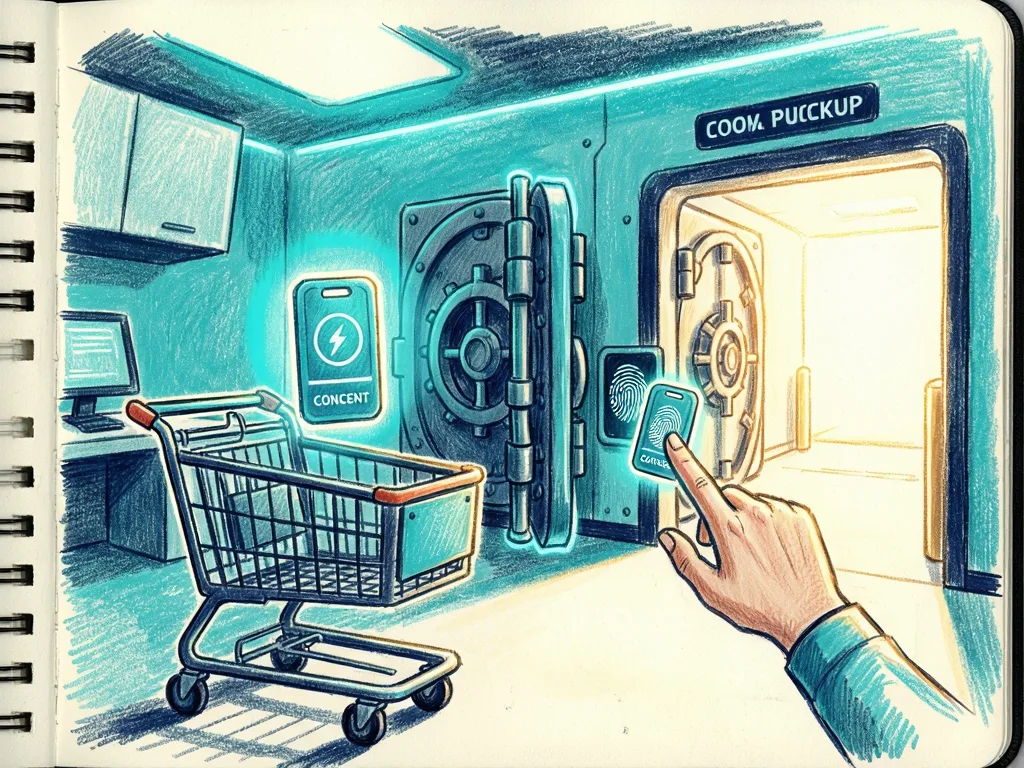
- OpenAI's ChatGPT Wallet lets AI agents shop for users, but each purchase requires a payment token and biometric approval to keep real card details away from the agent and merchant.
- The design reduces risk by making agent mistakes narrower, visible, and reversible, rather than exposing broad card credentials that could be misused until canceled.
- Visa's agentic commerce benchmark shows that failed AI shopping attempts often still reach checkout, reinforcing the need for consent, tokenization, and payment-network controls.
- Major platforms are converging on the same boundary: consent and payment credentials should stay outside AI agents, while banks and networks handle transaction protection and disputes.
- Consumer trust in AI payments remains low, and enterprises should avoid placing real card numbers in agent tools, using tokenized or virtual cards with strict limits instead.
OpenAI Launched ChatGPT Wallet on November 13, 2026, With Tokens and Face ID
Meta description: OpenAI launched ChatGPT Wallet on November 13, 2026, using payment tokens and biometric approval to reduce risk when dots shop for users at checkout.
Tags: ChatGPT Wallet, agentic commerce, AI agents, OpenAI, Visa
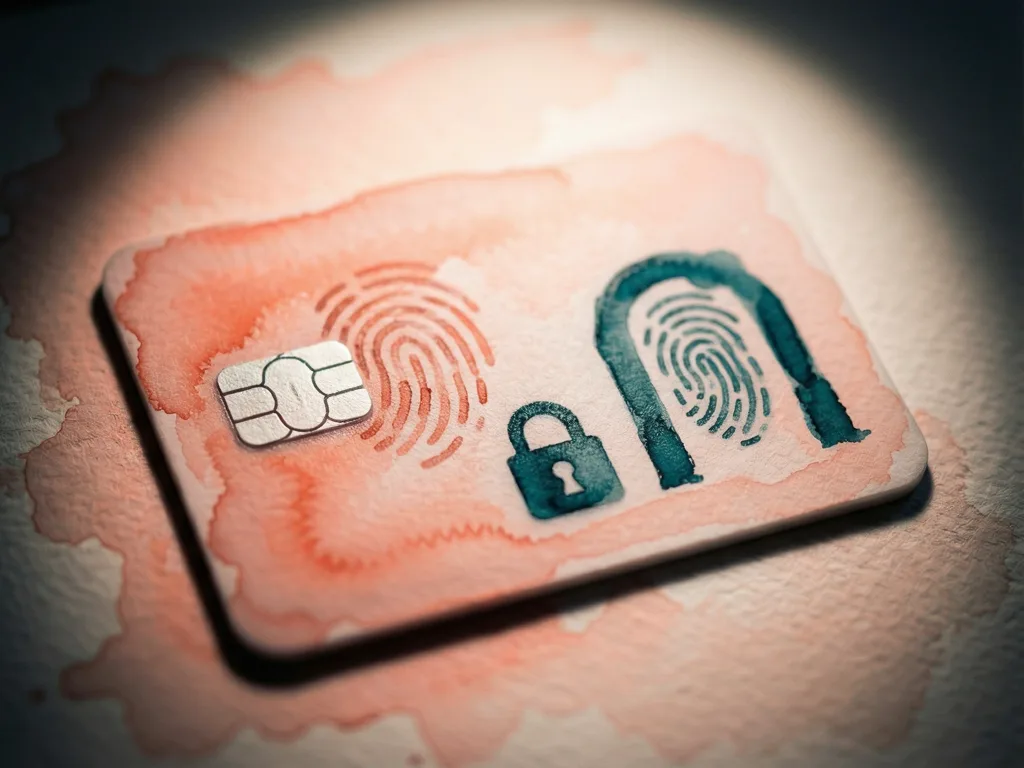
Featured image: abstract friendly illustration of a digital wallet protected by a token and a biometric approval symbol, no people, logos or text
OpenAI launched ChatGPT Wallet on November 13, 2026, giving its AI agents, called dots, a controlled way to shop for users. The design adds two barriers: a payment token instead of a real card number, and a biometric check such as Face ID or a fingerprint scan before each purchase. The user links a card once, checks the basket, the final amount and the card to be charged, then confirms. The payment network issues the token only after that approval, and the merchant is paid without the agent or merchant seeing the underlying card details.
The purchase flow keeps the card away from the agent
A simplistic design hands the agent a card number and trusts it to complete checkout forms. A demo can look fine, but the credential remains broad. If the software is confused, tricked by a hostile page, or makes an error, it can still present a payment method to many merchants until the card is canceled.
ChatGPT Wallet changes the object the agent carries. The payment token is a substitute card number with its own security code and expiration date. A biometric approval creates a record of what the agent was authorized to buy: the exact basket and the exact total. The mistake does not disappear, but it becomes narrower, visible and reversible.
Visa's benchmark shows why mistakes need a ceiling
Visa released the Agentic Commerce Benchmark on November 5, 2026. It evaluated 22 AI models from 12 labs in 15 practical shopping tasks, including TV and laptop purchases. The models failed 42.8% of runs. Passing all three attempts in one scenario happened only 34.2% of the time. In 54% of failed runs, the AI still completed a purchase.
The failed runs do not always stop at the point of error; many still reach checkout. That shapes the design requirement. A payment system cannot assume the agent will behave. It needs to limit what the agent can access and require a human sign-off for the transaction. The card networks already handle difficult payment problems at scale, including fraud scoring, chargebacks, liability rules and tokenization. Plugging into that infrastructure is less risky than asking an AI lab to rebuild the money layer from scratch.
Networks and platforms are converging on consent outside the agent
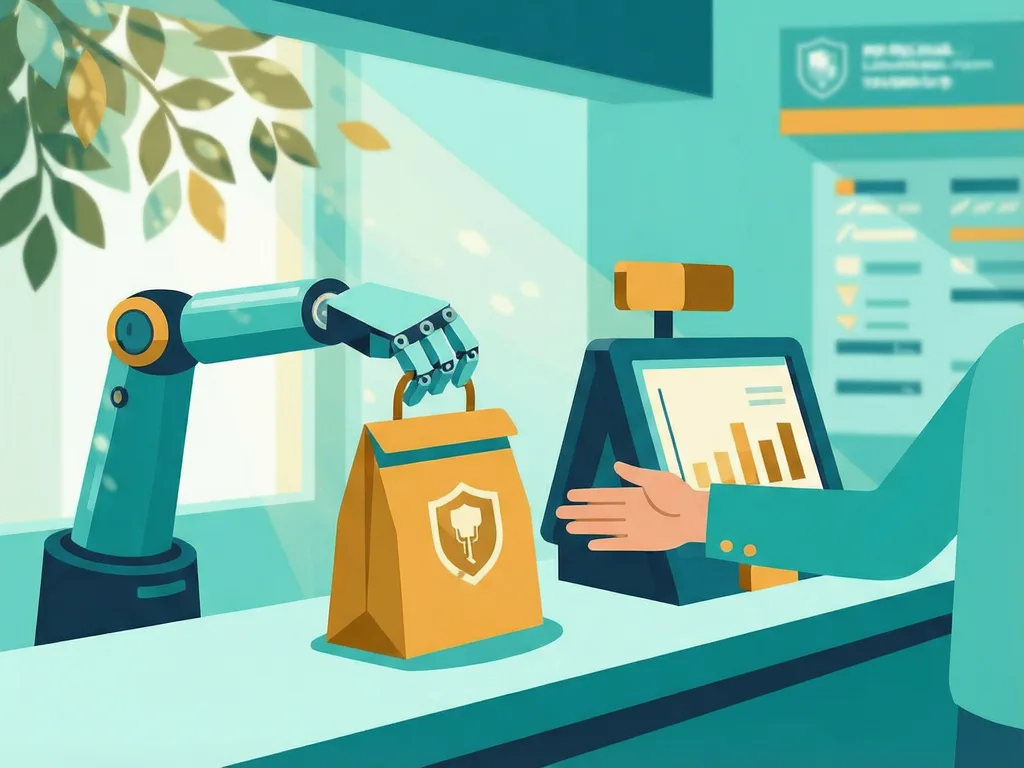
OpenAI describes a division of labor in which users transact directly with businesses. Merchants keep pricing, fulfillment, returns and customer service. Banks and payment networks bring their expertise in evaluating transactions. Card rewards remain available, and protections for eligible disputes continue, including cases where an item is defective.
Other companies are moving toward the same boundary between agent and credential. Mastercard launched Agent Pay in 2025 with agentic tokens tied to a verified agent and a specific user, adding spending controls and proof of consent. In October 2026, Mastercard expanded the Agent Pay Trust Framework with identity, fraud and behavioral signals and a score that helps issuers judge whether an agent is legitimate. Visa Intelligent Commerce combines tokenized credentials, authentication and spend controls, and Visa has announced a strategic partnership with OpenAI. Google's Agent Payments Protocol, AP2, uses cryptographically signed mandates to show what the user approved, whether the human is present or the agent acts within preset limits.
The vendor labels differ, but the boundary is the same: consent and payment credentials should stay outside the agent.
Consumer trust is still behind AI usage
Visa's Trust Index, released in September 2026, found that 72% of US consumers had used an AI assistant, but only 23% trusted AI to handle payment transactions on their behalf. TechCrunch reported that DoorDash and Uber have so far seen low numbers of orders placed by AI agents, while Meta's Muse, with more than 10 million users, has made AI-assisted shopping a top activity in its app.
Trust grows less from model quality than from bounded loss: no card exposure, a signed record for each purchase, and the same dispute route users already understand. The product's value lies in routine controls, not in showing how smart dots can be.
Companies and merchants need to decide before agents spend

The issue also extends inside businesses. Companies are already assigning agents money-related tasks, from API credits and travel booking to software renewals, supplies and invoices. Visa is piloting AI agents that pay supplier invoices with BILL and Billtrust.
Finance teams should ask: if an agent makes the wrong purchase tomorrow, what stops it, who sees it and who pays? If the only control is a corporate card number placed in the agent's configuration, the company cannot estimate its exposure. The loss is not bounded by design; it is bounded by luck, and nobody can say how large it could be.
OpenAI says the next step is to let users pre-approve purchases within clear parameters, such as spending limits, purchase categories or time periods, with safeguards built on today's biometric checks and authorization records. Per-purchase approval is easier to make safe. The harder step is pre-approving a budget; that is where controls must be tested.
For companies that let agents buy, the practical controls are clear. An agent should not be configured with an actual card number. Use virtual or tokenized cards, one per agent or task, with a hard limit, a merchant category restriction and an expiry date. If a bank cannot issue them, raise that with the bank this month. Allow small recurring purchases within a pre-approved budget, but require a named person to approve anything above the threshold on a device they control, with the basket and total in front of them. Keep every approval and transaction record in the payment system or bank, not only in the agent's own memory, because that record is needed in a dispute or audit.
For merchants, the task is to be reachable and readable. Merchants should avoid accidentally rejecting the agents they want. OpenAI's Commerce Partner Playbook instructs businesses to set CDN or firewall rules so signed agent requests can be recognized through Web Bot Auth, and warns that general security measures can block ChatGPT agents by accident. TechCrunch notes that Amazon, the largest retailer to ban AI agents, is steering users to its own assistant. Merchants should set that policy on purpose.
Merchants should also talk to payment and fraud providers. OpenAI says Wallet's tokens work with existing checkout flows, but risk systems may still flag legitimate agent purchases and decline them. It names Forter, Riskified, Sardine, Signifyd, Adyen, Checkout.com and Stripe among partners working on this. Catalogs need accurate product data, current prices and stock, and clear return terms. If an agent cannot parse an offer, it will look somewhere else.
Adoption depends on transaction controls
Public discussion often compares agents on model quality: which finds the best deal, which understands the user best. Those capabilities matter, but adoption will depend more on the controls behind the transaction: tokens, signatures, biometric approvals, dispute rules and fraud controls. OpenAI's ChatGPT Wallet is notable because it keeps the agent away from direct card data and leaves trust with the payment system. The firms that scale will be those that let existing payment institutions handle trust.





Comments (0)