
Tau Indian Bank Benchmark provides a procedure-aware and action-oriented evaluation of tool-using conversational agents.
TauIndianBankBench evaluates AI banking agents on 1,000 tasks by checking outcomes, required steps, and unrequested changes, exposing hidden failures.

Key Takeaways
- TauIndianBankBench evaluates tool-using conversational AI agents on 1,000 simulated Indian retail banking tasks.
- It measures more than the final database state by checking required procedure steps and unrequested changes.
- Outcome-only scoring can hide 6.5-12.0% of process failures, making some agents appear successful when they skipped required steps.
- The benchmark helps builders and evaluators compare agents on procedural reliability, not just final answers.
- It is public with available paper, dataset, and code, and invites community contributions and model evaluations.
Meta description: TauIndianBankBench checks required steps in 1,000 Indian retail banking tasks and shows outcome-only scoring can hide 6.5-12.0% process failures.

Tags: TauIndianBankBench, AI agents, banking benchmark, simulated customer, procedure compliance
Featured image: abstract, friendly illustration style, no real people, no logos, no text.
TauIndianBankBench is a benchmark for researchers and builders who want to test AI agents on Indian retail banking tasks. It gives readers a way to measure more than the final answer: it checks whether an agent reaches the correct database state, whether it completes every required step, and whether it makes any unrequested changes. The benchmark contains 1,000 tasks run with a simulated customer.
Why Final State Alone Can Be Misleading
Most agent benchmarks check the final database state. That approach works when the correct end record proves the correct action. Banking tasks are not always like that. Some required steps do not change any records. Getting a closure quote before closing a deposit is one example. The quote is part of the customer-facing procedure, but it may not create a database entry that a final-state checker can inspect.
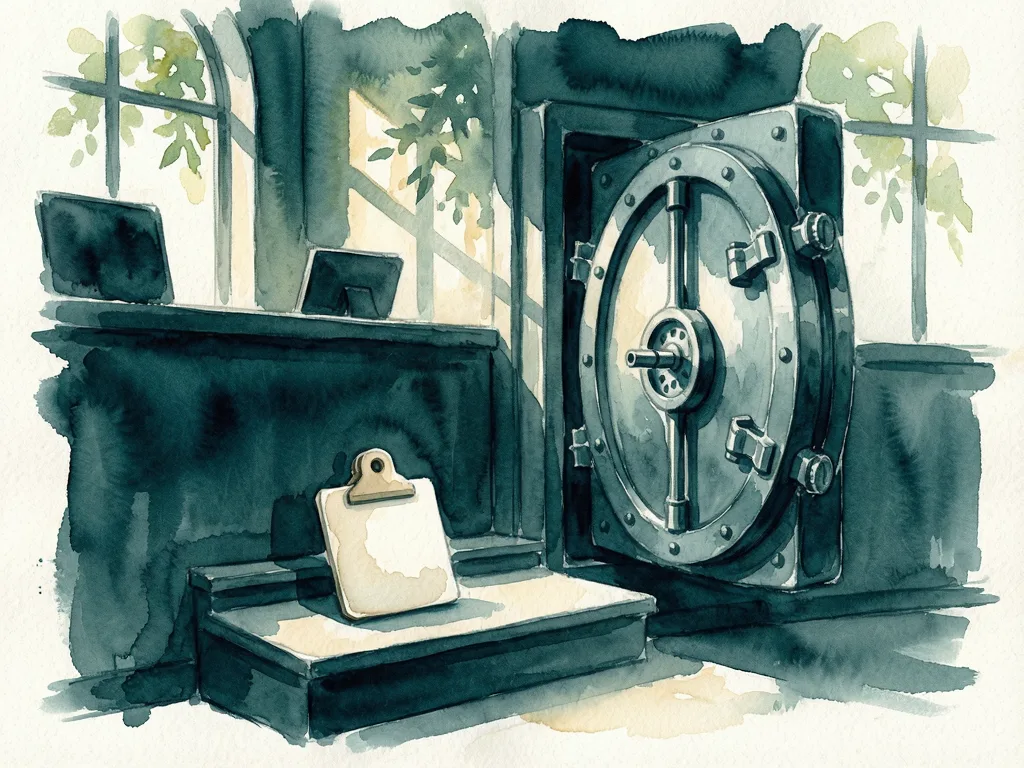
If an agent skips that step, closes the deposit, and leaves the database in the expected final state, a score that only checks the outcome can mark the session as successful. The benchmark’s author highlights this gap: with outcome-only scoring, 6.5-12.0% of sessions across all models were counted as successes even though the agent broke the procedure.
That range matters because it shows that a model can look reliable while still failing the rules that make the task behave correctly. For banking agents, the process is part of the result. A shortcut that reaches the right database state may still be wrong if it skips a required customer step.
What TauIndianBankBench Measures
TauIndianBankBench uses simulated customer conversations to evaluate agents on Indian retail banking tasks. The simulated customer lets the benchmark test the flow of the interaction, not just the final data mutation. It scores the outcome, but it also checks whether the agent completed every required step and whether it made any changes the customer did not request.
This makes the benchmark useful for teams that need to compare models on procedural reliability. A final-state score tells whether the database ended correctly. A process-aware score tells whether the agent got there in the required way. The two views can disagree, and TauIndianBankBench is designed to expose that disagreement.

The project is public. The paper is at https://arxiv.org/abs/2610.30161, the dataset is at https://huggingface.co/datasets/NPCI/tau-indian-banking, and the code is at https://github.com/npci/TauIndianBankBench. The author invites contributions, including new tasks, procedure fixes, and additional banking flows. Contributors can open a pull request on the dataset repository. Teams can also evaluate their own models against the benchmark and share the results.
What the Results Suggest for Builders
The main lesson is that banking-agent evaluation needs more than one signal. A model that passes a final-state test may still be skipping steps that do not leave a trace in the database. TauIndianBankBench adds that trace check by scoring required steps and unrequested changes alongside the outcome.
For builders, this gives a clearer way to compare agents when the final answer is not enough. For evaluators, it gives a way to question a success rate that comes only from outcome checks. The 6.5-12.0% figure across all models is a concrete reminder that process failures can hide inside sessions that are counted as successes.
The next step is community growth. The author says contributions are welcome and encourages readers to upvote the paper and like the dataset so more people can discover it. They are also open to questions and to seeing results from other teams evaluating their own models.





Comments (0)