
Is Your Long-Horizon Benchmark Truly Deep, and Can Depth Be Measured and Synthesized in Terminal Tasks?
Terminal task benchmarks often measure turns, not reasoning depth. DEPTH generates tasks that expose current AI model limits.
Key Takeaways
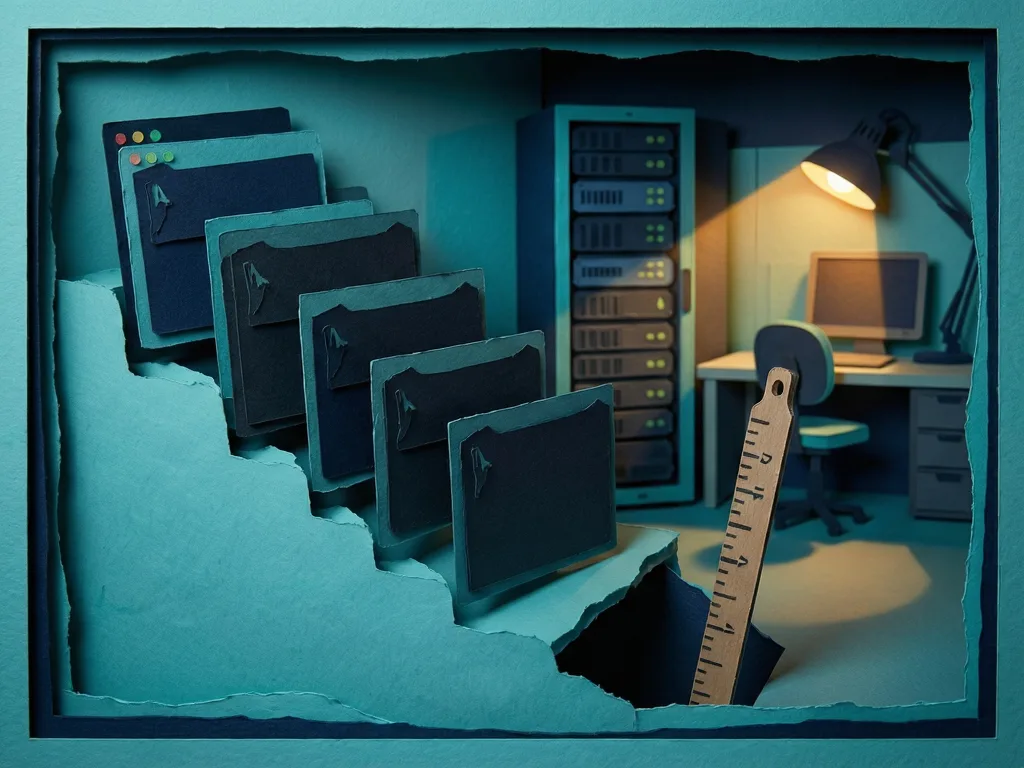
- Existing long-horizon terminal-task benchmarks often rely on weak difficulty signals: turn counts mostly reflect model behavior, and LLM-assigned labels poorly predict real pass rates.
- The study separates “work,” meaning the number of operations required, from “depth,” meaning how tightly steps must be executed one after another based on previous outputs.
- Auditing 734 tasks from six datasets shows that current synthesis methods mostly increase breadth, not depth: 94% of solved synthetic tasks pass within three turns, indicating many are broad but shallow.
- DEPTH generates tasks by writing and executing each segment in a real software environment, producing 105 tasks with higher depth and work than the audited datasets.
- Current models struggle with these deeper tasks: none of six models passes half of the DEPTH set, and fine-tuning Qwen3-8B on DEPTH task runs improves performance on terminal benchmarks.
For researchers and developers evaluating agents, long-horizon terminal tasks are multi-step tests in which a model operates inside a software environment. They are also used to train agents. Because hand-curated task sets are limited, many synthesis methods have appeared. A new study says the common signals for these synthetic tasks are too weak. It separates work from depth, audits 734 tasks from six existing datasets, and proposes DEPTH, a generation method that produces 105 tasks. None of six current models passes half of those tasks.
Turn Counts Do Not Show True Difficulty
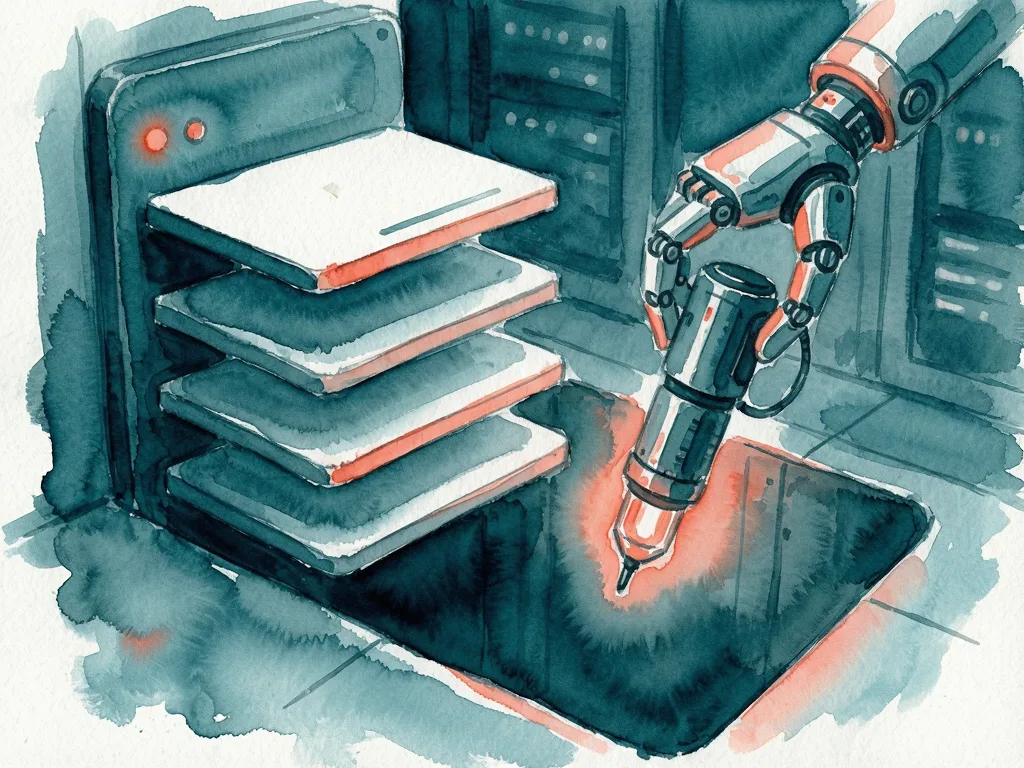
Existing synthesis methods usually estimate task length from the number of turns a model needs to pass the task. They also assign difficulty labels through the LLM that creates the task. The study finds that neither signal works well. The turn count often says more about how a model behaves than about what the task itself requires. A model may take extra turns to check outputs, retry commands, or move in small steps, even when the task is not deeply dependent on those steps. The LLM-generated labels also do not line up well with how often models pass the tasks.
For readers, this is a warning about benchmark design. A terminal-task set can look long because models use many turns, while the underlying tasks do not require much sequential reasoning. If the labels are unreliable, it becomes hard to know whether a new dataset is genuinely harder or only noisier.
Work and Depth Give a Clearer Picture
The study describes terminal tasks using two measures. Work is the number of operations required by the task. Depth is the number of turns that must happen one after another, because each turn's commands can only be chosen after reading the previous turn's output.
Depth is estimated through a turn cap stated to the agent: the smallest cap under which the task passes. If the task only passes when the agent is allowed several turns, the next step likely depends on the prior step. If it passes under a tight cap, the task may have many operations but low sequential dependency.

The authors audit 734 tasks from six existing datasets. They find that synthesis has mostly increased work, not depth. Of the solved synthetic tasks, 94% pass within three turns. Yet depth, unlike the turn count, predicts difficulty beyond work. This suggests that many generated tasks are broad but shallow: they require operations, but those operations are not tightly chained.
DEPTH Writes Tasks in Real Software State
DEPTH changes task creation. A generation agent writes each task one segment at a time inside a real software environment. Before writing a segment, it carries out that segment. The next segment starts from the state left by the previous one. This makes the task built from actual environment transitions, not from a model's idea of what a difficult task might look like.
The resulting set contains 105 tasks. These tasks exceed every audited dataset in depth and work. The study also finds that none of six current models passes half of them. Fine-tuning Qwen3-8B on runs from these tasks improves it on two terminal benchmarks.

What Readers Should Take From This
The result points to a simple evaluation rule: for terminal tasks, count dependencies, not just steps. Work tells how much an agent must do; depth tells how much it must plan over time. A dataset with high depth is more likely to reveal whether an agent can adapt its commands after each output. DEPTH gives a way to generate such tasks, and the 105-task set shows that deeper task creation can expose limits in current models.
Meta description: DEPTH builds 105 terminal tasks that measure AI agent difficulty by sequential depth, showing most synthetic tasks pass within three turns, study says.
Tags: AI agents, terminal tasks, DEPTH, model evaluation, Qwen3-8B



Comments (0)