
llama.cpp version 1.0.0 provides a stronger foundation for the local AI ecosystem
llama.cpp and ggml v1.0.0 define stable API boundaries, strengthen CI, and support 150+ architectures for local and private AI inference.
Key Takeaways
- llama.cpp and ggml v1.0.0 introduce semantic versioning, meaning future API and ABI breaking changes will be clearly signaled through major version updates.
- The release is aimed at developers and downstream products, providing a more stable and predictable foundation for local and private AI inference.
- llama.cpp now supports more than 150 model architecture variants and mainstream speculative decoding methods, with ggml backends designed to run on broad hardware platforms.
- The project is investing more in CI infrastructure, hardware support, packaging, and distribution to keep pace with development and ensure correctness across platforms.
Meta description: llama.cpp and ggml libraries v1.0.0 introduce semantic versioning for API and ABI compatibility, stronger CI, and support for 150+ architectures.
Tags: llama.cpp, ggml, v1.0.0, semantic versioning, local AI
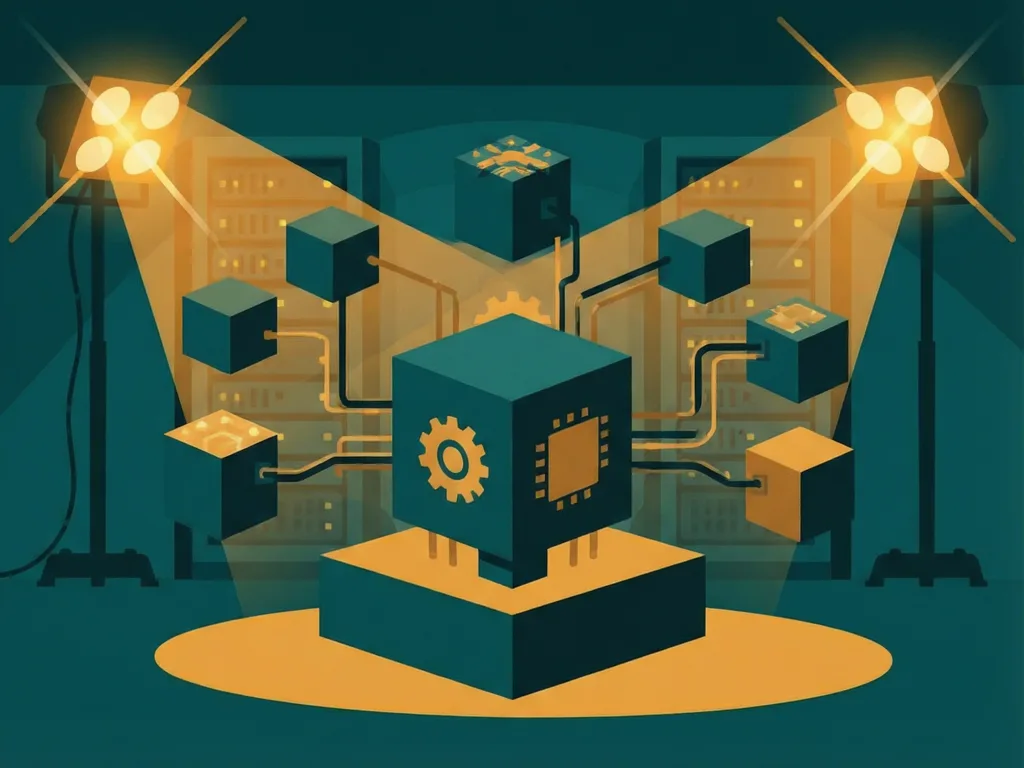
Featured image: abstract friendly illustration of llama.cpp and ggml libraries v1.0.0 running on laptops, servers, and chips, with no real people, no logos, no text.
The llama.cpp and ggml projects have released libraries v1.0.0 today, marking the point at which developers can expect clearer compatibility signals from the core interfaces that power local and private AI inference. The announcement is aimed at teams building products on top of llama.cpp: as more applications depend on the project, a flexible but stable API becomes central.
Why the version number matters
llama.cpp is used to run multi-modal LLMs on hardware ranging from consumer-grade local machines to high-end enterprise servers. Its approach relies on quantization, optimized backends, and a portable C/C++ implementation, with the stated goal of making AI inference accessible across the software stack. The project describes itself as a lightweight, versatile, and sensible platform for cross-platform and private AI products.
After 3.5 years since inception, the project has grown, and many downstream applications already depend on its work. The team expects local AI and privacy to remain increasingly important in everyday use. Because each new integration increases the number of developers relying on library interfaces, the v1.0.0 release is framed as a responsibility to those users.
From this point forward, both llama.cpp and ggml will reflect API and application binary interface (ABI) incompatibilities with major-version bumps. In semantic versioning, a major version change signals that callers should expect breaking compatibility, while smaller updates are intended to be more compatible. The project says it will become stricter about making those boundaries visible to downstream consumers as adoption grows. The semantic version update rules apply to all ggml-org projects using semantic versioning.
Distribution and development pipeline
The release also looks beyond the codebase to how the software reaches developers and end-users. The team says it is expanding the ways in which ggml-org software is distributed and points to a discussion for details on adding ggml-org projects to packaging and release pipelines.
The project credits an open-source community of highly-skilled and talented contributors. It says it continues to adapt and integrate LLMs into its development cycle in a thoughtful and reasonable manner, especially as AI capabilities advance in software engineering. The stated priorities remain maintaining a high-quality codebase, staying in control of the architecture, and understanding implementation details.
To support a faster pace of development, the project is investing more resources in CI infrastructure. It credits HF technologies such as HF Buckets and HF Jobs for helping scale the capacity needed to guarantee correctness for every change that lands on the master branches. Hardware support from NVIDIA, AMD, Qualcomm, Arm, IBM and Intel is also cited, with more self-hosted runners being added across all major hardware platforms.
Backend and model coverage
At the lower layer, the machine learning engine behind llama.cpp is ggml. The project says ggml is designed to run on virtually any hardware in existence by implementing dedicated ggml backends. Each backend can be compiled as a dynamic library and optionally loaded at runtime. The release notes point to a complete list of currently implemented backends.
For model coverage, the team says it is committed to continuous support of all model architectures. Currently, llama.cpp supports more than 150 architecture variants and all mainstream speculative decoding methods.
What happens next
The llama.cpp team at Hugging Face thanked the community, long-time maintainers of the project, and all contributors for reaching what it called a significant milestone. The release notes also point readers to llama.cpp examples, ggml-org at Hugging Face, ggml-org at Github, and Llama desktop apps for MacOS and Windows, which the team says are shipped with love by the team behind llama.cpp and Hugging Face.
For developers, the practical takeaway is that llama.cpp libraries v1.0.0 is less about a single feature and more about a contract: the project is signaling that API and ABI changes will be versioned more predictably, while its backend, model support, CI scale, and distribution plans continue to expand around that stable core.


Comments (0)