
WeLM-Image is a unified image generation model aimed at visual intelligence.
WeLM-Image unifies understanding, generation, editing and multi-reference synthesis via a shared sequence for single-GPU apps.
Key Takeaways
- WeLM-Image is a unified image foundation model that combines multimodal understanding, text-to-image generation, instruction-guided editing, and multi-reference synthesis for single-GPU consumer app deployment.
- It processes prompts, reference images, and target latents as one interleaved sequence using a Mixture-of-Transformers backbone with shared attention but separate understanding and generation parameters to reduce task interference.
- The model uses sparse Mixture-of-Experts capacity: it stores 31.7 billion parameters but activates only about 5.4 billion generation parameters per target latent token.
- Its training combines a generation-oriented data engine, bilingual annotations, verified editing supervision, native 1.5K resolution support, and separate reward optimization for generation and editing before policy distillation.
- The 1536-resolution version ranks first among evaluated open-source models on PRISM-Bench, Qwen-Image-Bench, and UnicBench, while WeLM-Image-Turbo generates a 1024×1024 image in 4.98 seconds on a single NVIDIA H20 GPU.
WeLM-Image is a unified image foundation model that combines multimodal understanding with text-to-image generation, instruction-guided editing, and multi-reference synthesis. It is designed for single-GPU deployment in WeChat's large-scale consumer applications. For teams building image generation and editing features in consumer apps, the practical value is a shared pipeline that can understand prompts and references, generate images, edit them with instructions, and combine multiple reference images without switching between specialized systems.
A shared sequence for understanding and generation
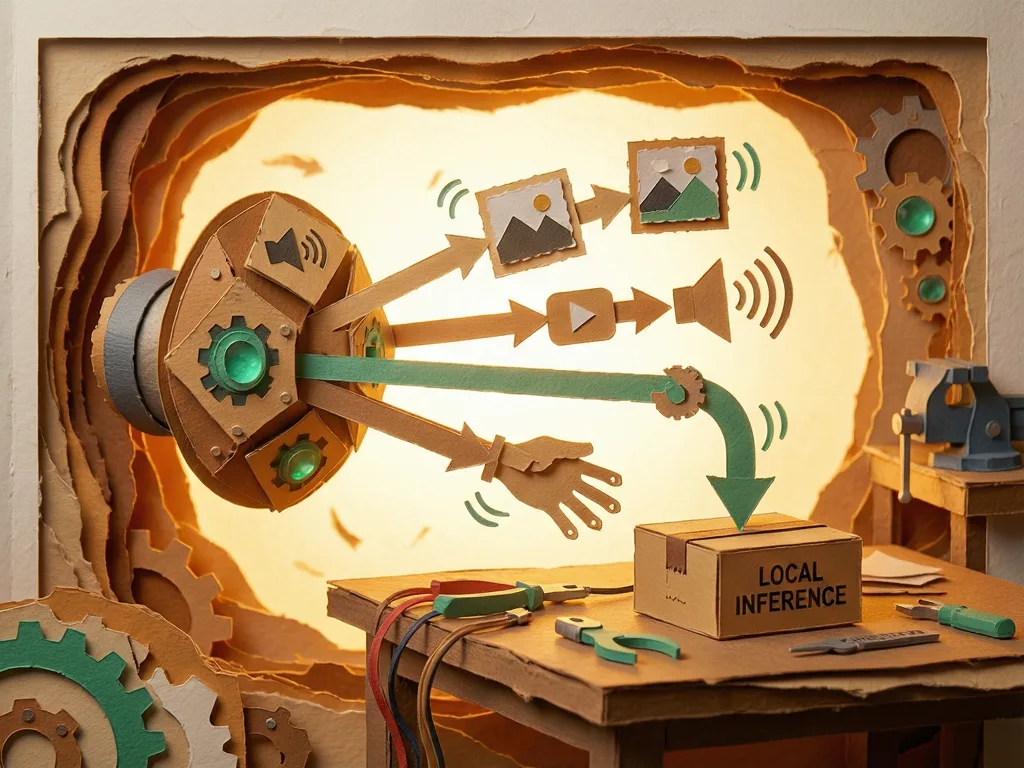
The model processes text, reference images, and target latents as one interleaved sequence. That means the same input stream can carry a prompt, source images, and the image representation to be generated or edited. Instead of treating understanding and generation as separate backbones that need to be stitched together, WeLM-Image connects them through a Mixture-of-Transformers backbone.
The backbone uses shared attention, while understanding and generation keep independent parameters. That design choice is aimed at limiting optimization interference: when a model learns to understand images and create images at the same time, the two tasks can otherwise pull the shared weights in different directions. Keeping task-specific parameters separate is a way to preserve the benefits of a unified system without forcing the two functions to compete too directly.
Sparse capacity is handled by Mixture-of-Experts modules placed on each path. The reported total is 31.7 billion stored parameters, but only about 5.4 billion generation parameters are activated per target latent token. For a production system, that distinction matters: stored parameters describe the model's size, while activated parameters describe the compute needed for a particular token. A large model does not necessarily require all of its capacity to be used for every step.
Training data and editing supervision
WeLM-Image is built around a generation-oriented data engine. It combines a knowledge-grounded visual vocabulary with large-scale visual clustering to balance semantic coverage and editing tasks. In practical terms, the data strategy tries to cover many visual concepts while also giving the model enough examples of how images can be changed, not just created.
Training-time evaluation guides iterative data refinement. The model also uses bilingual annotations and verified editing supervision to support progressive training up to native 1.5K resolution. Bilingual labels can improve instruction following across languages, while verified editing supervision gives the system more reliable signals for how an edit should look.
The training process also separates generation and editing optimization. WeLM-Image uses rubric- and checklist-based rewards for each task, then consolidates the specialized policies through noise-aware on-policy distillation. This is a multi-stage approach: first optimize generation and editing with reward signals, then bring those task-specific behaviors together into a more unified policy.
Benchmark results and the faster Turbo variant
In the reported overall comparisons, the 1536-resolution model ranks first among the evaluated open-source models on PRISM-Bench, Qwen-Image-Bench, and UnicBench. Those results are presented as part of the model report, not as a claim about every possible image task or deployment scenario. For readers comparing image models, the benchmark names are the key detail: they show where the 1536-resolution version was evaluated and what kind of comparison it is positioned within.
The same line of work also includes WeLM-Image-Turbo, produced through Mean Flow-based few-step distillation. The Turbo variant is described as generating a 1024 times 1024 image in 4.98 seconds on a single NVIDIA H20 GPU using eight guidance-free steps. That makes it the most concrete latency-related detail reported: a smaller step count, a fixed resolution, and a single-GPU target.
Why this matters for image systems
For teams building consumer image features, the main question is not only whether a model can make a good image, but whether it can understand references, follow edits, and stay within a practical serving budget. WeLM-Image's unified input format, sparse capacity, and single-GPU deployment target all point toward that operational goal.
The next things to watch are how the reported benchmark rankings hold up outside the evaluation set, how native 1.5K output performs in editing-heavy use, and whether the 4.98-second Turbo result translates into stable interactive experiences on hardware similar to the NVIDIA H20 GPU. The most concrete takeaway is the architecture itself: one sequence, two specialized parameter paths, sparse activation, and a faster distilled version for generation.

Comments (0)