
Develop and Train a GLM-5.3-Flash Model From Scratch Using Python
A CPU Python course builds a tiny GLM-5.3-Flash model, covering attention, experts, vision, and RL, lifting Python task solving from 0 to 16 of 24.

Key Takeaways
- A freeCodeCamp course shows how to build and train a tiny 25-million-parameter GLM-5.3-Flash multimodal model from scratch in Python using only a CPU.
- The model uses a compact byte-level vocabulary, a short 192-token context, linear and sparse attention, a mixture-of-experts design, and a small vision encoder that turns 32x32 images into 16 tokens.
- The course explains key multimodal training details, including 2D RoPE for image patches, token routing to experts, and how data diversity, interleaving, and curriculum learning affect pre-training.
- Reinforcement learning lessons cover reward functions, GRPO-style advantages, final-layer updates, and tuning group size, temperature, and seeds.
- After reinforcement learning, the model improves from solving 0 out of 24 Python tasks to solving 16 out of 24, offering a compact, low-resource path to understanding language model training.
Meta description:
This freeCodeCamp course shows how to build a small GLM-5.3-Flash model on a CPU, covering attention, experts, vision, and reinforcement learning.
Tags:
GLM-5.3-Flash, freeCodeCamp, language models, multimodal AI, reinforcement learning
Featured image:
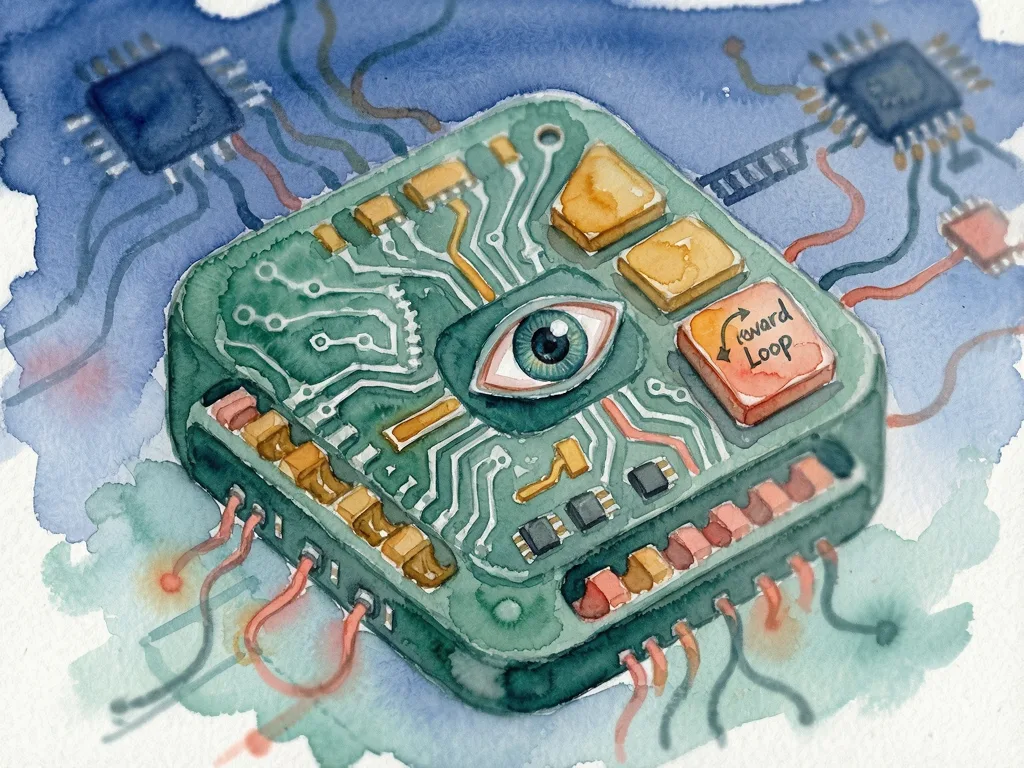
abstract friendly illustration of a tiny multimodal language model, CPU chip, and image patches, no text
A small model, a practical course
freeCodeCamp.org has just published a 44-minute course on its YouTube channel. It is aimed at readers who want to build and train a GLM-5.3-Flash multimodal language model from scratch, covering both pre-training and post-training. The course is from @vukrosic, and all code, slides, and experiments are in the GitHub repository linked in the video description.

GLM-5.3-Flash combines linear and sparse attention, a mixture-of-experts design, and manifold constrained hyperconnections. The course shows how a scaled-down version with 25 million parameters can be built in Python and trained on a standard CPU.
Compact vocabulary, context, and vision tokens
The model uses a 260-token byte-level vocabulary and a 192-token context. A byte-level vocabulary means the model works with byte sequences instead of a large word list, keeping the model smaller. It also uses a small vision encoder that turns a 32 by 32 image into 16 tokens.
The course covers tokenization and embeddings, including why a small model needs a small vocabulary and how weight tying shares one matrix between the embeddings and the output head. It also covers linear and sparse attention. Linear attention keeps a fixed-size memory of recent tokens, while every fourth layer uses sparse attention with an indexer to find distant details.
Routing experts and adding image understanding
The mixture-of-experts section explains how tokens are routed to a few chosen experts plus a shared expert that learns information common to every token. The vision section explains how images are split into patches with 2D RoPE, a positional encoding method for image patches, and merged into image tokens so the model can recognize digits.

Pre-training experiments show how data diversity, interleaving, and curriculums affect learning. The course notes that interleaving helps prevent catastrophic forgetting, a problem where earlier learning can be lost during later training.
Reinforcement learning and measured gains
The reinforcement learning lessons cover how to design reward functions, compute advantages as in GRPO, update only the final layers, and test group size, temperature, and seeds. The course gives the result: after reinforcement learning, the model goes from solving 0 of 24 Python tasks to 16 of 24.
For readers who want to understand language model training without requiring large computing resources, the course offers a compact path from model components to post-training results. The full 44-minute watch is available on the freeCodeCamp.org YouTube channel, with repository materials linked for hands-on follow-up.


Comments (0)