
MMFlash accelerates speculative decoding for vision-language models.
MMFlash targets visually dependent tokens in multimodal speculative decoding with sparse attention, yielding lossless speedups up to 3.58 times.

Key Takeaways
- MMFlash addresses a key weakness in multimodal speculative decoding: lightweight drafters, including diffusion-based ones, struggle most with visually dependent tokens, where acceptance rates drop from 46% to 22%.
- The paper introduces a token-level visual dependence metric based on KL divergence between next-token distributions with and without visual input, making this failure mode measurable.
- MMFlash improves drafting by adaptively upweighting visually dependent tokens that are predicted poorly and using sparse attention for long video inputs to reduce redundant computation.
- It achieves lossless decoding speedups of up to 3.58× across multimodal benchmarks, outperforming EAGLE-3 and DFlash.
- For builders, the main takeaway is that text-only speculative decoding gains do not automatically transfer to multimodal systems; acceptance rates on visual tokens should be tracked directly.
Meta description: MMFlash boosts multimodal speculative decoding by prioritizing visually dependent tokens and using sparse attention, with speedups up to 3.58 times.
Tags: MMFlash, Speculative Decoding, Multimodal AI, Diffusion Drafters, Sparse Attention
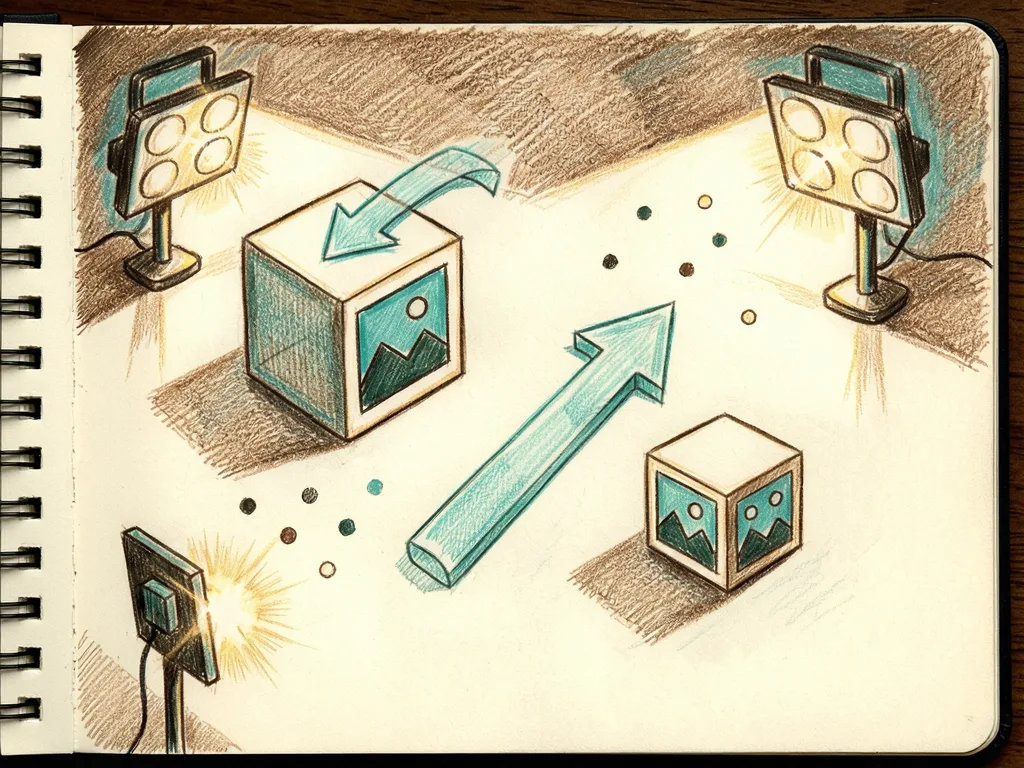
Featured image: A friendly abstract illustration of a small model handing token blocks to a larger model, with highlighted visual tokens and sparse attention paths; no real people, no logos, no text.
MMFlash, a multimodal speculative decoding framework, helps lightweight drafters handle visually dependent tokens better. The approach reports lossless decoding speedups of up to 3.58× across various multimodal benchmarks.

Speculative drafting hits a visual wall
Speculative decoding accelerates generation by letting a lightweight drafter propose tokens for parallel verification by a target model. Diffusion drafters such as DFlash extend that idea by proposing an entire token block in a single forward pass, but DFlash and similar methods mainly focus on text-only tasks, leaving multimodal drafting underexplored.
A metric that separates text from visual dependence
The work introduces a token-level visual dependence metric based on the KL divergence between next-token distributions with and without visual input. Acceptance rates decrease from 46% in the lowest visual-dependence quartile to 22% in the highest. This disparity persists after multimodal training, suggesting that exposing a drafter to more multimodal data is not enough.

MMFlash adapts the drafter to weak visual tokens
MMFlash adaptively upweights visually dependent tokens that the drafter predicts poorly, aiming to reduce the gap between text-only and multimodal drafting without replacing verification. For long video inputs, MMFlash employs sparse attention to reduce redundant attention computation and improve drafting quality.
Results point to a practical speedup
Across various multimodal benchmarks, MMFlash achieves lossless decoding speedups of up to 3.58×. The reported gains outperform EAGLE-3 and DFlash by up to 195.4% and 17.1%, respectively. Visual dependence is a measurable failure mode in speculative decoding; tracking which tokens are most affected by visual input and adjusting drafting and attention accordingly may gain speed without sacrificing verified output.
What builders should watch next
Improvements made in text-only speculative decoding do not automatically carry over to multimodal tasks. Builders should pay attention to acceptance rates on visually dependent tokens, not just average speed on text-heavy workloads. The 46% to 22% gap is a warning sign that a drafter can look strong overall while still failing where visual context drives the next token. Follow-up work may show whether the visual dependence metric can guide training, inference-time token selection, or drafter design across more multimodal and video settings.



Comments (0)