
EditAgent Reconsiders Agentic Image Editing
EditAgent routes editing steps to suitable editors and uses verification records for listwise judging, improving reliability and efficiency.

Key Takeaways
- EditAgent improves agentic image editing by routing each editing step to suitable general or specialized editors, helping agents recover from failed steps without repeatedly relying on the same narrow tools.
- It expands the agent’s action space and the judge’s observation space, making the editing workflow more reliable and efficient.
- Each candidate edit is paired with a verification record, giving judges concrete evidence to inspect rather than only a single visual impression.
- With these verification records, off-the-shelf vision-language models can outperform fine-tuned reward models as judges.
- Candidates are generated in parallel and compared listwise in one judge call, reducing evaluation cost while receiving strong expert preference over sequential refinement.
Meta description: EditAgent makes agentic image editing more reliable by routing each step to suitable editors and using verification records for listwise judging.

Tags: EditAgent, image editing, vision-language models, verification records, open-weight editors
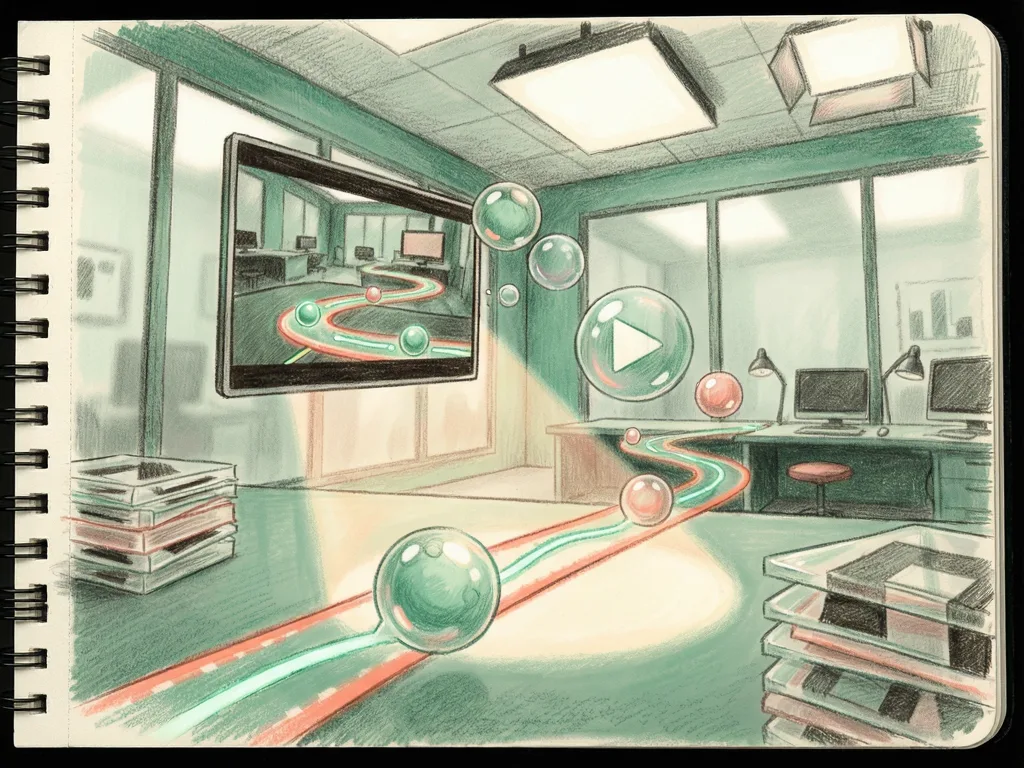
Featured image: abstract friendly illustration of EditAgent routing image-editing steps to multiple editors and verification records, no real people, no logos, no text.

A more reliable workflow for image-editing agents
EditAgent is a method that broadens agentic image editing by routing each editing step to different editors and by giving judges verification records for listwise comparison. It is useful for readers who want image-editing agents to recover from failed steps without repeatedly using the same narrow tools. The central idea is that both reliability and efficiency can improve when the agent’s action space and observation space are expanded.
Why agents get stuck
Agentic image editors decompose complex requests into steps. But when a step fails, they mostly retry with the same narrow set of tools, while a judge scores each output by eye directly. The reasoning behind EditAgent is that such agents are bounded by two spaces: the action space of what the agent can do, and the observation space of what its judge can see. On an expert-annotated benchmark, a general-purpose editor yields no usable result in over 40% of the cases, and no judge is reliable across edit types.
Routing steps and adding verification records
EditAgent expands both spaces. It routes each step to general editors and specialized methods, and attaches to each candidate a verification record. With these records, off-the-shelf VLM judges outperform finetuned reward models. VLM here refers to vision-language model, a model that can look at images and read instructions. The verification record gives the judge something more to inspect than a single visual impression.

Parallel candidates and listwise judging
Candidates are generated in parallel and judged in one listwise call. Instead of evaluating outputs one by one, the judge compares them together. Experts prefer this to sequential refinement in 78.5% of decided comparisons, at no more than half the judge calls. The reported expert preference suggests that listwise judging can improve perceived quality while reducing judge calls, a practical gain for systems that must evaluate many possible edits.
What readers should watch next
EditAgent improves two open-weight editors on three benchmarks and serves as a data engine for training stronger editors. For users, the reported value is less about one perfect edit and more about a workflow that can choose the right tool, collect evidence, and compare candidates efficiently. The next question is whether this pattern scales beyond the reported benchmarks and helps create stronger image-editing models.



Comments (0)