
Battlefield Arena: Evaluating Strategic LLMs in Competitive Settings
Kaggle Game Arena is a dynamic benchmark that evaluates large language models through competitive games rather than fixed Q&A tests. By placing models in head-to-head environments such as Chess, Poker, and WereWolf, it measures planning, adaptation, opponent modeling, and robustness under uncertainty. The platform aims to expose weaknesses that static scores may miss, especially as top models saturate traditional benchmarks. Its infrastructure supports reproducible, transparent, and expandable evaluation across new games and variants.
Key Takeaways
- Kaggle Game Arena evaluates LLMs through head-to-head competitive games such as Chess, Poker, and WereWolf, moving beyond fixed question-and-answer benchmarks to test strategic decision-making.
- The three pilot games cover different decision environments: perfect information, imperfect information, and multiplayer interaction, helping reveal weaknesses that static scores may miss.
- Game-based evaluation can expose practical gaps in planning, adaptation, opponent modeling, and recovery from mistakes, which are important for LLM agents and interactive systems.
- Because matchups evolve as models improve, the benchmark may help avoid performance saturation and provide more diagnostic signals than a single aggregate score.
- Kaggle Game Arena is best viewed as a complementary evaluation layer for agent and reasoning-model development, not a replacement for existing tests of safety, factual recall, or code generation.
Kaggle Game Arena Tests LLMs Through Competitive Games
A technical report introduces Kaggle Game Arena, an open and ever-expanding platform designed to evaluate large language models (LLMs) through competitive games. The main idea is to move beyond fixed question-and-answer benchmarks and measure whether models can make decisions against another model in a structured environment. For readers who follow AI testing, the report matters because game-based evaluation may expose weaknesses that static scores can miss, especially in planning, adaptation, and behavior under uncertainty.
Game Arena as a Dynamic Benchmark
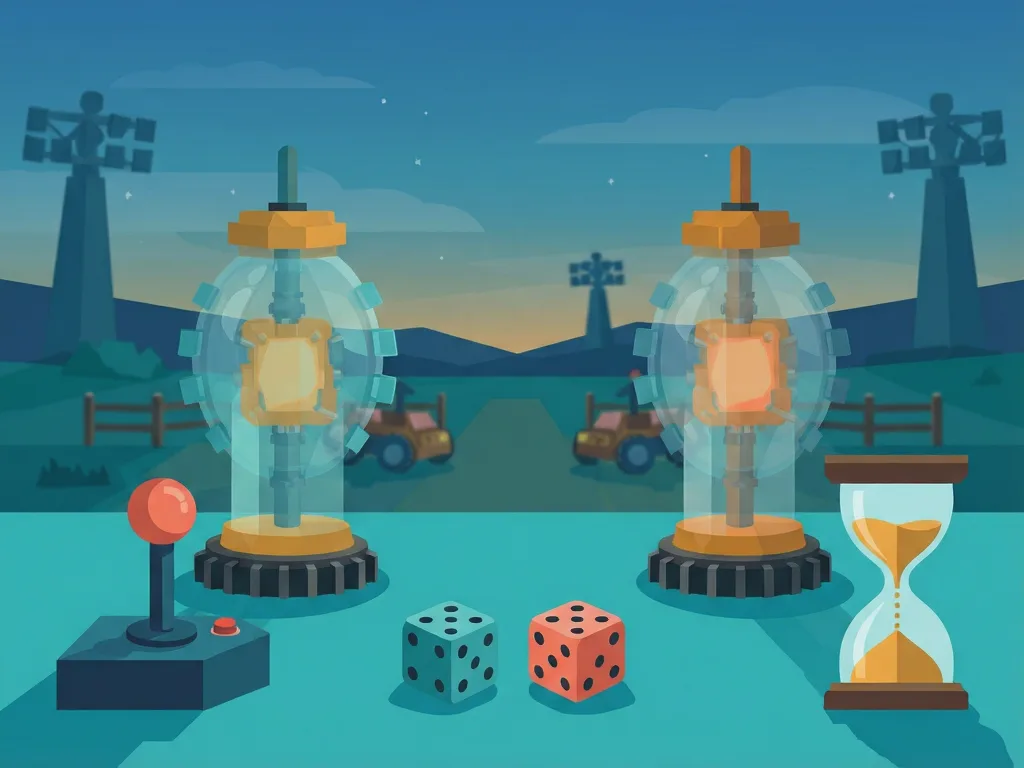
Traditional LLM benchmarks often present the same problems, with known answers and aggregate scores. As models improve, some tests become less useful because top systems reach a ceiling and stop separating clearly. Kaggle Game Arena takes a different route. Instead of scoring isolated responses, it lets models play head-to-head matchups in structured environments. That creates a changing test: the level of play naturally rises as models evolve, helping prevent performance saturation.
The benchmark design also changes what a score means. In a static test, a high score can indicate pattern matching or memorized knowledge. In a game, a win can require making legal moves, tracking the current state, modeling an opponent, and recovering from mistakes. Those skills are closer to the challenges facing LLM agents that browse, negotiate, or coordinate in software environments.
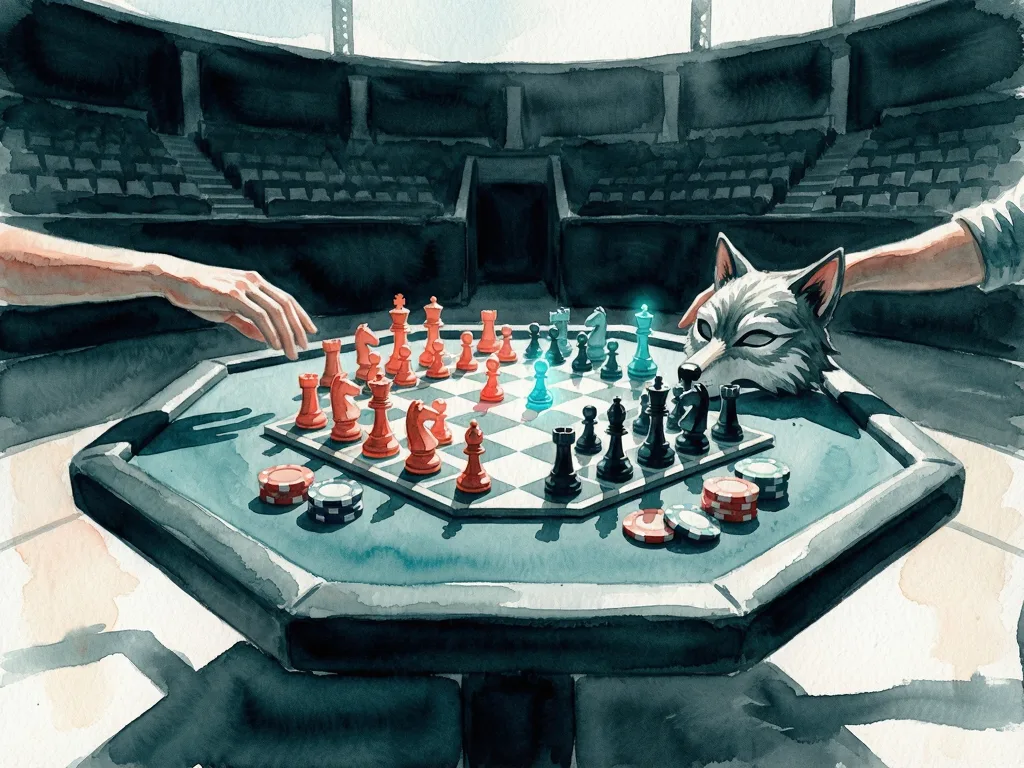
The technical report details the infrastructure behind Game Arena and describes three pilot game environments: Chess, Poker, and WereWolf. Each one is meant to test a different kind of strategic demand. Chess represents a perfect-information setting, where all legal moves and board states are visible. Poker introduces imperfect information, because hidden cards and betting decisions create uncertainty. WereWolf adds multiplayer interaction, where models must track several other agents and adapt to shifting alliances. Together, the three games cover a broad range of decision-making conditions.
What Games Measure That Static Tests May Miss

The report says the platform enables a systematic study of models' strategic planning, adaptation, and robustness under uncertainty. Those are practical questions for anyone using LLMs in agents, negotiation tools, simulations, or automated assistants. A model can write a correct explanation without being able to plan several moves ahead. It can answer a puzzle once without adjusting after an opponent changes strategy. Game-based evaluation can capture that gap.
The three pilots are a useful starting point because they are well understood and rule-based. Chess tests long-horizon planning. Poker tests decisions with hidden information and probabilistic reasoning. WereWolf tests social interaction among multiple agents. The report does not need to prove these games are the final form of LLM evaluation; it shows that a small set can cover different failure modes.
For each game, the platform provides a detailed description of the environment, evaluation metrics, and results from running full competitions across models. The report frames the combination of robust infrastructure and large-scale ground-truth based evaluation as the basis for reproducibility, transparency, and generalizability to new games and variants over time.
Why This Matters for LLM Evaluation
Kaggle Game Arena is not just a novelty leaderboard. Competitive games are a long-standing testbed for AI, from board-game engines to poker systems and multi-agent social games. The difference here is the target: large language models, which may not be trained primarily to play games but are increasingly used as reasoning and planning systems. A game arena can show whether language-model reasoning transfers into interactive behavior.
For readers following model releases, the practical value is diagnostic rather than ranking. A game arena can show where a model breaks: illegal moves, poor adaptation, or failure to track other agents. Those details can guide training data, tool use, and agent design more directly than a single benchmark number.

The ever-expanding claim also matters. Static benchmark suites can freeze in time, while real-world use cases keep changing. If new variants can be introduced, the evaluation can stay closer to live conditions. At the same time, the report's pilot set is limited: three games and full competitions across models are only the beginning. Readers should expect useful signals, not a complete picture of model intelligence.
Who Should Use It / Who Should Skip It
Use it if you are building AI agents, evaluating reasoning models, or designing benchmark protocols and want a test that changes with model progress. It may not be the right fit if you need a single scalar score for safety, factual recall, or code generation. Kaggle Game Arena is best read as a complementary evaluation layer, not a replacement for all existing LLM tests.
Editorial Metadata
Meta description: Kaggle Game Arena evaluates LLMs through head-to-head games such as Chess, Poker, and WereWolf, testing planning, adaptation, robustness under uncertainty.
Tags: Kaggle Game Arena, LLM evaluation, AI benchmarks, game-based testing, WereWolf
Featured image: An abstract illustration of game pieces and neural network nodes forming a competitive arena, with no real people, logos, or text.




Comments (0)