
Choosing Between RAG and Fine-Tuning for Domain Adaptation: What Fits When
RAG updates context at query time; fine-tuning updates model behavior. Choose RAG for changing facts and fine-tuning for consistent output.
Key Takeaways
- RAG updates answers by retrieving relevant documents into the prompt at runtime, while fine-tuning updates the model’s internal weights to change its behavior.
- RAG is usually the best first choice when answers depend on frequently updated facts, multiple sources, or traceable citations.
- Fine-tuning is usually the best first choice when the main problem is consistency of tone, format, domain vocabulary, or repeated task behavior.
- RAG risks are mainly retrieval quality, indexing, chunking, permissions, and evaluation; poor retrieval can produce confidently wrong answers.
- Fine-tuning risks are stale facts, overfitting, and higher setup cost; a common strategy is to improve prompts and retrieval before committing to full fine-tuning.
Teams building AI assistants now face a common architecture choice: retrieval-augmented generation versus fine-tuning. This guide explains the mechanical difference, when each technique is the right tool, and how to decide. The short version: retrieval-augmented generation changes what the model sees before answering, while fine-tuning changes how the model behaves after training.

What Changes When You Use Retrieval-Augmented Generation
Retrieval-augmented generation, often abbreviated as RAG, leaves the base model mostly unchanged. When a user asks a question, the system first searches a chosen set of sources, such as product manuals, support articles, internal policies, or a database. It selects the most relevant text and adds it to the prompt sent to the model. The model then answers using that retrieved context.
Mechanically, the key work happens outside the model. A RAG pipeline usually includes a document store, a retrieval method, and a way to combine retrieved passages with the user question. Retrieval often uses text embeddings, which are numeric representations that let the system compare meaning across short passages. If the retrieval layer finds the right document, the model can give a grounded answer. If it finds the wrong one, the answer can be confidently wrong.
What Changes When You Fine-Tune a Model
Fine-tuning takes a pre-trained model and updates its internal weights using examples of desired input and output. It does not search a live document collection at question time. Instead, it trains the model to become more reliable at particular patterns, such as a writing style, a preferred answer format, domain vocabulary, or a repeated task behavior.
The mechanical difference is where the knowledge and behavior are placed. RAG places new information in the prompt at runtime. Fine-tuning places learned adjustments inside the model itself. Because of that, fine-tuning is often better when the problem is consistency: the same type of answer should look and sound the same across many requests. It is less suited for facts that change often, because those facts may need another training run to update.
When RAG Is Usually the Better First Choice
RAG is often the right starting point when answers depend on documents that update frequently. Examples include product documentation, legal policy pages, knowledge-base articles, and internal records. It is also useful when the system needs to cite sources, because retrieved passages can be shown alongside the answer.
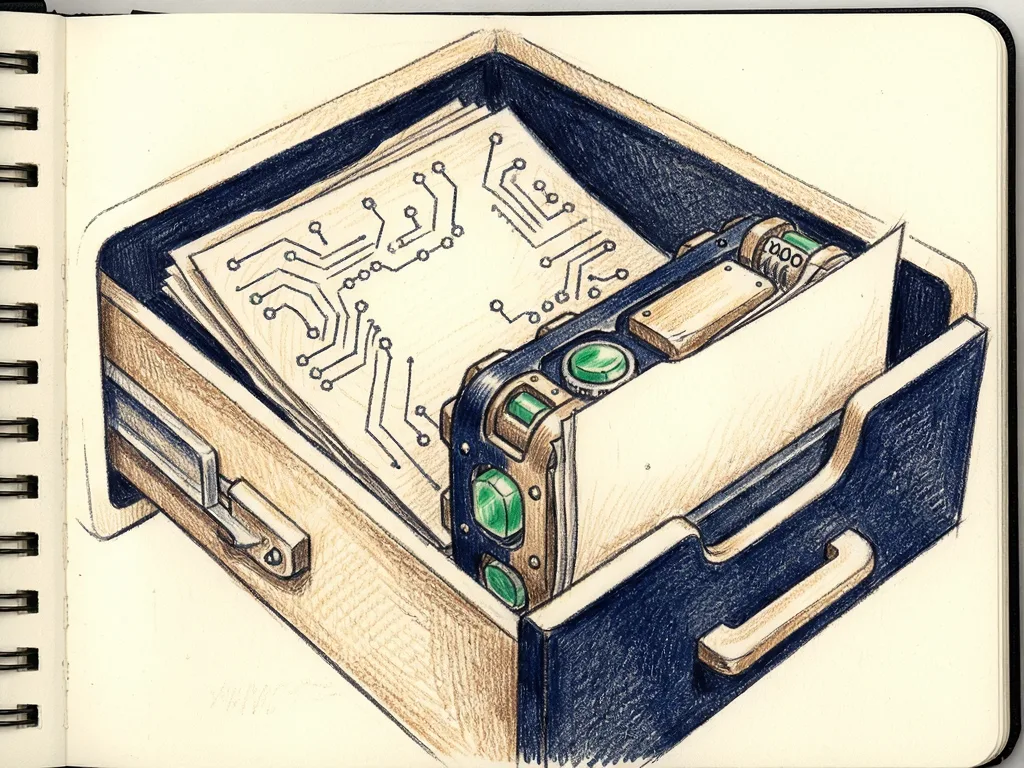
This makes RAG attractive for teams that want to control information without retraining a model. If a policy changes, the team can update the indexed document instead of producing a new fine-tuned version. RAG also supports multiple data sources: a model can retrieve from a support wiki, a CRM, or a file repository, as long as the retrieval layer is configured correctly.
The risks are retrieval quality and maintenance. The system needs accurate indexing, good chunking, permission controls, and evaluation. If users ask for facts outside the indexed sources, the model may still answer from its general training, which can be undesirable in regulated or private contexts.
When Fine-Tuning Is Usually the Better First Choice
Fine-tuning is more useful when the main issue is not what the model knows, but how it responds. A team may need the model to use a specific tone, follow a strict output format, understand niche vocabulary, or perform a repeated classification task more consistently. In these cases, examples can teach the model the desired behavior directly.
Fine-tuning can also reduce runtime complexity when answers are mostly stable and do not require live lookup. However, it requires more preparation than a quick retrieval setup. The team needs representative training data, a clear evaluation method, and a process for comparing model versions. It also carries a risk of overfitting, where the model becomes good on examples but brittle on real-world questions.

A Practical Decision Path
To decide, start with the kind of problem the system faces. If the answer changes as documents change, choose RAG first. If the answer format, tone, or task pattern is the main issue, choose fine-tuning first. If both are true, combine them: use RAG to supply current facts, then use a fine-tuned or instruction-tuned model to shape the response.
A simple test is to ask which layer is failing. If the model knows the right answer but misses the updated fact, retrieval is likely the bottleneck. If the model has the fact but returns the wrong format, training or prompt design may be the better fix. For many teams, the least risky first move is to improve prompts and retrieval before committing to a full fine-tuning project.
Meta description: Learn how retrieval-augmented generation and fine-tuning differ, when to use each, and how to choose the right method for an AI system without guessing.
Tags: retrieval-augmented generation, fine-tuning, AI architecture, RAG, model customization
Featured image: abstract friendly illustration showing a document index feeding an AI answer beside a neural network being trained, with no real people, logos, or text.





Comments (0)