
Nextdoor engineers turn to Codex to create without constraints
This article explores how Nextdoor engineering teams use Codex and GPT-5.5 in real production workflows. Engineers leverage AI to investigate bugs that are nearly impossible to reproduce, port features across web, iOS, and Android without losing momentum, and shift focus from routine implementation work to product outcomes. The piece offers a practical, hype-free look at day-to-day AI-assisted engineering, showing how critical review and clear problem statements unlock the most value from AI tools.

For engineering teams curious how AI coding tools fit into real production workflows, this piece looks at how engineers at Nextdoor put Codex to work alongside GPT-5.5. You'll learn how they tackle bugs that are nearly impossible to reproduce, keep development moving across multiple platforms, and shift their attention from plumbing to the product itself. No hype—just a practical picture of what day-to-day AI-assisted engineering looks like at a company serving millions of neighbors.

Tracking Down Bugs That Won't Reproduce
Every engineer knows the frustration of a bug report that says "it broke once, and now I can't make it happen again." These issues are time sinks: you can spend hours trying to recreate the exact conditions that triggered the failure, often without success.
At Nextdoor, engineers reach for Codex when these cases appear. Rather than chasing a reproduction path by hand, they can hand the agent the relevant logs, stack traces, and code context, then ask it to reason through what might have gone wrong. GPT-5.5's ability to analyze code paths and form hypotheses about race conditions, edge cases, or environment-specific behavior helps engineers shortcut a process that would otherwise involve lots of guesswork.
The value here isn't that the AI magically pins down the bug every time. It's that the investigation phase gets dramatically faster. Instead of combing through call stacks alone, an engineer can explore several plausible explanations in parallel and test the most promising ones. Even when Codex's first guess is wrong, the process of reviewing its reasoning often surfaces something the engineer hadn't considered.
Building Across Platforms Without Losing Momentum
Nextdoor's product needs to work everywhere its users are—web, iOS, and Android. That multi-platform reality creates a familiar pain: work done on one surface often has cousins waiting on the others. A feature designed for the web still needs native implementations, and context gets lost moving between codebases with different languages and conventions.

Codex helps smooth this out. Because it can work across different stacks, engineers use it to translate logic and patterns between platforms, scaffold equivalent features in a second codebase, and handle the repetitive portions of porting work. An engineer who deeply understands a feature on one platform can lean on the agent to carry much of that structure into another, reviewing and adjusting rather than writing everything from scratch.
This doesn't replace platform expertise—knowing the quirks of native mobile development still matters. What it changes is the ratio of time spent on mechanical porting versus genuinely platform-specific decisions. Teams can move a feature across surfaces without one platform always lagging behind the others.
Refocusing on Product Outcomes
Perhaps the most interesting shift Nextdoor engineers describe is a change in where their attention goes. When the model handles a larger share of the routine work—boilerplate, test scaffolding, investigation legwork—engineers spend more time on questions that actually shape the product: Does this feature solve the neighbor's problem? Is the flow intuitive? Is this the right thing to build at all?
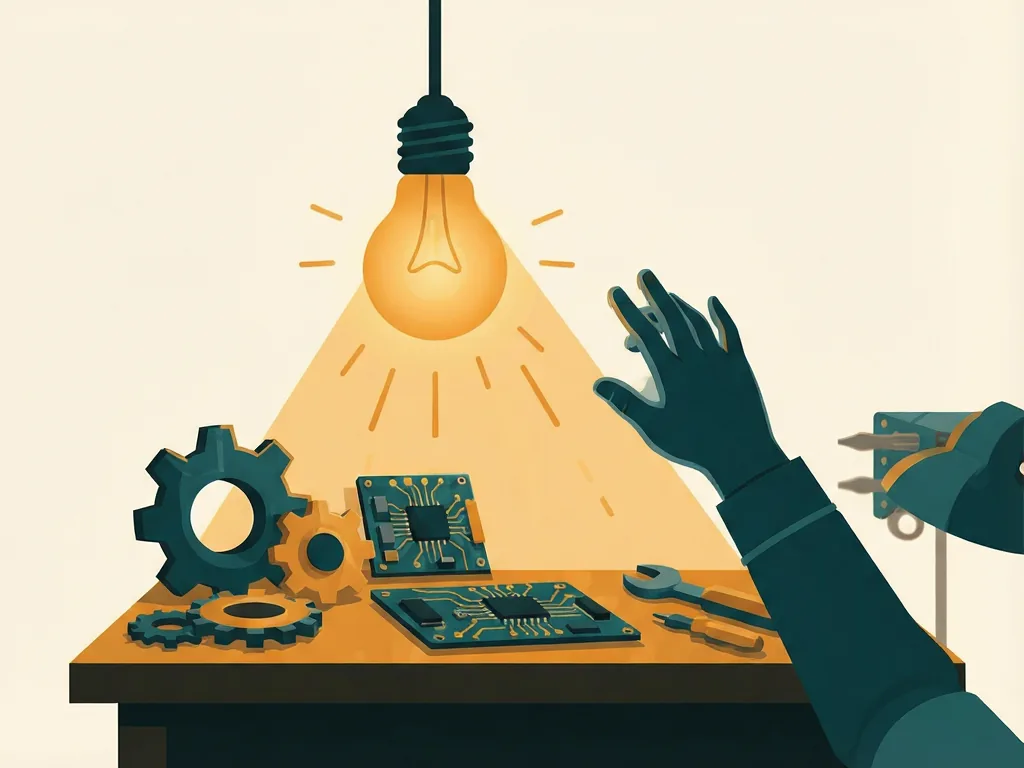
This reframing matters for how teams think about AI tools. The point isn't writing code faster for its own sake; it's that coding speed stops being the bottleneck, so product judgment becomes the differentiator. Engineers at Nextdoor describe spending more cycles on outcomes and less on implementation details that used to eat entire afternoons.
There's also a collaboration angle. When Codex can take a well-described task and return a working draft, the engineer's job shifts toward writing clearer problem statements and reviewing output critically. That's a different skill set, and teams that adapt to it tend to get more from the tool than teams that treat it as a glorified autocomplete.
What Other Teams Can Take Away
A few lessons from Nextdoor's experience seem broadly applicable:
- Use AI for investigation, not just generation. The hardest part of many bugs is figuring out where to look. Models like GPT-5.5 are strong at reasoning through symptoms and code to propose hypotheses.
- Lean on agents for cross-platform consistency. Porting and translating between codebases is exactly the kind of structured, repetitive work agents handle well—with human review on top.
- Treat the tool as a junior collaborator. You get better results when you give clear context and review output carefully than when you fire off vague requests and hope.
- Measure the real win in outcomes. Faster code matters less than more time spent on product decisions and user problems.
The Bottom Line
Nextdoor's approach shows AI coding tools at their most practical: not replacing engineers, but absorbing the work that kept engineers away from the problems only they could solve. Hard-to-reproduce bugs get investigated faster, multi-platform features stay in sync, and engineering attention shifts toward what the product should do rather than how to grind through the implementation. For teams evaluating Codex and GPT-5.5, the most useful question isn't "will this make us type faster?" but "what will our engineers do with the time this frees up?"




Comments (0)