
Avatar Intelligence Expands Human Agency by Using Persistent Personal Agents
Avatar Intelligence frames persistent personal agents as tools for safe delegation, oversight, and expanded human agency.

Key Takeaways
- The article proposes “Avatar Intelligence” as a paradigm for persistent personal AI agents that represent users’ goals, values, and constraints over time, aiming to amplify human agency rather than replace it.
- It introduces the Agentic Oversight Index to evaluate whether an agent reduces the user’s supervision burden more than it creates new checking, correcting, and approval work.
- The framework describes a maturity path from human-directed execution to delegated autonomy, where agents make recurring decisions only within domains explicitly authorized by users.
- Reliable personal agents require three key research advances: continuous personalization across contexts, user-situated improvement through Rehearsal Engineering, and safety mechanisms that include accountability and user recourse.
- The core benefit is lower effort in specifying goals, resolving ambiguity, and verifying outcomes while preserving human control over consequential decisions.
A research position says progress in personal AI agents should be measured by how effectively they amplify human agency, not by how much work they can do alone. It proposes Avatar Intelligence as a paradigm for persistent personal agents that represent users' goals, values and constraints through sustained decision delegation across contexts and over time. For users, the core promise is less effort in specifying goals, resolving ambiguity and verifying outcomes, while control over consequential decisions remains with the person.

Measuring Value, Cost and Oversight
The framework introduces the Agentic Oversight Index as a way to compare delivered value against agent-side operational cost and human oversight burden. The index is meant to answer a practical question: is the agent reducing the user's routine supervision, or is it creating new work through checking, correcting and approving outputs?
A Roadmap From Direction to Delegation
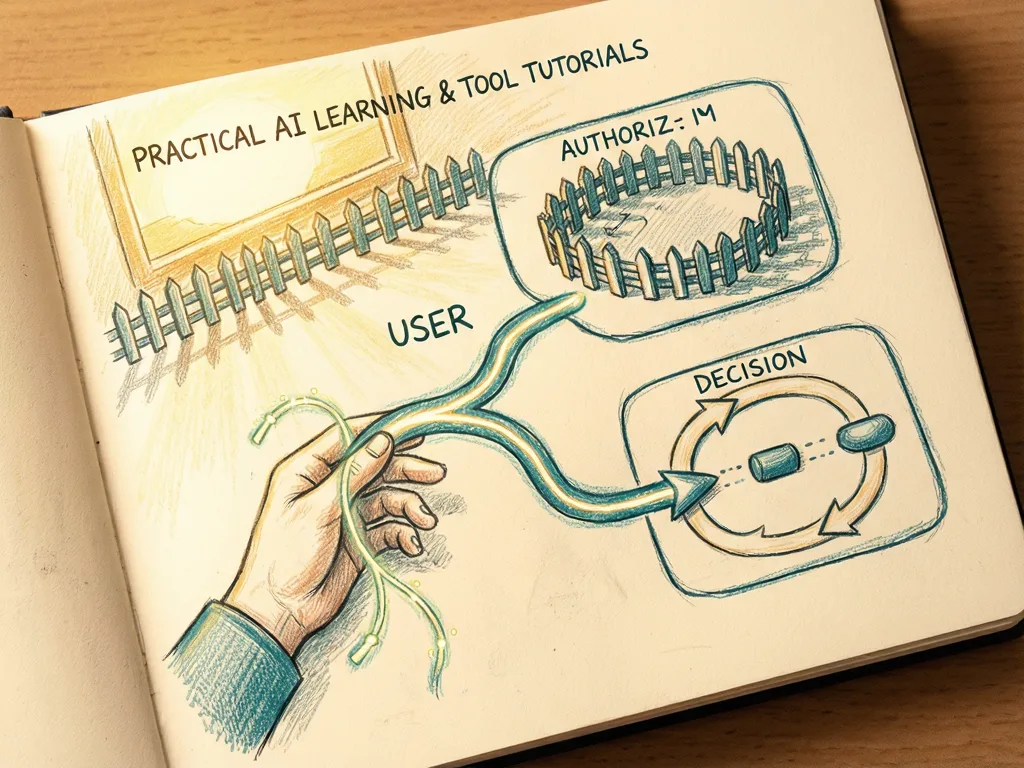
The position describes a maturity path from human-directed execution to autonomous operation within delegated domains. In the early stage, the user gives the goal, the agent carries out instructions, and the user remains responsible for ambiguity and verification. Over time, as delegation expands, the agent can make recurring decisions inside domains the user has authorized. The framing is delegation, not fully independent automation.
Three Research Challenges for Reliable Agents
The authors identify three areas that must be solved before reliable delegation becomes practical.
Identity-continuous personalization requires agents to carry user preferences across tasks instead of starting from a blank context each time.
User-situated evolution through Rehearsal Engineering suggests agents should improve in a way that reflects the user's situation, constraints and decision patterns, rather than optimizing only isolated task success.

Safety mechanisms need to combine technical control with accountability and recourse. A reliable personal agent should not only limit harmful actions; it should also give the user a way to understand and correct decisions when delegation fails.
Why the Shift Matters for Users
The argument reframes personal AI agents as tools for decision delegation. Their value is not only in completing long-horizon tasks across applications, but in lowering the supervision burden while preserving human control. The next question is whether persistent agents can be trusted over time without making users monitor every step.




Comments (0)