
I analyzed my logs to determine whether Claude Code is actually faster with message threads.
Claude Code message threads cut time-to-first-token by 35% in very large sessions, but do not lower token costs or model intelligence.
Key Takeaways
- Anthropic’s message threads for Claude Code can reduce time-to-first-token by about 35% in large contexts of 500,000–1,000,000 tokens.
- The feature works by sending only changed context instead of the full conversation history each time, making long coding sessions feel slightly faster.
- It does not reduce token costs or make Claude smarter, because the model still processes the full conversation and rate limits remain unchanged.
- The benefit is modest, estimated at saving 2–4 minutes per four-hour session, and is most useful for long-running, large-context, document-heavy, or image-heavy agent workflows.
- One-off requests, short gaps over 5 minutes, or cost-focused use cases will not benefit much, since message threads mainly improve responsiveness rather than reduce usage.
Meta description: Anthropic's message threads for Claude reduce time-to-first-token by 35% in large contexts, but do not cut token costs or make the model smarter overall.
Tags: Claude Code, message threads, Anthropic, time-to-first-token, developer tools
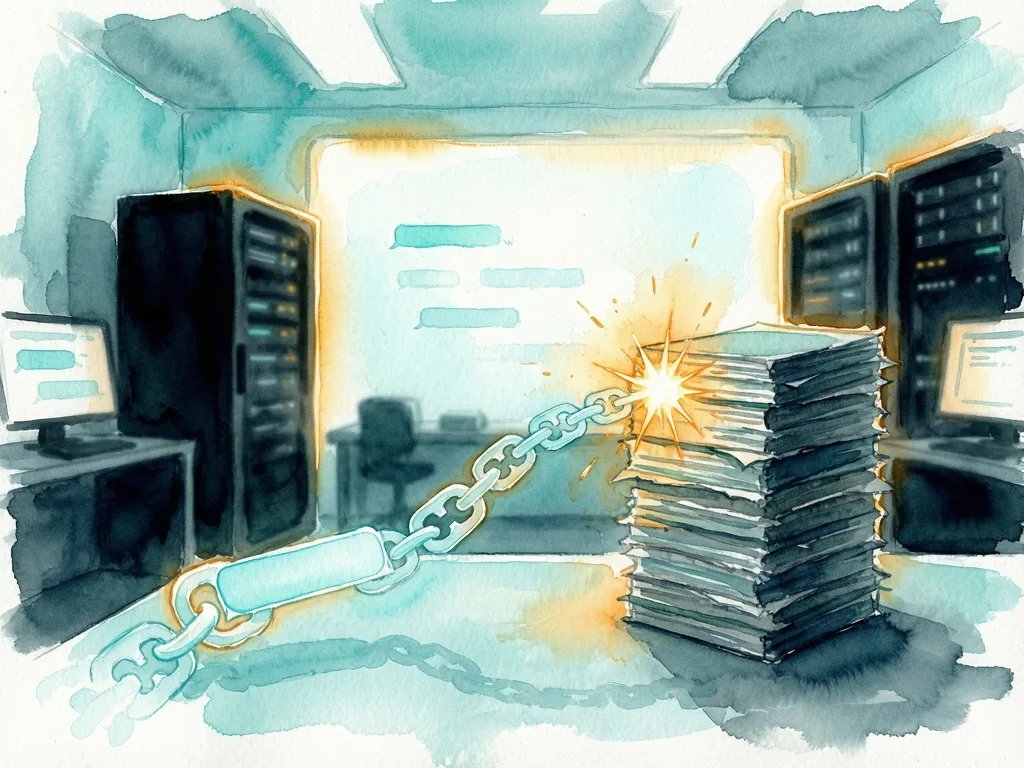
Featured image: An abstract, friendly illustration of connected message bubbles and code brackets, no real people, no logos, no text.
For developers using Claude Code or the Claude Messages API, message threads are the newest responsiveness feature. Anthropic introduced message threads yesterday as part of Claude's Messages API. ZDNET's key takeaways are that Claude Code becomes slightly more responsive, the writer's tests suggest saving 2 to 4 minutes per coding session, and the feature gives faster responses without reducing token costs. The change can save roughly 35% of time-to-first-token, the delay before model output starts, when Claude requests contain 500,000 to 1 million tokens.
Real-world speed gains from large contexts
The feature is on by default for most Claude Code users. API users can turn it on with the "thread" parameter. These message threads are not the same as ordinary human-to-human discussion threads. Before, agents often sent many requests in one conversation, and every request carried the full chat history again. That was like forwarding every previous message and reply each time you sent one new text. With threads enabled, agents only transmit what changed since the last turn, which reduces data movement and improves the responsiveness Anthropic calls time-to-first-token.
The benefit is strongest in sessions with a context of 500,000 to 1 million tokens. Anthropic reports a 35% median time-to-first-token reduction for large requests, and that 35% figure comes from Anthropic's measurement. Timing data from roughly 980 turns in the author's Claude Code logs before the feature appeared showed Claude usually began a response about 3 seconds after each mid-task request when running contexts of 500,000 tokens and up. During five busy evenings last month, the conversations made roughly 100 to 225 model calls in a four hour stretch. Applying Anthropic's reported median reduction to a quick projection, Claude estimated a 2- to 4-minute saving per four hour work session. The author noted about half of sessions hit that context ceiling multiple times a night.
The estimated saving of several minutes per session is modest, but the effect grows for very long-running coding agents and for agents that transmit documents or image-heavy workloads. For computer-using agents, Anthropic's blog post on the feature says screenshots remain attached to the thread rather than being uploaded again on each turn. In larger enterprise deployments, or in products where teams want the AI to answer faster, even small latency reductions can matter a lot and should appear in applications that have many back-and-forth turns with large data payloads.
Faster responses do not mean cheaper usage
Token consumption remains unchanged, so message threads do not provide cost savings. The model still processes the full conversation during every turn, and rate limits do not change either. Prompt caching can work alongside message threads to reduce workload. Prompt caching has been around for about two years now, and it does save money because the model can avoid re-processing prompts repeatedly, for example in looping analysis calls. The message threads capability adds a small performance gain at no extra cost, but faster does not mean cheaper.
Context size, compaction, and limits
Message threads do not make Claude smarter. Context is the size of the full session that Claude is currently working with, roughly similar to current working or short-term memory. Most Claude Code sessions max out at a million token context. A locally hosted AI on the author's 128GB Mac Studio handles a context no bigger than 64K, or about 6% of the Claude Code context size.

Compaction is the process where the AI tries to reduce and remove extra information so the current session's turns fit inside the available context. An oversimplified analog is saving a JPEG with quality turned way down to free space: the visual detail is lost, but the main idea remains. A larger context lets a session run longer before compaction begins. There is a gotcha: the larger the context, the more chance the model will lose track of what it is working on or make reasoning errors.
The feature also has clear limits. Individual one-off requests will not improve because of message threads. If a conversation waits longer than 5 minutes between turns, the next request sends the full message contents, not only the new parts. The feature does not eliminate context management or compaction, but if your context is quite large, responses will feel a bit quicker.
Who should use it / who should skip it
Use message threads if you run long Claude Code sessions, large token contexts, document-heavy or image-heavy agents, or enterprise applications where latency matters. Skip them if you only make one-off requests, rarely reach 500,000 to 1 million token contexts, or need lower token costs. Overall, they are a useful, modest improvement to responsiveness, and the extra speed does not add cost.
The More from ZDNET and The Latest from David sections also listed related coverage. Among those reports, Claude Code's revised projects adds AI orchestration, but local developers must wait; the author's survey coverage said 75% of developers surveyed prefer Claude Code over Codex; one piece described making a paid Mac app in 11 days with Claude without writing a single line of code; and another looked at the debugging hangover that follows the vibe-coding rush. The article page also asked readers to accept cookies to view comments powered by Disqus. David's latest items included the most popular programming languages in 2026 and some good news on developer job growth; a math check on whether Claude Code is truly faster with message threads using the author's logs; a test of Lenovo's RTX Spark laptop through a completely bonkers AI coding test that it passed; early Black Friday membership deals from Costco, BJ's, and more; early Black Friday Apple deals for MacBooks, AirPods, and more; and the RedMagic 12 Pro, which the author called the fastest Android he had ever seen. The page's / latest section also carried those items.




Comments (0)