
Building Your First World Model from the Ground Up
Learn to build a world model in Python, daydream CartPole trajectories, and measure when imagined states diverge from real dynamics.
Key Takeaways
- The article introduces a beginner-friendly Python guide for building a first world model using the simple CartPole environment.
- CartPole is useful because it has clear states, actions, physics, and failure signals, making it easier to learn model-based reinforcement learning.
- “Daydreaming” means letting the model predict future states without using the real environment each step, but useful imagination must still match real dynamics.
- The core practical skill is measuring when the model’s imagined trajectory drifts from reality, such as through state errors or mismatched rewards.
- The guide emphasizes evaluating prediction quality before relying on a policy, encouraging learners to test short- and long-horizon rollouts.
A beginner-friendly guide titled "How to Make Your First World Model from Scratch" appeared first on Towards Data Science. It tells readers how to build a world model in Python, let that model "daydream" through the classic CartPole environment, and measure when the model's imagined pole-balancing run stops matching reality.

Why CartPole Makes a Good Starting Point
CartPole is a small control task: a pole is attached to a cart, and the system must keep the pole upright by moving the cart. It is simple enough for a beginner notebook, but it still has state, actions, physics, and a clear failure signal when the pole falls. That makes it useful for introducing a world model, which is a learned simulation of how an environment might evolve after an action.
For readers new to reinforcement learning, CartPole is less intimidating than large game or robotics environments. A learner can see the whole loop: collect states, predict the next state, compare predictions with the real environment, and notice when the model starts to drift.
What a World Model Daydream Adds
The guide uses "daydreaming" to mean letting the learned model roll out future states without asking the real environment for every step. Instead of calling the simulator repeatedly, the model predicts what the next cart position, pole angle, and related state details might be after each action.
This is a concrete way to understand model-based reinforcement learning. The policy can be thought of as acting partly inside an internal simulation. The imagined trajectory is useful only if it stays close to the true dynamics. A model that keeps the pole upright forever in imagination but fails when checked against real CartPole physics is not a useful world model. It is a hallucination.
The Value of Measuring the Collapse
The practical emphasis is on measuring when the illusion collapses. In this setting, that means tracking how far the model's predictions drift from what the real environment would produce. The collapse may appear as growing state error, a mismatched reward, an incorrect action value, or a predicted termination that does not match the real one.
Measuring that break turns a vague feeling of "the model looks okay" into a testable question. It helps a learner see where the model is still useful and where it should stop being trusted. It also creates a feedback loop. If the imagined rollout diverges after a few steps, the learner can inspect the state representation, training data, prediction horizon, or model architecture before trying a longer simulation.
What This Means for Readers
For readers who want to move from toy neural networks to model-based agents, this guide offers a low-risk entry point. CartPole is small enough to run on a normal laptop, and the task has obvious success and failure conditions. The guide's framing also avoids the trap of treating a learned model as a black box. A beginner can see the model's imagined future, compare it with the environment, and learn why prediction quality matters before policy quality.
The available source description does not provide a publication date, author name, specific architecture, dataset, benchmark score, or code repository details. That limits how much readers can judge from the summary alone. Still, the topic is clear. It is aimed at readers who want to build, simulate, and evaluate a first world model in Python rather than only use an existing library.
Follow-Up to Watch
The next step for a reader is to reproduce the guide's core experiment: train a simple model, roll it out in CartPole, and inspect the point where imagined state changes stop matching real state changes. After that, compare short-horizon predictions with longer-horizon predictions. A world model that works for one step may fail after several, and seeing that failure curve is often more useful than a single accuracy number.
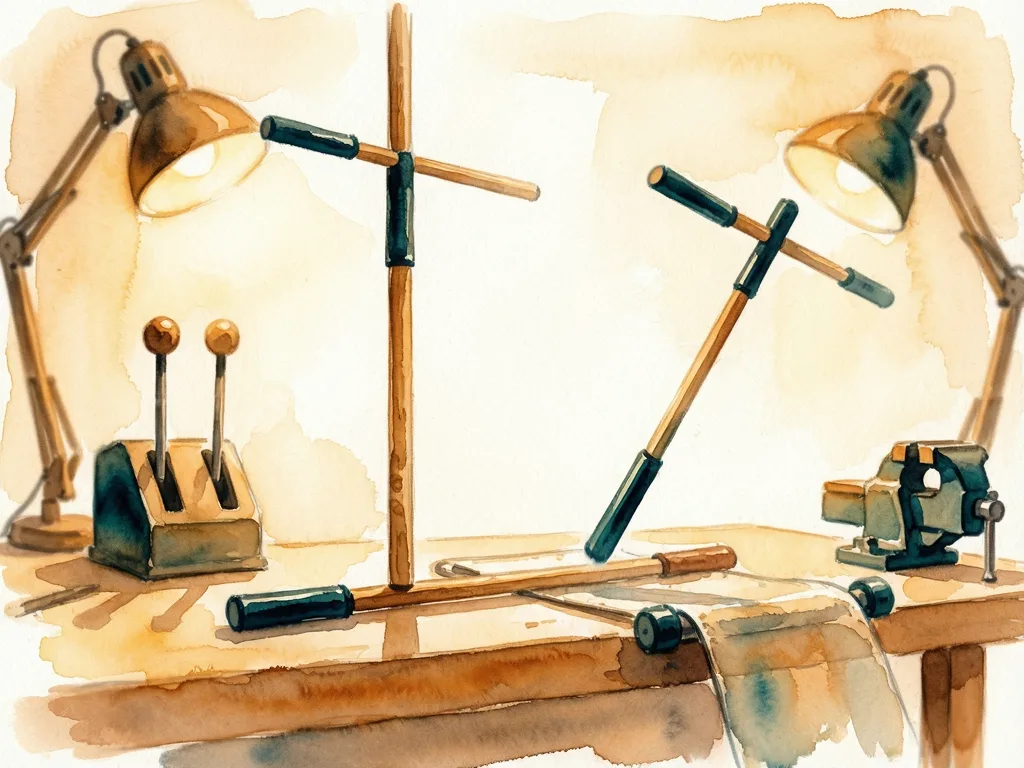
The guide also points to a broader question in reinforcement learning: how much future should an agent trust its own simulation before it asks the real environment again? A small CartPole example makes that question visible without requiring a large robotics or game benchmark.
Meta description: A Python world model guide on Towards Data Science explains CartPole daydreams and how to measure when simulated control breaks down for learners.
Tags: world models, Python, CartPole, reinforcement learning, beginner guide
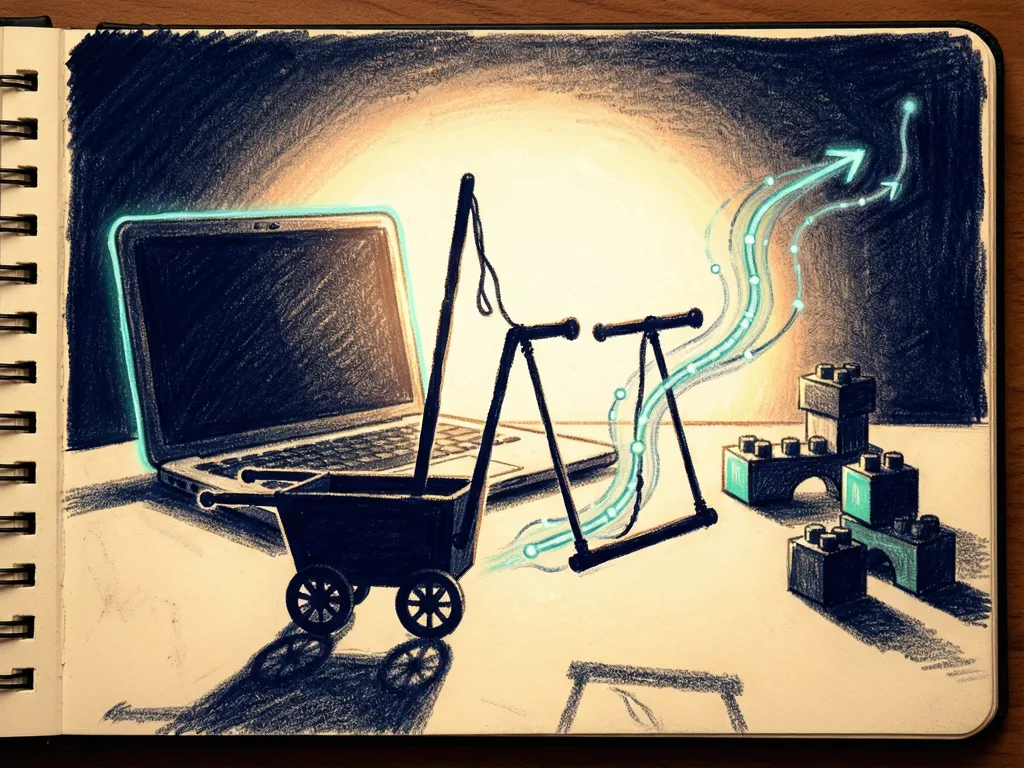
Featured image: abstract, friendly illustration of a small neural network imagining a pole-balancing CartPole inside a Python notebook, no people, no logos, no text.



Comments (0)