
From RAG to Reliability: Building Genuinely Truthful AI Harnesses
Retrieval-augmented generation alone cannot prove claims. A truthful AI harness treats retrieved passages as candidates, not evidence, and verifies each factual statement with inspectable sources, claim-level citations, freshness checks, and audit trails. It separates claim types, compares conflicting sources, and adds post-generation verification so models disclose uncertainty and avoid presenting weak guesses as facts.
Key Takeaways
- Retrieval alone is not evidence: fetched passages can be irrelevant, outdated, incomplete, or misaligned with claims, so AI systems need verification beyond RAG.
- Build claim-proving harnesses by defining claim types, requiring claim-level citations, storing inspectable source metadata, comparing evidence, and adding post-generation verification.
- Trustworthy AI needs audit trails and human-review-friendly outputs: log questions, evidence, citations, verifier results, and present answers with snippets, limitations, and uncertainty.
- Evaluate harnesses with operational metrics such as citation precision, unsupported statement rate, stale-source rate, contradiction detection, and escalation rate, especially for high-risk uses.
Meta description: A recent Towards Data Science post says retrieval is not evidence. Learn how to build AI harnesses that prove claims with citations and checks.

Tags: AI harnesses, retrieval-augmented generation, evidence checking, trustworthy AI, model evaluation
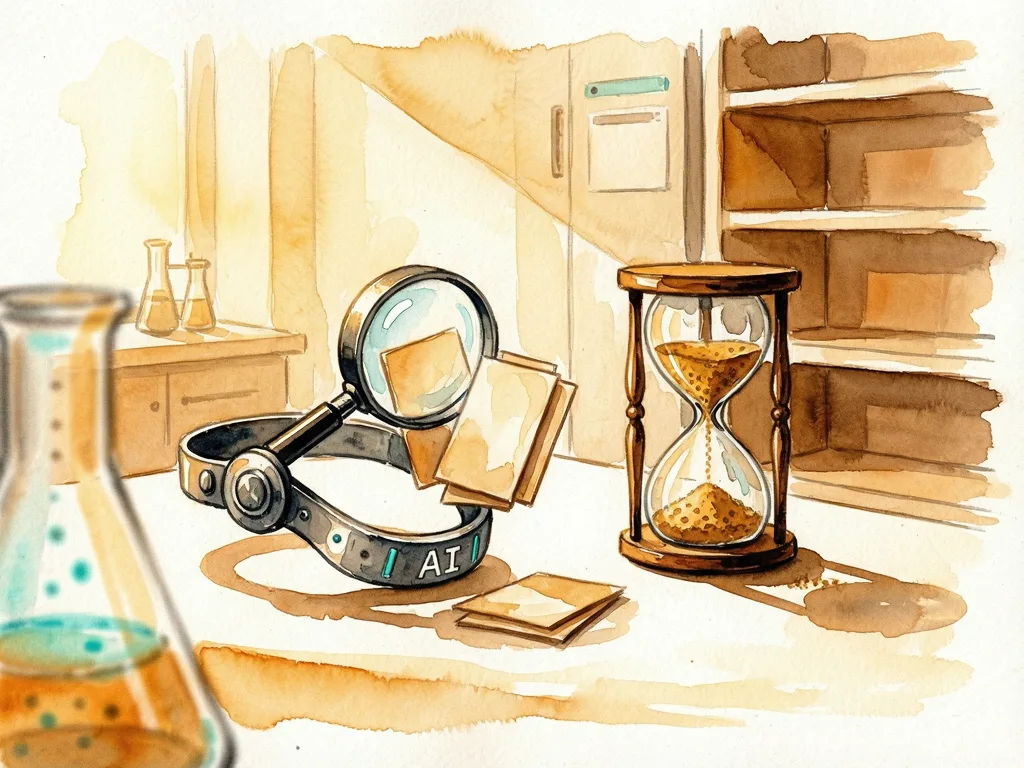
Featured image: Abstract friendly illustration showing linked evidence cards and a model output box, with no real people, logos, or text.
How to Build AI Harnesses That Prove Claims Beyond RAG
The post "Beyond RAGs: Building Actually Truthful AI Harnesses" appeared first on Towards Data Science and states a rule for builders: retrieval is not evidence. This guide is for developers, product managers, and evaluators who want to turn that rule into an AI harness, a software scaffold around a model, that produces claims backed by inspectable sources instead of only by fetched text.
Why Retrieval Alone Is Not Proof
Large language models can write fluent answers even when the underlying source is wrong, outdated, incomplete, or irrelevant. Retrieval-augmented generation, or RAG, can reduce that risk by letting a system search a document collection and pass returned passages into the model as context. But a retrieved passage is only a candidate piece of text. It is not proof that a statement is true.

The difference matters because retrieval can succeed while verification fails. A system may find a document that mentions the topic but does not support the exact claim. It may find a source that was credible at one time but has been superseded by newer evidence. It may copy a passage without showing its location, author, date, or usage limits. It may answer confidently from one source while ignoring others that say something different.
An AI harness that proves claims needs to move beyond "I found text" to "I can show why this claim is supported." That means each factual statement should connect to evidence, the system should disclose uncertainty when evidence is weak, and the interaction should leave an audit trail that a human can review.
How to Build an AI Harness That Proves Claims
An effective harness treats retrieval as one input, not the final authority. The following steps turn a basic RAG pipeline into a claim-proving system.
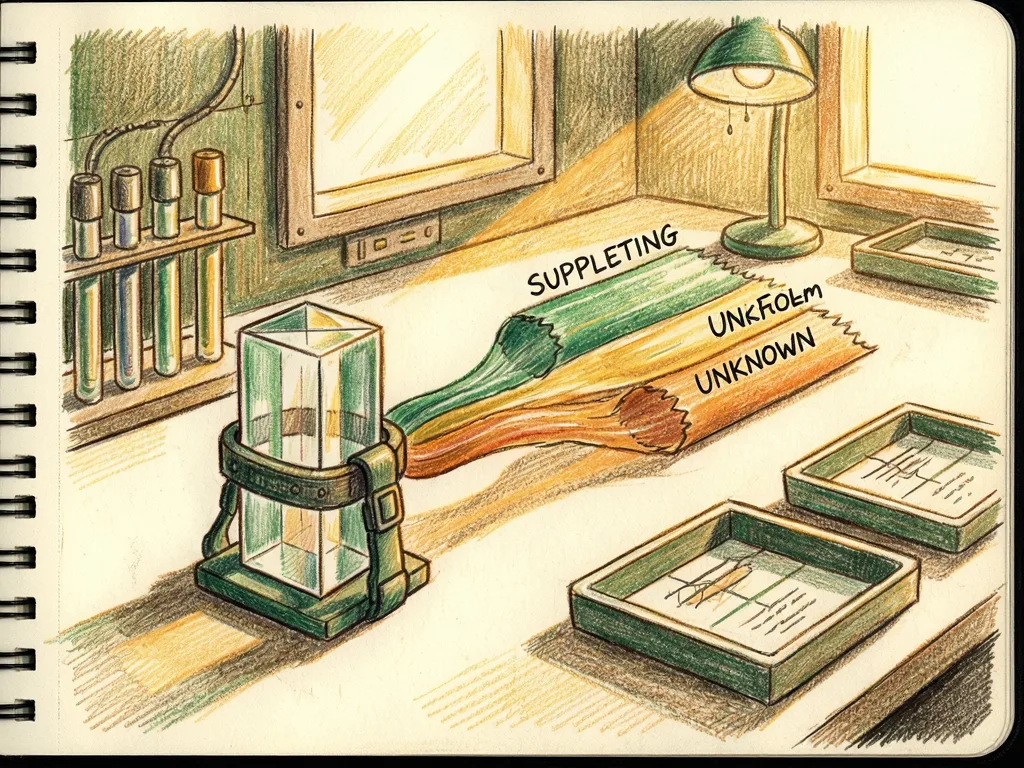
- Define claim types and verification thresholds. Separate factual claims, procedural instructions, recommendations, and opinions. A factual answer about a published policy may need a dated source and a direct quote. A recommendation may need stated assumptions and alternatives. If the user does not ask for a source, the system should still avoid presenting weak guesses as verified facts.
- Make sources inspectable. Store metadata with every passage: title, author or owner, publication date, last checked date, URL or file path, section, quote boundaries, and usage rights. For internal documents, add version, approval status, and responsible team. A claim is easier to trust when a reader can see where it came from and whether the source is current.
- Require claim-level citations. Do not cite a whole document for a paragraph of output. Map each factual sentence to the smallest passage that supports it. If a sentence has no support, remove it or label it as unverified. This makes it harder for the model to hide a fabricated inference inside a plausible citation.
- Compare evidence before answering. For high-risk questions, check whether sources agree. Look for contradictions, outdated versions, and missing context. Use multiple independent sources when the answer is important enough to warrant extra confidence. When sources conflict, the system should say what conflicts exist and which evidence it is relying on.
- Add a verification step after generation. A verifier can be a rules check, a second model call, or a human review queue. It should ask simple questions: Does the quote support the claim? Is the source date valid? Is the citation location accurate? Did the answer stay within the retrieved evidence? If the verifier cannot confirm a claim, the system should downgrade confidence or refuse to present it as proven.
- Log the full proof chain. Keep the user question, retrieved passages, selected evidence, rejected evidence, model output, citation map, and verifier result. Logs are not just for debugging. They let teams investigate why an answer failed, improve retrieval quality, and show that a claim was checked rather than guessed.
- Design output for human review. Show the answer first, then the supporting evidence, then limitations. A user should be able to see the source snippet without opening the full document, understand why the snippet was selected, and know what to do if the evidence is unclear. For private or licensed sources, show only the permitted excerpt or link.
Evaluate the Harness Before Trusting It
A truthful AI harness needs evaluation beyond a single demo. Builders should create test questions that include ambiguous terms, outdated documents, conflicting sources, and claims that cannot be answered from the available evidence. Track whether every factual sentence has support, how often citations point to the right passage, how often the model omits a claim instead of guessing, and how often a human reviewer would need to intervene.
Useful signals include citation precision, claim coverage, unsupported statement rate, stale source rate, contradiction detection rate, and escalation rate. These do not need to be presented as public scores. They are operational metrics that show whether the system is improving. In high-stakes areas, human review should remain part of the workflow because an automated check can prove alignment with evidence but not the full correctness of a judgment.
What This Means for Builders and Readers
For readers, the shift from retrieval to proof changes what they can expect from AI systems. A response should not only sound reasonable; it should be inspectable. That makes it easier to verify a source, challenge an inference, and decide whether the answer is useful enough to act on.
For builders, the work moves from prompt design to system design. The model still generates language, but the harness decides what counts as evidence, how claims are linked to sources, and what happens when verification fails. The future value of AI products will likely depend on this proof layer, because users, partners, and internal teams need a way to trust outputs without rereading every source from scratch.
Common mistakes
- Treating a high retrieval score as a truth score.
- Citing a whole document instead of the passage that supports each claim.
- Letting the model paraphrase evidence without keeping a verifiable quote.
- Ignoring contradictory or newer sources.
- Presenting uncertain answers with confident language.
- Failing to log the evidence chain for later review.
- Assuming any publicly retrievable source is safe to reuse.


Comments (0)