
Fresh approaches to studying math and science with ChatGPT
ChatGPT's new interactive visual explanations turn the AI into a visual tutor for math and science. Students can manipulate variables, watch graphs update in real time, and build intuition for abstract concepts like quadratic equations, physics forces, and wave frequency. Ideal for students, teachers, and self-directed learners, though users should verify AI outputs and supplement with hands-on problem solving.
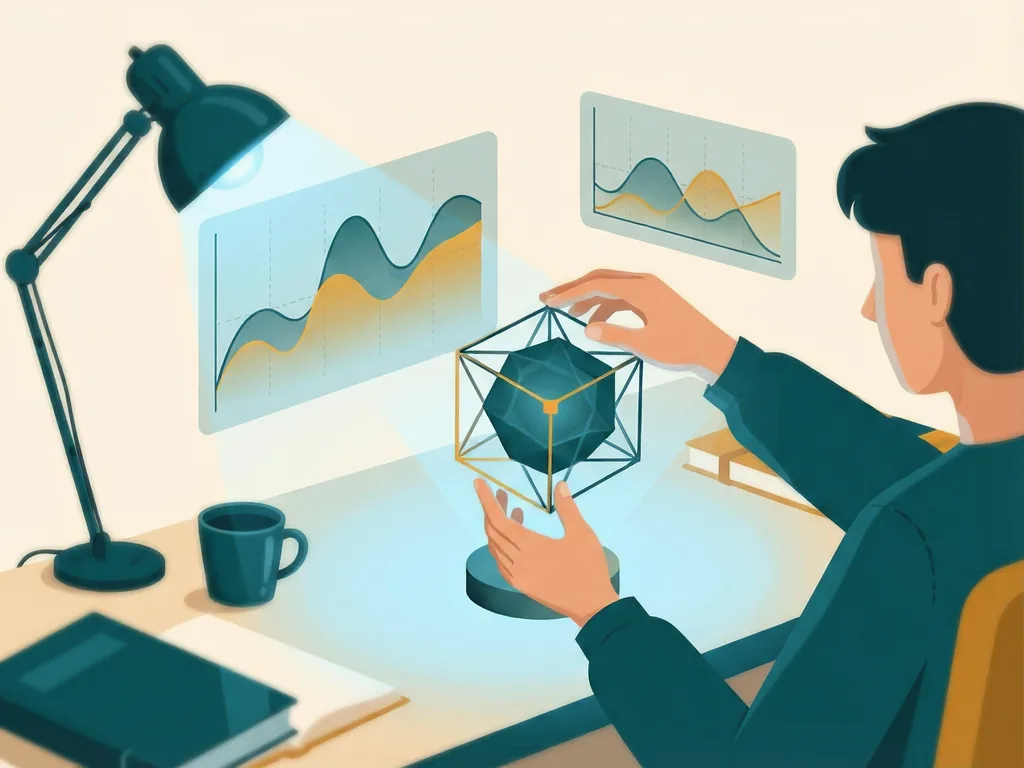
If you've ever stared at a formula and wished someone could just show you what it means, ChatGPT's new interactive visual explanations are worth a look. This feature is designed for students, teachers, and lifelong learners who want to move beyond walls of text when tackling math and science topics. Instead of reading a static description of a concept, you can now explore formulas, variables, and ideas visually — adjusting things in real time and watching how the concept responds.

What the Feature Actually Does
At its core, this update turns ChatGPT into something closer to a visual tutor. When you ask about a math or science topic, the AI can generate interactive elements that let you see concepts in motion rather than just reading about them.
Say you're learning about quadratic equations. Instead of receiving only the standard form and a written explanation, you can interact with a visual representation that shows how changing each coefficient reshapes the parabola. Slide a variable up or down, and the graph updates instantly. That immediate feedback loop is exactly the kind of thing that helps concepts click for many learners.
The same approach applies across science topics. Whether it's understanding how wave frequency relates to pitch, how forces balance in physics problems, or how chemical reactions progress over time, the goal is the same: let you manipulate and observe rather than passively read.
Why Visual Learning Matters Here
Research on education has long suggested that many people learn abstract concepts more easily when they can see and interact with them. Math and science are full of ideas that are hard to grasp from text alone — think derivatives, electromagnetic fields, or the behavior of gases under pressure.
Traditional tools like graphing calculators and simulation software have filled this gap for years. But they often require you to already know how to use them. What makes the ChatGPT approach different is that the explanation and the visual come together: you can ask a question in plain language, get an interactive answer, and follow up immediately if something confuses you.

That conversational loop — ask, see, tweak, ask again — is something a textbook or a standalone app can't easily replicate.
How Students and Teachers Might Use It
For students working through homework or exam prep, the feature can serve as a way to build intuition before drilling problems. If you understand why a formula behaves the way it does, memorizing it becomes much easier.
For teachers, it opens up possibilities for live demonstrations in class. Instead of pre-building a simulation, an educator could generate a visual on the fly to answer a student's "but what happens if...?" question in the moment.
Self-directed learners probably benefit the most. If you're brushing up on algebra years after school or exploring physics out of curiosity, having an interactive explainer available on demand lowers the barrier considerably.
Things to Keep in Mind
A few caveats are worth noting. First, AI-generated explanations can occasionally contain errors, so it's smart to cross-check anything critical — especially for graded work or standardized test preparation. Second, interactivity is a supplement, not a replacement, for working through problems yourself. Watching a variable move is engaging, but actually solving problems by hand is still where deep learning happens.
Finally, access to advanced features can depend on which version of ChatGPT you're using and your subscription tier, so it's worth checking what's available on your plan.
Who Should Use It / Who Should Skip It
Use it if: you're a student who struggles with abstract formulas, a teacher looking for quick classroom demos, or a curious learner who wants to build intuition in math and science without wading through dense textbooks.
Skip it if: you need guaranteed-accurate, exam-board-specific explanations without verification, or if you already have a simulation tool you're comfortable with and prefer learning from structured problem sets instead.
For everyone else, this is a genuinely useful step toward making ChatGPT feel less like a text machine and more like a patient, visual tutor that's available whenever a concept refuses to make sense.




Comments (0)