
DominoBench evaluates multi-step physical reasoning from still images.
DominoBench tests if vision-language models can identify who is hit in minimal-pair chain reactions from images; calculations raise scores.

Key Takeaways
- DominoBench tests whether vision-language models can infer physical chain reactions from still images, especially identifying the person ultimately hit.
- The benchmark uses 854 simulator-generated minimal pairs, where only one quantity changes and one person’s outcome flips, requiring models to detect decisive visual differences.
- Unaided performance is unreliable: the best single-image accuracy is at most 75%, while strict paired accuracy is at most 40%.
- Simple hints do not substantially improve results, but forcing models to write explicit calculations raises accuracy to 80–92%, suggesting explicit reasoning helps.
- Different models show opposite strengths: GPT-6 performs best unaided, while GPT-5.6-Sol benefits most from calculation support; the full dataset and code are publicly available.
DominoBench checks whether vision-language models, which read both images and text, can read a still image of a chain reaction and identify the person hit. It contains 854 simulator-labelled scenes in minimal pairs; the author tested 30 models. Unaided, none is reliable; writing the calculation lifts scores to 80-92%.
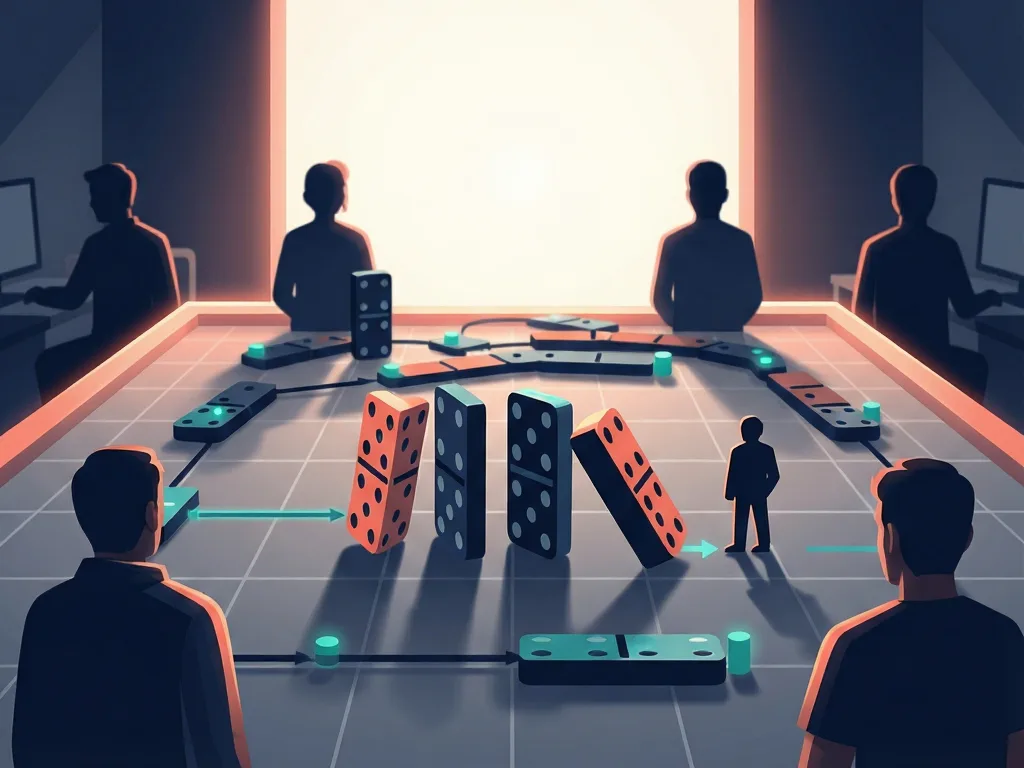
A minimal pair makes the question hard to hide
Pairs move one quantity one grid step and flip one person's fate, testing whether models see the decisive visual difference and track exact changes; models that miss the exact change should fail clearly.
Unaided scores stay below the reliability threshold
Best unaided accuracy was at most 75% on the flipping person. The stricter paired requirement: requiring both twins of a pair right, top score was at most 40%; even strong models often got one side wrong when the same visual logic appeared in two closely related versions.
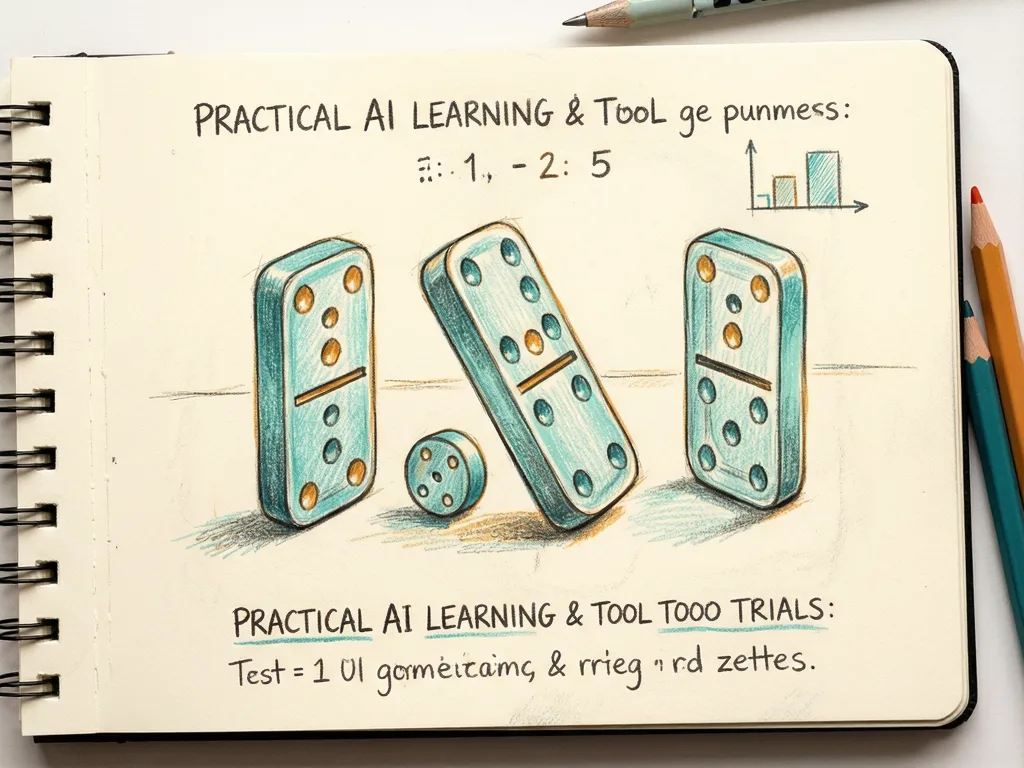
Hints help only when they force explicit work
Pointing at the deciding step helps little and does not supply missing reasoning. Writing calculations raises scores to 80-92%, suggesting models can handle logic when forced explicit rather than quick visual judgment. This does not settle visual reasoning broadly, but written support strengthens weak visual answers here.
GPT-6 and GPT-5.6-Sol take opposite routes
GPT-6 was most accurate unaided but gained little from calculation prompts, indicating unaided score was near supported level. GPT-5.6-Sol started low but ended first with calculation support. Best unaided model may not be best aided.
The full benchmark is open
Images, simulator trajectories, hint ladder, generator and evaluation code are open at https://huggingface.co/datasets/emilioferrara/DominoBench. The author wants to hear whether other models do better and which mechanism trips them up; the benchmark is not only a score report but provides pieces to test whether a model can see a chain reaction, trace the decisive step, and report the consequence.


Comments (0)