
In What Cases Does Latent Prediction Error Support Claims of Physical Surprise in Video World Models?
Video model prediction error may not reliably indicate physical surprise; tests found mixed errors and many false flags, needing stronger validation.

Key Takeaways
- The paper tests when V-JEPA2-G prediction error can support claims of physical surprise in video world models using sphere support and gap experiments.
- Across 256 configurations, the model shows mixed error patterns: lower error for impossible motion on solid support but higher error for impossible motion over a gap, suggesting prediction error is not a simple one-way surprise signal.
- A fixed development cutoff reaches 53.9% balanced accuracy on clean clips but falsely flags about 69% of physically possible clips, highlighting the need for stronger validation.
- The study distinguishes accessible physical information, representation geometry, and action sensitivity from native prediction error, showing that physical cues in features do not guarantee a reliable surprise signal.
- The findings do not claim V-JEPA2-G lacks physical knowledge; they raise a narrower question: when does prediction error actually support a physical-violation claim?
Meta description: A new paper tests whether V-JEPA2-G prediction error can support physical surprise claims in video world models using sphere support and gap experiments.

Tags: video world models, V-JEPA2-G, physical reasoning, prediction error, AI evaluation
Featured image: !Abstract friendly illustration of a sphere above a support gap and a prediction-error curve
For researchers building video world models, a new paper by its authors asks when a V-JEPA2-G prediction error can be treated as evidence of physical surprise. The authors tested whether the model's error signal changes when a sphere's support condition is swapped from solid ground to a gap. The result shows why careful validation matters: some error patterns appear, but a single cutoff still flags many physically possible clips.
The support swap makes the question concrete
The clearest result comes from a controlled support test. A sphere can stop on solid support or fall through a gap. Swapping the support reverses which motion is physically possible. In that setup, a model that uses prediction error to measure physical surprise should show a clear difference between impossible motion on solid support and impossible motion over a gap.
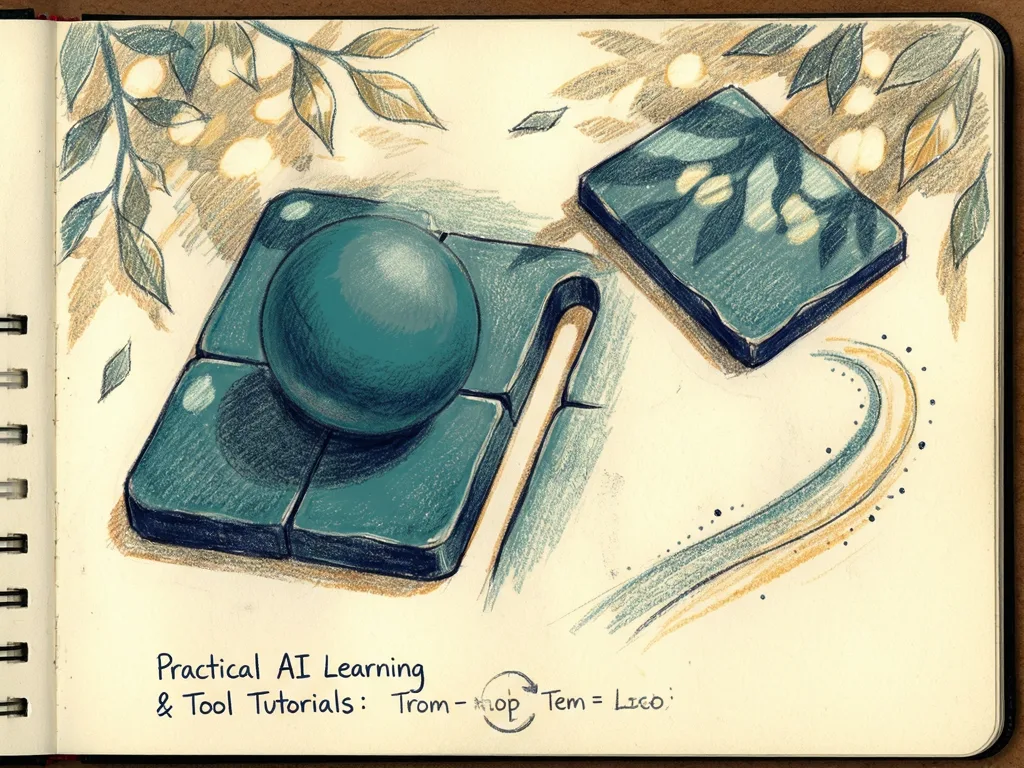
Across 256 test configurations, V-JEPA2-G assigns lower mean error to impossible motion on solid support, but higher error to impossible motion over a gap. The mixed direction matters. It suggests that the tested prediction error does not behave as a simple, one-way signal for every physically impossible event.
A cutoff still flags many possible clips
The paper also reports one development-fixed cutoff, meaning a threshold fixed during development. On clean clips, that cutoff reaches 53.9% balanced accuracy. At the same time, it falsely flags about 69% of possible clips.
For readers, that means the tested signal may need stronger validation before it is used to detect physical violations. A model may separate some cases, but the false flag rate shows why a single error threshold can produce many alarms on ordinary, physically possible motion.
Physical information is not the same as surprise
The authors also examine physical-label readouts, representation geometry, and action/appearance controls. These are different ways to probe whether a model stores, exposes, or reacts to physical structure. The key distinction is narrower: accessible physical information and action sensitivity do not, by themselves, establish that native prediction error measures physical surprise.

A model can contain physical cues in its features, respond to motion changes, or allow a label to be read out, while its native prediction error still fails to mark a physical violation in the expected way. The tested V-JEPA2-G results point to that gap between having physical information and turning that information into a reliable surprise signal.
What the test does not claim
These findings concern the tested models and settings, not an absence of physical knowledge. The paper does not say that V-JEPA2-G lacks physical knowledge. It asks a more precise question: when does a video world model's prediction error actually support a claim of physical surprise?
The authors invite others to consider how prediction-error signals should be validated before they are used for physical-violation detection. The links below show the paper, figures, code, and experiment records.
Paper: https://arxiv.org/abs/2611.01815
Project and figures: https://3-ml.github.io/jepa-surprise/
Code and experiment records: https://github.com/3-ml/jepa-surprise


Comments (0)