
NVIDIA DGX Spark 64GB Opens New Paths for Developers to Build and Scale Local AI
DGX Spark 64GB gives developers a $4,999 local AI box with unified memory, agent tools, and optional two-unit clustering for 128GB workloads.
Key Takeaways
- NVIDIA DGX Spark 64GB launches Oct. 23 at $4,999 from Acer, ASUS, Dell, Gigabyte, HP, and MSI, offering a lower-cost local AI platform with the same GB10 Grace Blackwell Superchip, DGX OS, and NVIDIA AI software stack as the 128GB model.
- The system is designed for private local AI agents and development workflows, supporting models up to 100 billion parameters and coming with ready-to-use software such as NVIDIA Agent Toolkit, CUDA-X, Nemotron, Ollama, vLLM, and PyTorch.
- Two 64GB DGX Spark units can be paired through NVIDIA Sync Cluster Assistant to create a 128GB unified-memory cluster, expanding support to models up to 200 billion parameters and delivering up to 1.7x performance in NVIDIA's Qwen 3.8 27B test.
- The platform supports practical day-one uses, including long-running coding or research agents, local inference companions for everyday PCs, and scalable multi-node clusters for larger models, longer context windows, or concurrent agent tasks.
Meta description: NVIDIA DGX Spark 64GB ships Oct. 23 from Acer, ASUS, Dell, Gigabyte, HP and MSI at $4,999, running private local AI agents and scaling to two units.

Tags: NVIDIA DGX Spark, local AI, AI agents, unified memory, NVIDIA Sync Cluster Assistant
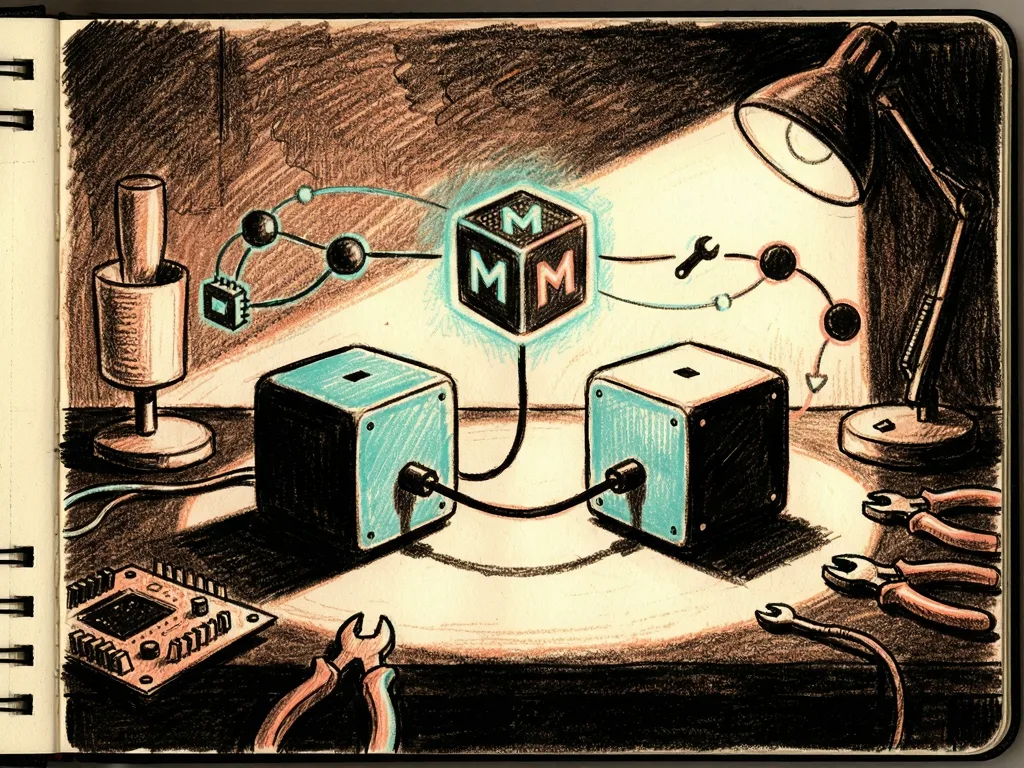
Featured image: An abstract, friendly illustration of a compact personal AI supercomputer glowing softly, linked to a matching second unit by a thin cable, surrounded by flowing data waves and small agent icons, with no text, people, logos, or brand marks.
Developers, researchers and AI enthusiasts who want to run open models, agents, inference, fine-tuning, data science and edge work using developers’ own data without turning to a cloud instance for every task now have a lower-cost entry point in the NVIDIA DGX Spark 64GB. NVIDIA said the configuration will be available on Friday, Oct. 23, from top manufacturer partners Acer, ASUS, Dell, Gigabyte, HP and MSI starting at $4,999. It keeps the GB10 Grace Blackwell Superchip, DGX OS and full NVIDIA AI software stack used by the 128GB model, and NVIDIA positioned the new SKU as a way to run capable local agents privately, without cloud dependency. Two 64GB units can also be paired through NVIDIA Sync Cluster Assistant.
A Complete Local AI Box, Not Just a GPU
The 64GB version is part of a broader shift: capable open models are becoming smaller, and AI agents are moving from research demos into regular development work. DGX Spark is NVIDIA’s compact personal AI supercomputer for that moment. It bundles NVIDIA Grace Blackwell compute, unified memory, NVIDIA ConnectX-7 networking and an NVIDIA CUDA-accelerated AI software stack into one machine. Unified memory lets the CPU and GPU work with the same memory pool, which can make large model workloads easier to run than systems where memory is split across separate chips.
The new SKU is available only through the manufacturer partners, but it does not cut the core hardware: the GB10 Grace Blackwell Superchip, DGX OS and full NVIDIA AI software stack are the same as in the 128GB model. NVIDIA says the 64GB system supports up to 100-billion-parameter models and the agentic applications built on them, fully on device. Agentic applications are software that can plan and carry out multi-step tasks, such as reviewing code or analyzing documents, rather than only answering one prompt.
The platform also arrives with a developer-ready software set. NVIDIA Agent Toolkit, CUDA-X AI libraries, Nemotron open models, and popular runtimes such as Ollama, vLLM, and PyTorch with CUDA are supported out of the box, so a developer can go from power-on to running models in minutes. Blender is among the first major creator application providers to support the platform, with a prebuilt, downloadable installer coming soon.
Scaling From One Unit to a 128GB Pair
A single DGX Spark 64GB is meant for projects that fit inside its memory; the design lets developers start with the memory their projects need today and scale multi-node clusters as pipelines grow. When work grows, two units can be clustered with NVIDIA Sync Cluster Assistant without additional setup. Each DGX Spark includes a built-in NVIDIA ConnectX-7 NIC, and two systems can connect directly with a QSFP cable. In that configuration, the memory pools to 128GB, model support expands to up to 200 billion parameters, and the cluster delivers twice the memory bandwidth. NVIDIA said that in its Qwen 3.8 27B test, two clustered 64 GB systems delivered up to 1.7x performance compared with a single system, with room to keep scaling as workloads demand.
The NVIDIA Sync app handles the cluster setup. The cluster assistant feature detects connected units, validates device configuration and configures the ConnectX-7 network, so developers can focus on their work rather than infrastructure plumbing. Because every node runs the same NVIDIA software stack, scaling from one unit to two does not require reconfiguring the software environment.
More convenience is coming at the end of the month, when NVIDIA Sync Model Launcher arrives. The tool makes running local AI as simple as clicking a few buttons. Developers can download and launch Qwen3.8 27B on a single DGX Spark system or a cluster, with NVIDIA Sync configuring the model to run across connected devices and making it accessible from users’ laptops. The launcher will also set up OpenCode to use the model, so developers can start coding in their browser.
Three Workflows That Benefit Right Away
NVIDIA framed the 64GB configuration around practical tasks that can start on day one, whether a user keeps one system or connects multiple systems for larger workloads. The first example is a long-running AI agent. A coding or research agent can stay on DGX Spark, ready to review code, analyze documents or carry out multistep tasks. A cluster adds capacity for larger models, longer context windows, or multiple agents working at once.

The second example turns DGX Spark into a companion for an everyday PC. A language-generation or image-generation model can run on DGX Spark while a laptop or desktop runs an agent or creative application. DGX Spark handles the model inference, freeing the personal computer for other work. Inference is the process of using a trained model to generate answers, images or other outputs.
The third example is scaling when a task outgrows one unit. Running a larger model, using a longer context window, or handling concurrent agent requests can push a single system past its limits. With two DGX Spark 64GB systems connected over the 200 GbE fabric via NVIDIA Sync Cluster Assistant, memory pools to 128GB. The same workflow that ran on one unit can scale to two without reconfiguring the software environment.
What Comes Next in the Local AI Stack
Getting started is intentionally simple. Users download a supported inference framework — llama.cpp, Ollama, vLLM or LM Studio — then download the recommended local model for their workflow. To scale to two units, they connect the systems through their NVIDIA ConnectX-7 ports and launch NVIDIA Sync Cluster Assistant, which configures the network and routes workloads automatically. For agentic AI playbooks, NVIDIA points to the NemoClaw, OpenClaw, Hermes Agent and OpenShell pages on build.nvidia.com. For builders, the practical question is memory: a single 64GB box is for models that fit in 64GB, while a two-unit cluster reaches 128GB and supports up to 200 billion parameters.
The company also listed additional resources on build.nvidia.com/spark for DGX Spark. Playbooks for Serve LLMs With vLLM, Run OpenClaw With a Local LLM, and Connect Multiple DGX Sparks for Distributed Workloads are coming soon to 64GB devices. Outside DGX Spark, NVIDIA said new Windows PCs powered by NVIDIA RTX Spark are coming this month from Acer, ASUS, Dell, HP, Lenovo, Microsoft and MSI. Interested buyers can sign up for the RTX Spark newsletter for future updates.
Alibaba’s Qwen-Image-2.1 also moves the local AI story closer to creators. The model brings image generation and editing together in a lightweight, open-weight package and can run locally on NVIDIA RTX GPUs, DGX Spark and DGX Station, giving creators more ways to create and refine images on their own hardware. NVIDIA is directing readers to its social and newsletter channels for more information: Follow NVIDIA RTX Spark on X, Instagram, TikTok and Facebook, subscribe to the NVIDIA Local AI newsletter, and follow NVIDIA Workstation on LinkedIn and X. NVIDIA also references a notice regarding software product information.


Comments (0)