
RoboColosseum evaluates physical intelligence at scale in real-world environments.
RoboColosseum tests robot AI across four embodiments, exposing generalization gaps and weak cross-robot rankings after fine-tuning.
Key Points
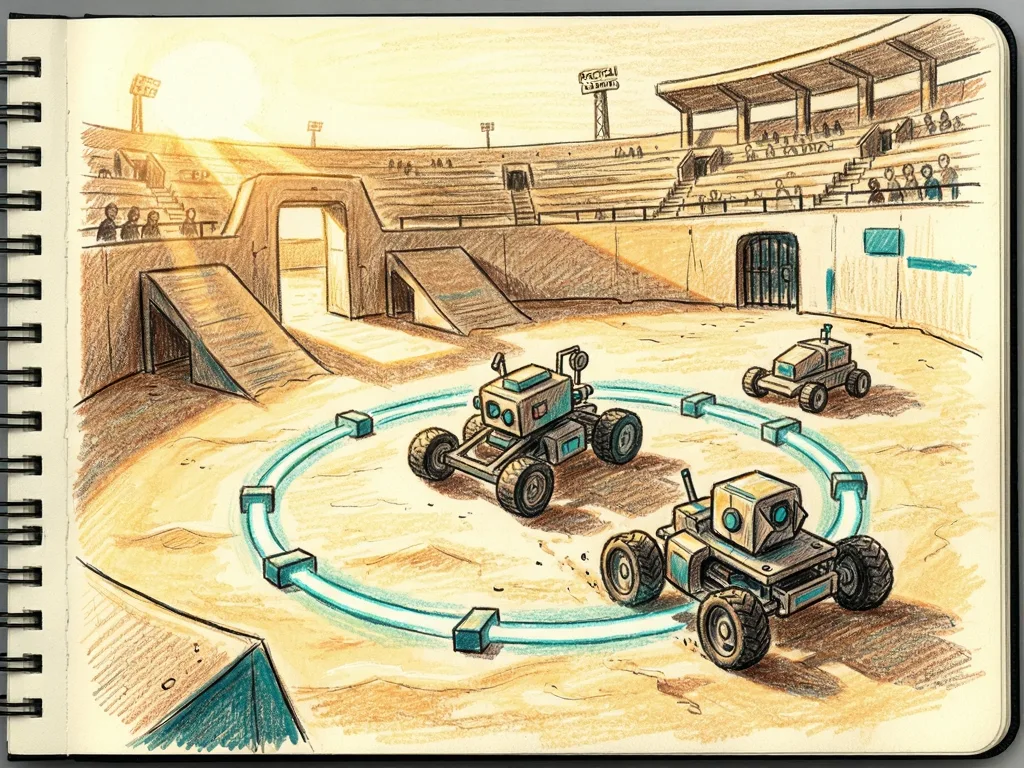
- RoboColosseum is a distributed framework for evaluating general-purpose robot policies across multiple real-world robot bodies, tasks, and sites using shared serving and comparison protocols.
- In the Open Track, frontier AI agents closely compete with specialized vision-language-action policies, but all systems still struggle to reliably complete open-world tasks without task-specific adaptation.
- In the Fine-tune Track, performance rankings change sharply across robot embodiments, showing that strong fine-tuned policies on one platform do not necessarily transfer equally well to others.
- Measuring partial task progress reveals meaningful differences that binary success or failure hides, helping developers compare systems that fail the final task but make different amounts of progress.
- The study suggests that robust robot evaluation requires many sites, matched conditions, equal fine-tuning budgets, and richer metrics rather than single-site leaderboards.
Meta description: RoboColosseum tests five VLA policies and three AI agents across four robots, showing new distributed testing can reveal generalization gaps.

Tags: RoboColosseum, robot policies, vision language action, embodied AI, physical evaluation

RoboColosseum is a distributed evaluation framework for general-purpose robot policies. In an initial study, it compares five vision-language-action (VLA) policies and three frontier AI agents across four robot bodies, or embodiments: SO-101, Franka, Bimanual-YAM, and G1 Humanoid. For readers tracking embodied AI, the main question is not which model wins one demo, but whether a policy can keep working when the robot, task, and testing site change. RoboColosseum tries to answer that by putting many locally operated robots under shared serving and comparison rules.
Why shared rules matter for physical testing
Robot learning has a practical problem. A policy that performs well in one lab may fail somewhere else because the robot body, the task setup, or the local control stack is different. That same variation is what makes physical trials valuable: it tests whether a system is robust. But it also makes reproduction difficult, because two teams can claim to run the same test while using subtly different conditions.
RoboColosseum responds by combining unified policy serving and standardized protocols across a network of locally operated robots in diverse environments. The framework does not erase the messiness of the physical world. Instead, it tries to make that messiness comparable. A benchmark that depends on one site can overstate a model's robustness, while a benchmark with no shared protocol can make different results impossible to compare. RoboColosseum sits between those extremes.
Open Track tests raw generalization
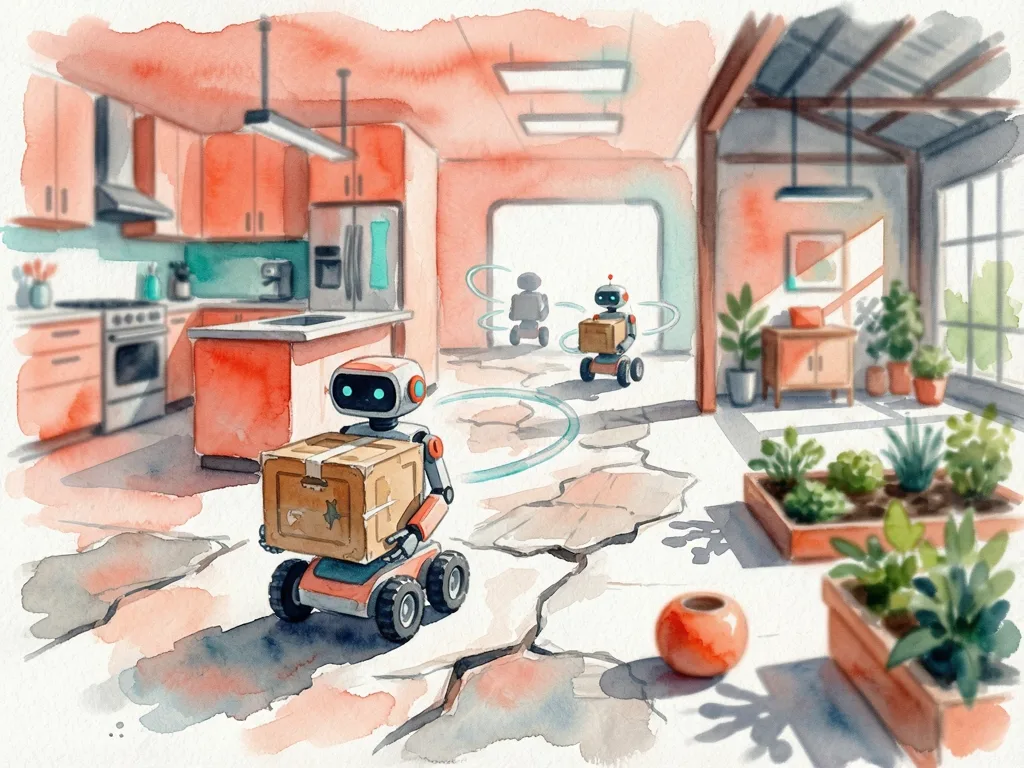
The study's first evaluation path is the Open Track. It compares models without task-specific adaptation, so the question is how well each system generalizes out of the box. The trials are blinded and pairwise, with matched local conditions, so each comparison is meant to be fair rather than a showcase built for one model.
Across 5,699 Open Track comparisons at 124 sites, the three frontier AI agents rival the five specialized VLA policies. That is an important signal: general-purpose AI systems are now close enough to specialized robot policies to compete in physical evaluations. At the same time, the result is not a clean victory. All systems struggle to complete open-world tasks reliably, which keeps the bar for real deployment high.
This setup is useful because it separates raw model ability from extra training effort. If a policy needs custom tuning before it can compete, that is a different result from a system that performs well directly.
Fine-tuning reshuffles the leaderboard
The second path is the Fine-tune Track. It measures how well VLA policies adapt to 20 tasks when each policy receives the same 100 demonstrations per task. Equal demonstration budgets are central here: the study is testing adaptation ability, not who can gather the most data. The same budget also gives a common test of how much a policy can learn from a fixed amount of supervised physical data.
After fine-tuning, GR00T N1.7 leads on SO-101, and π0.5 leads on Franka and Bimanual-YAM. These two leaders show that fine-tuned VLA policies can become strong on specific robot bodies.
The more cautionary result is that rankings do not line up neatly across embodiments. Policy rankings show weak agreement across embodiment-specific task suites, with Kendall's W = 0.24. Kendall's W is a measure of ranking agreement, so a low value means the leader on one robot setup may not be the leader on another. Open Track rankings also poorly predict relative performance after fine-tuning, with substantial rank reversals on all three embodiments shared between tracks: SO-101, Franka, and Bimanual-YAM.
Partial progress reveals hidden gaps
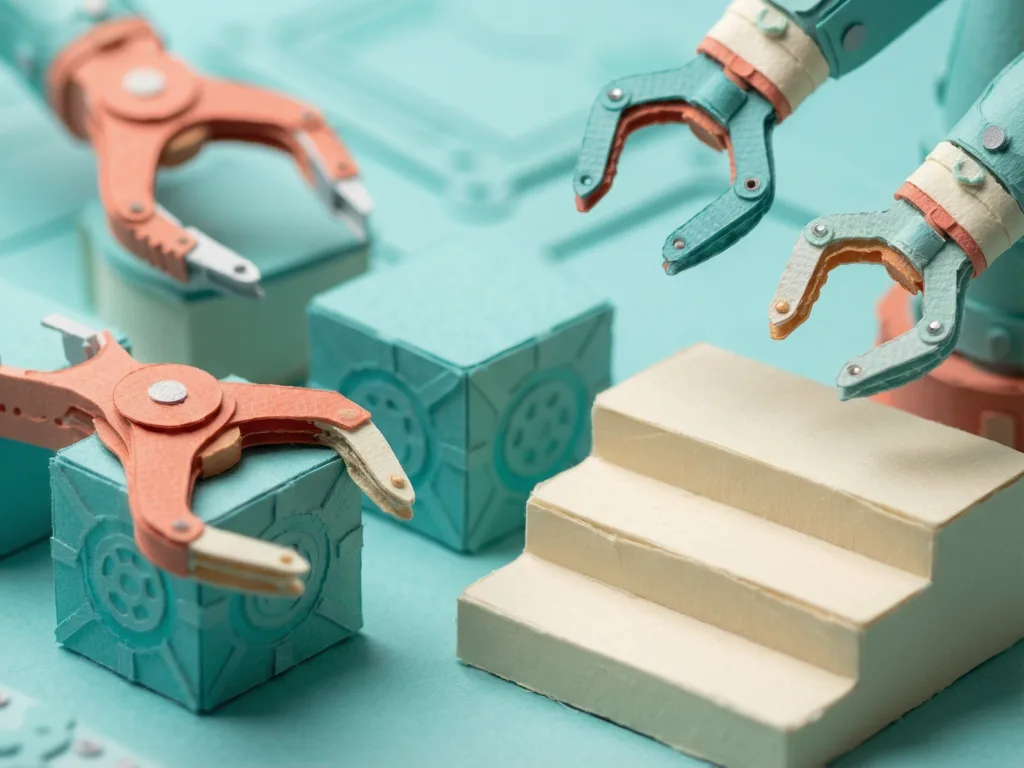
The study also argues that pass or fail is too coarse. Measuring partial progress reveals differences that task success alone misses. On the G1 Humanoid, no policy completes any of the five tasks. Yet average progress ranges from 13.3% to 23.2% across policies. Even when every system fails the final task, some systems get noticeably closer to the goal than others.
That matters because many robot tasks have steps. A policy that reaches an object, moves it partway, or avoids a collision may be more useful than binary scoring suggests. For developers, partial progress can guide debugging. A system that reaches 23.2% on average may be closer to a working policy than one that reaches 13.3%, even if both fail the final task.
The evaluation process itself can also become more efficient. Open Track rankings stabilize as trials accumulate. Active matchmaking achieves comparable ranking agreement with substantially fewer physical trials than uniform sampling. In plain terms, the framework can spend its limited robot time more wisely instead of testing every possible comparison equally.
What readers should take away
RoboColosseum shows how distributed physical evaluation can reveal where robot policies generalize, how well they adapt to new tasks, and how far they progress on tasks they fail to complete. The practical lesson is that single-site robot leaderboards are not enough. A stronger evaluation needs many sites, matched local conditions, equal fine-tuning budgets, and metrics that capture partial success.
For robotics researchers, the result is a template for more comparable physical benchmarking. For AI readers, it is a reminder that frontier agents and specialized VLA policies are becoming hard to separate in real robot settings. For anyone hoping to deploy general-purpose robots, the gap between competitive trials and reliable task completion remains the problem to solve.




Comments (0)