
RynnUnify Moves Toward a Unified Embodied Brain
RynnUnify links reasoning, video prediction, and robot control, using interleaved video-language planning for embodied understanding.
Key Takeaways
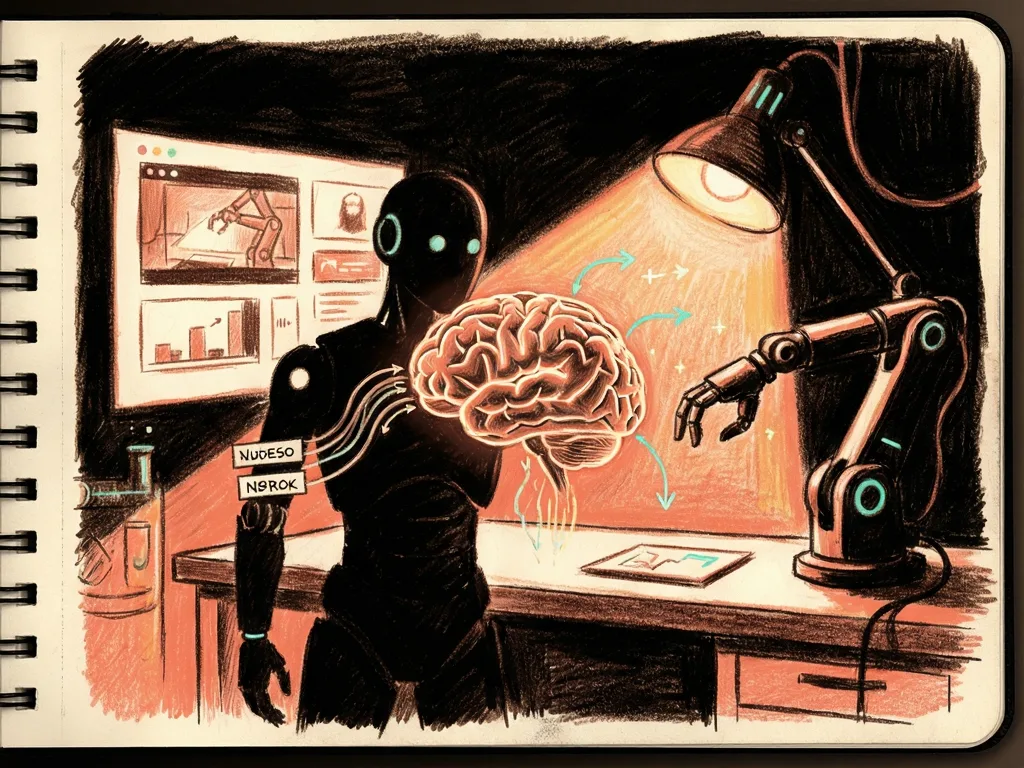
- RynnUnify is a unified Mixture-of-Transformers model built on Cosmos3 that combines an autoregressive Reasoner with a video Generator to link embodied understanding, spatial grounding, and visual prediction.
- It plans by alternating between reasoning and generated video, using cross-chunk scene memory, self-forcing training, and adaptive durations for coherent long-horizon planning.
- An agentic controller trained with reinforcement learning decides when to answer directly and when to generate visual evidence, choosing between text reasoning and simulation as needed.
- A World-Action Model extension connects predicted visual futures to robot control through joint video-action training, targeting multi-step manipulation tasks.
- The source describes the architectural direction rather than proven performance, with no benchmark results, release details, or evaluation data provided.
RynnUnify Combines Reasoner and Video Generator for Embodied Planning
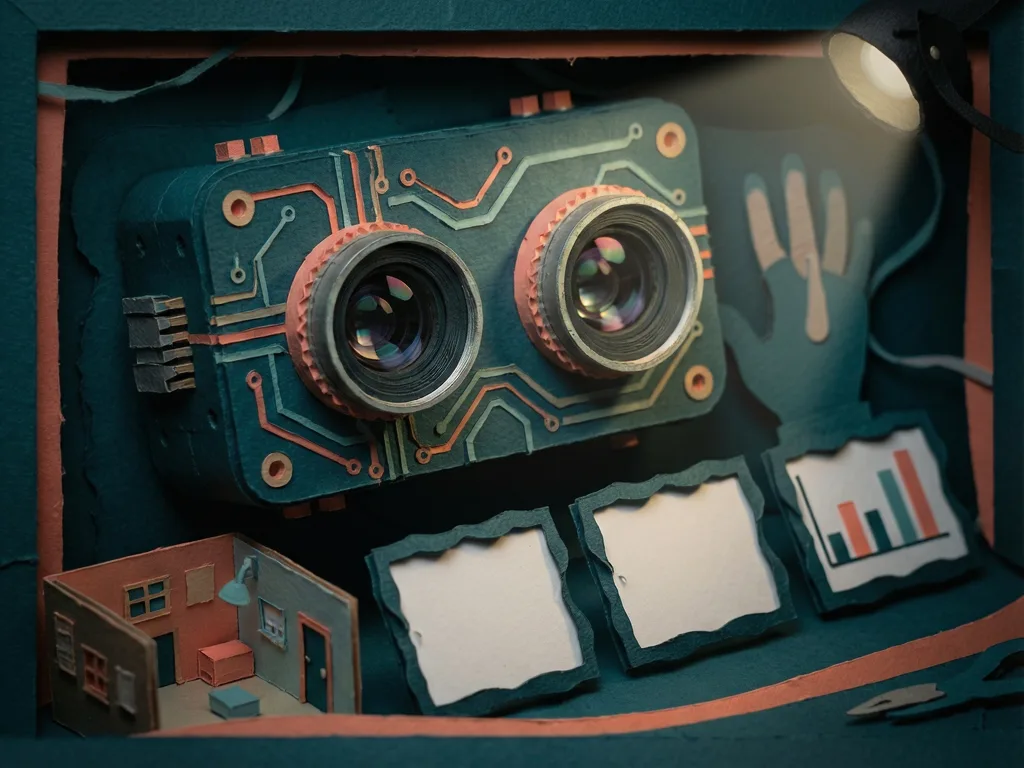
RynnUnify is a Mixture-of-Transformers architecture that combines an autoregressive Reasoner with a rectified-flow video Generator. Built on Cosmos3, it connects embodied understanding, spatial grounding, and long-horizon visual planning through interleaved video-language reasoning. For readers, the central point is not a single chatbot or video tool, but an attempt to let one system understand a scene, imagine how it changes, and use that imagined future to plan.
One architecture for understanding and prediction
The source describes RynnUnify as a unified embodied brain. In this framing, embodied cognition, spatial grounding, and video generation are brought into one architecture. The goal is to connect scene understanding with predictions of how the physical world evolves. Spatial grounding means tying language or reasoning to positions and relationships in a scene. Embodied understanding refers to interpreting the world from the viewpoint of an agent that can act in it.
Planning through interleaved video and reasoning

RynnUnify alternates subtask reasoning with video prediction. Each generated outcome is used to plan the next step. The design includes cross-chunk scene memory, self-forcing training, and adaptive durations. Cross-chunk scene memory suggests the system can carry information across pieces of a sequence. Self-forcing training suggests it learns by using its own generated outputs during training. Adaptive durations suggest the model can adjust how long each video or planning step lasts. These details support coherent visual planning over long horizons, where short clips or isolated reasoning steps may lose continuity.
An agent decides when to generate visual evidence
The source also describes agentic interleaved thinking. An agent trained with reinforcement learning learns when to answer directly and when to generate visual evidence. Through BCPO, it learns to formulate generation requests, interpret predicted outcomes, and select the reasoning path that benefits the task. This adds a practical behavior: the system does not always produce a video. It can choose between text-style reasoning and visual simulation depending on what the task needs.
From world prediction to robot control
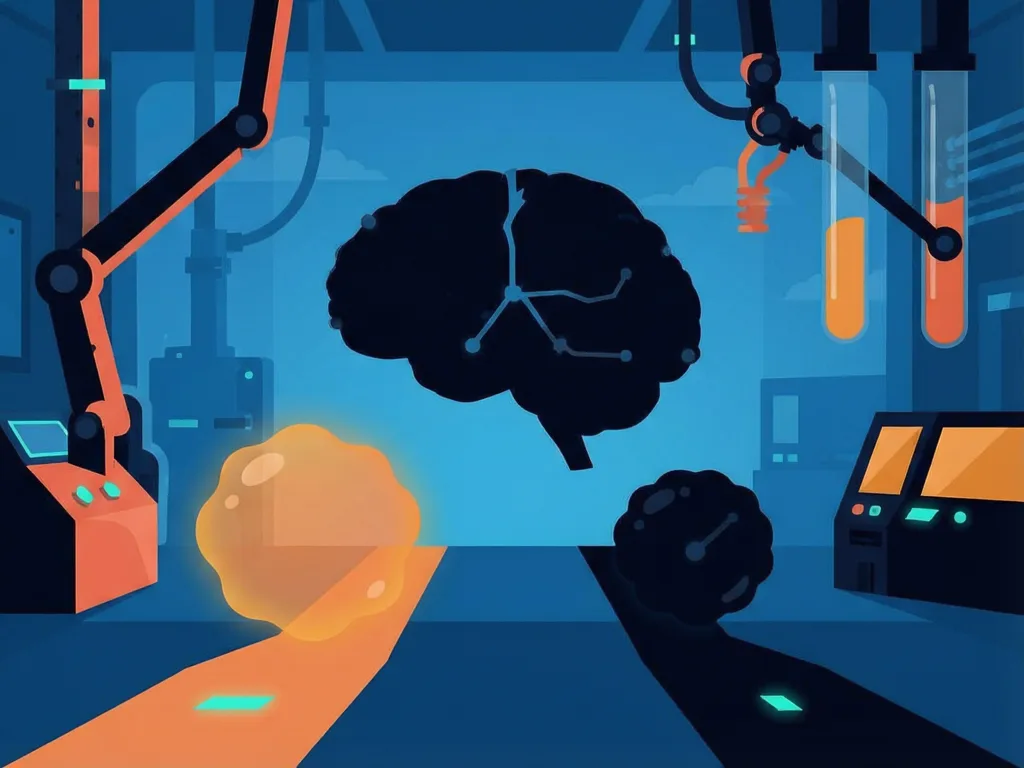
The World-Action Model extension is presented as the bridge from prediction to action. It translates predictive world representations into robot control through joint video-action training. The source says this supports composite manipulation tasks. Composite manipulation usually means tasks made of multiple steps, where a robot must grasp, move, place, or adjust objects in sequence. The extension matters because visual planning alone does not control a machine; the model must connect what it predicts to executable actions.
What readers should know
The provided material does not give benchmark scores, release dates, pricing, hardware requirements, or evaluation details. It does not say whether RynnUnify is already deployed, how it compares with other Cosmos3-based systems, or what datasets were used. The factual value for readers is therefore architectural: it shows a direction where understanding, video prediction, and action are tied together in one system. That direction is relevant to robotics, embodied AI, and visual planning, but the source alone is not enough to confirm performance or real-world readiness.



Comments (0)