
GPT-6 Astra helped Legora review 41 documents in just minutes
Legora, an AI-assisted document review platform, tested GPT-6 Astra on a financial review workflow of 41 documents with four deliberately planted errors. The model caught all four errors in minutes and delivered nearly 40% performance gains, combining speed and accuracy. This human-in-the-loop approach could transform document review for finance, legal, and compliance teams.

If you work in finance, law, or compliance and spend hours reviewing dense documents, this story is worth your attention. Legora, an AI-assisted document review platform, recently ran a financial-review workflow powered by GPT-6 Astra, and the results were striking: the system processed 41 documents in minutes, spotted all four deliberately planted errors in the test set, and delivered performance gains of nearly 40 percent. In this article, we break down what happened, why it matters, and what it could mean for teams that review contracts, statements, and reports for a living.

What the Test Involved
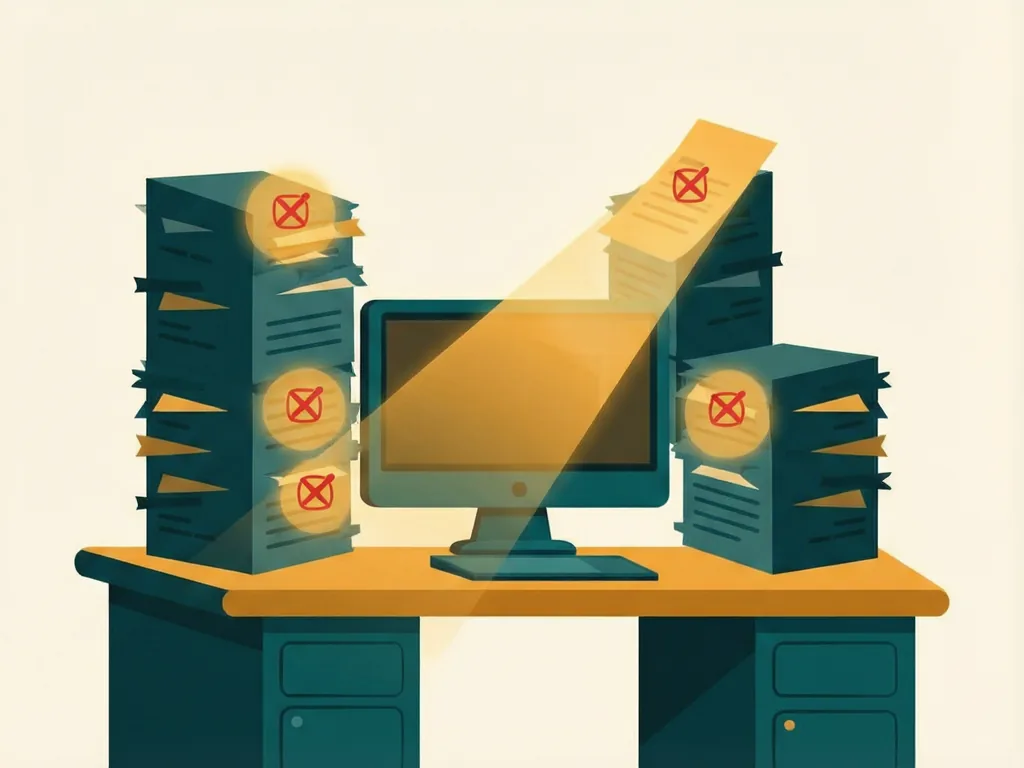
The setup was straightforward but demanding. Legora's team prepared a batch of 41 documents and deliberately embedded four errors in them — the kind of subtle mistakes that a tired human reviewer could easily miss, such as inconsistencies in figures or details that don't line up across pages. The goal was to see whether GPT-6 Astra, running inside Legora's review workflow, could catch every planted issue while working through the full set of files.
It did. The model flagged all four errors, and it did so in a matter of minutes rather than the hours such a review might traditionally take. Just as importantly, the overall workflow saw performance improve by close to 40 percent, suggesting the gains weren't limited to error-catching alone but extended to how efficiently the entire review process ran.
Why Speed and Accuracy Together Matter
Plenty of AI tools promise speed, and plenty promise accuracy. The challenge in document review is getting both at once. A system that rushes through files but misses mistakes is worse than useless in finance — it creates false confidence. A system that is accurate but slow doesn't solve the workload problem either.
That's what makes this result notable. Catching all four planted errors shows the model was thorough enough to catch deliberate, hard-to-spot problems. Finishing 41 documents in minutes shows it wasn't trading speed for that thoroughness. And the near-40 percent performance improvement suggests the workflow as a whole — not just one metric — became meaningfully better with GPT-6 Astra in the loop.
For teams handling high volumes of financial paperwork, that combination is the whole point. Review capacity often becomes a bottleneck: there are only so many hours in a day, and human attention fades over long sessions. An AI layer that keeps its accuracy consistent across an entire batch, no matter how long the batch is, changes the math.
What Legora's Workflow Looks Like in Practice
While the full technical details of Legora's setup haven't been published, the general shape of this kind of workflow is easy to picture. Documents are uploaded into the platform, and the AI model reads through them systematically, comparing figures, terms, and details across files. When something looks inconsistent or out of place, it gets flagged for a human to verify.
That last part is key. In this test, the AI wasn't making final decisions — it was surfacing potential issues so people could confirm them. That human-in-the-loop model is the healthiest way to use AI in high-stakes review work. The machine does the heavy lifting of reading and cross-checking; the person does the judgment calls. Errors like the four planted in this test are exactly the kind of thing that benefits from this approach: an AI catches them reliably, and a human confirms them before anything downstream happens.

It's also worth noting what this test doesn't tell us. A controlled test with four known errors is a great proof of concept, but real-world documents are messier — errors can be ambiguous, context-dependent, or debatable. The 40 percent improvement figure comes from this specific workflow, so teams considering similar tools should expect results to vary with their own document types and processes.
What This Means Going Forward
If you manage document review in finance, audit, legal operations, or compliance, results like this point to a practical shift. AI models are getting good enough at careful, cross-document reasoning that they can take on genuine review workloads — not just summarizing or searching, but actively checking for problems.
The realistic takeaway isn't that AI replaces reviewers. It's that one reviewer supported by a system like Legora's can cover far more ground with fewer missed details. The near-40 percent performance gain in this test suggests the productivity upside is real, and the perfect error-detection score suggests reliability is improving fast.
As always with AI in high-stakes work, the sensible path is to pilot these tools on your own documents, measure your own results, and keep humans in the verification step. But the direction is clear: careful document review is becoming faster, and the tools doing it are earning their place in professional workflows.





Comments (0)