
Claude Sonnet Version 5.5
Sonnet 5.5 is faster, cheaper, stronger on benchmarks, and now powers claude.ai free tier; pelican tests warn max thinking can waste tokens.
Key Takeaways
- Claude Sonnet 5.5 offers up to 30%+ faster responses and lower runtime cost while keeping the same price as Sonnet 5 and improving benchmark performance.
- It now powers Claude’s free tier, giving Anthropic a notably more capable free offering compared with OpenAI’s ChatGPT free tier using Luna 5.6.
- The model is especially useful for coding and web graphics tasks, appearing nearly as strong as Opus 5.5 on some of those workloads.
- The pelican-on-a-bicycle SVG test shows that “max” thinking effort can waste tokens and cause failures, making reasoning settings important for compact outputs.
- Future competition may depend less on raw benchmarks and more on lower-cost models, while pricing details for the next model remain unclear.
Anthropic Claude Sonnet 5.5 Moves Faster and Upgrades Free Tier

Meta description: Anthropic Claude Sonnet 5.5 is faster and cheaper to run, now powering claude.ai free tier. Review pelican tests, coding limits, and benchmark gains.
Tags: Anthropic, Claude Sonnet 5.5, free tier, pelican benchmark, Opus 5.5
Featured image: abstract friendly illustration of a pelican riding a bicycle beside a speedometer, no real people, no logos, no text
Anthropic released Claude Sonnet 5.5 today. For developers and everyday claude.ai users, the model gives a faster Sonnet-class option at the same price as Sonnet 5, and it now powers the claude.ai free tier. Anthropic's description says it is 30%+ faster and can cost up to 30% less for most work. It appears to beat Sonnet 5 on every benchmark and should be cheaper to run as well.

What changed in Claude Sonnet 5.5
The update keeps Sonnet's role as a balanced choice inside Anthropic's Claude family, with Opus 5.5 sitting above it for harder work. The practical selling point is not a new price tag. It is better output for the same price, with lower runtime cost and shorter waits. That can matter most in tasks that need many tokens, such as code generation, document handling, or repeated testing of visual prompts.
The pelican test shows why settings matter
A recurring pelican-on-a-bicycle drawing test checks whether models can follow a simple visual brief and produce a usable SVG. SVG is a vector image format, so a model that plans too much may still fail to deliver the final file.
Sonnet 5.5 shows the same bug as Opus 5.5 in this test. With thinking effort set to "max", the model spent 128,000 tokens thinking, at a cost of $1.28, before running out of tokens and failing to produce an SVG. With thinking effort set to "xhigh", the pelican attempt cost 5.74 cents and took 41 seconds. The result is a warning for developers: a larger reasoning budget can become a token sink when the task needs a compact output.
Free tier access is the bigger story
The most notable product change is distribution. Claude Sonnet 5.5 is now the model behind the free tier on claude.ai. That comparison matters because OpenAI's ChatGPT free tier uses Luna 5.6, so Anthropic currently has a much more capable free offering.
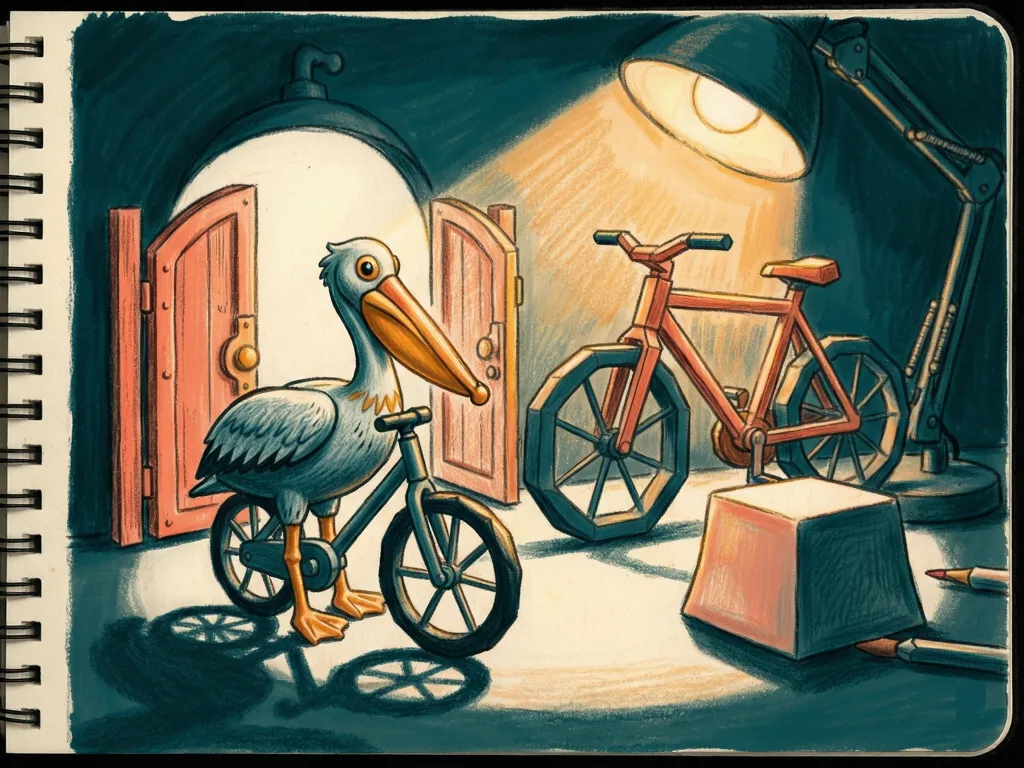
The free-tier test asked the model to build an HTML page that renders a three-dimensional pelican riding a bicycle with WebGL. WebGL is a standard browser technology for drawing 3D graphics. The test author judged the result to be solid. Sonnet 5.5 also appears almost as good as Opus 5.5 on some coding tasks, including various viral 3D animation tricks.
What comes next and what remains unclear
The forward-looking note ends with a hope that the relevant model or tier will be price competitive with GPT-6 Luna, but the available details do not name that model or give its timing. That leaves a practical question for readers: if Anthropic keeps Sonnet-class power at the free tier, the next competitive pressure may come from lower-cost models rather than raw benchmark wins. For now, the concrete facts are the benchmark uplift, the same price, the faster runs, and the free-tier switch.
Who should use it / who should skip it
Use Claude Sonnet 5.5 if you want a stronger free-tier model on claude.ai, need faster Sonnet-class work at the same price as Sonnet 5, or are testing coding tasks that produce web graphics. It is also worth benchmarking against your current model if long prompts, code generation, or 3D browser demos are part of your workflow.
Skip or delay if you need the top-end Claude model for every difficult coding task; the source only says Sonnet 5.5 is almost as good as Opus 5.5 on some coding tasks, not all. Also avoid assuming "max" thinking effort is always best, because the pelican bug shows it can exhaust the token budget before producing output. For teams, compare Sonnet 5.5 with Sonnet 5 on real workloads, not only benchmark scores.



Comments (0)