
Claude 5.5 Haiku
Claude Haiku 5.5 matches GPT-6 Luna under 100K tokens, but its stricter tokenizer, higher long-context rates, and cache rules reshape API costs.

Key Takeaways
- Claude Haiku 5.5 is Anthropic’s new fast, low-cost model, priced at $0.10/$0.50 per million input/output tokens up to 100,000 tokens, matching GPT-6 Luna.
- For prompts above 100,000 tokens, Haiku 5.5 becomes 5x more expensive, while GPT-6 Luna remains cheaper until its later 272,000-token pricing step.
- Haiku 5.5 uses a less generous tokenizer, making the same prompt count around 1.25x more tokens than Haiku 4.5, so real costs depend on measured token usage, not headline prices.
- Anthropic also halved Sonnet 5.5 cache read prices and added non-rolling monthly API credits to subscriptions, improving low-cost API budgeting.
- Haiku 5.5 is best for short prompts, lightweight tasks, and requests under 100,000 tokens; long-document pipelines or predictable token billing favor GPT-6 Luna.
Meta description: Claude Haiku 5.5 matches GPT-6 Luna pricing under 100,000 tokens, while a new tokenizer and Sonnet 5.5 cache cuts reshape low-cost API budgeting.
Tags: Anthropic, Claude Haiku 5.5, GPT-6 Luna, API pricing, LLM benchmarks
Featured image: Abstract friendly illustration of a pelican riding a bicycle, with no real people, no logos, no text.
Anthropic released Claude Haiku 5.5 on 7th October 2026, as previously promised, as its new fast, low cost model. For developers, product teams, and API users comparing OpenAI and Anthropic pricing, this update changes the math: Haiku 5.5 now matches GPT-6 Luna at $0.10/$0.50 per million input/output tokens up to 100,000 tokens, but a less generous tokenizer and a higher price above 100,000 tokens mean the best choice depends on prompt length, caching needs, and reasoning settings.
The pricing reset
Haiku 4.5 came out almost a year ago and cost $1/million input and $5/million output. That was relatively expensive even back then, and it was a full 10x the price of OpenAI’s GPT-6 Luna, which launched last month. The new model resets the fast tier: Claude Haiku 5.5 exactly matches Luna’s price at $0.10/$0.50 up to 100,000 tokens.
Beyond 100,000 tokens, Haiku 5.5 increases 5x to $0.50/$2.50. GPT-6 Luna has its own price step, but it arrives later, at 272,000 tokens, and rises only to $0.20/$0.75. That makes the first 100,000 tokens a tie on sticker price, while longer contexts favor Luna.

| Model | Standard price | Increase point | After increase |
|---|---|---|---|
| Claude Haiku 5.5 | $0.10/$0.50 | 100,000 tokens | $0.50/$2.50 |
| GPT-6 Luna | $0.10/$0.50 | 272,000 tokens | $0.20/$0.75 |
The original write-up also says that when workloads fit inside 100,000 tokens, Haiku 5.5 is the same price as Luna and reports higher benchmark scores. Above 100,000 tokens, Luna looks like a much better deal. No specific benchmark numbers are given, so buyers should treat that as a reported advantage rather than a verified universal win.
The hidden cost: a less generous tokenizer
The headline price drop is not the whole story. Claude Haiku 5.5 uses a new, less generous tokenizer. The Claude Token Counter tool shows that the same long prompt uses around 1.25x as many tokens with Haiku 5.5 compared with Haiku 4.5.
That creates a hidden price increase. If a prompt that used 10,000 tokens before now counts as roughly 12,500 tokens, the cost per task can rise even though the per-token rate is lower. For teams that route traffic by model, the practical rule is simple: compare measured token counts, not advertised prices alone. A model can look cheaper per token while becoming more expensive per completed request.
Reasoning effort, pelicans, and plugin support
The update also matters for local tooling. The most recent release of llm-anthropic finally fixed the plugin so a new version does not need to be shipped for every new model. That makes hands-on testing easier, and the original test used a familiar pelican-on-bicycle SVG prompt across low, medium, high, xhigh, and max reasoning settings.
Claude Haiku 5.5 does not let users disable reasoning, and it defaults to medium. The test found a good bicycle frame for everything beyond low. The low effort pelican cost 0.0936 cents and took 7 seconds. The max effort pelican took 5 minutes 9 seconds to generate but still cost only 3.3826 cents. Its reasoning trace starts “This is the classic pelican-on-bicycle SVG test...”.
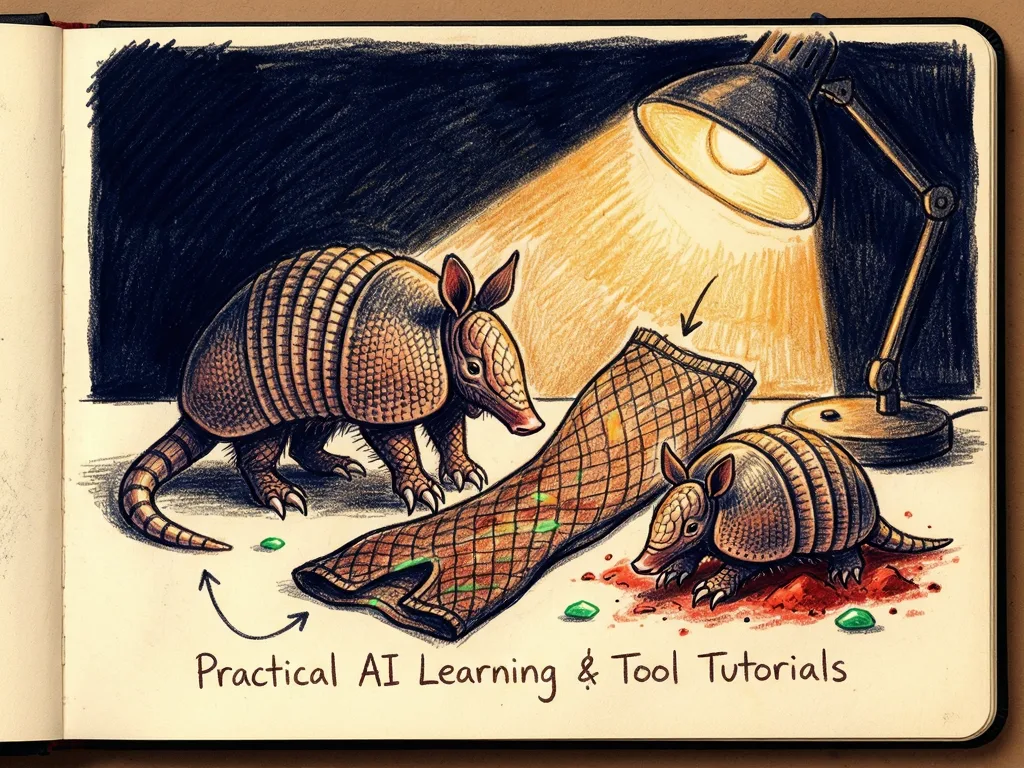
Because that trace showed awareness of the benchmark, the original write-up also included a deliberately odd alternative prompt: Generate an SVG of an armadillo in fishnet tights jaywalking on Mars, run on xhigh and compared against some other recent models, with background on that. For comparison, the pelican produced by Haiku 4.5 a year ago cost 0.7583 cents. Haiku 4.5 did not support reasoning levels, and it sucked at drawing pelicans.
Cache discounts and subscription API credits
Anthropic did not only announce Claude Haiku 5.5. On the same day, it said it is halving the price of cache reads for Sonnet 5.5. That change matters for applications that reuse prompts, documents, or tool outputs across many calls, because cache reads can matter in repeated-context workflows.
Anthropic has also added API credits to subscription plans. The claim flow is described as pleasantly easy: navigate to Settings -> Billing and select the API organization that should benefit from the credits every month. The monthly credits do not roll over, so teams need to use them or lose them.
This also narrows a gap with OpenAI. OpenAI still allows users to apply their Codex subscription to personal API use, which works out as a better deal for heavy API users. Anthropic’s new credit scheme goes at least some way toward overcoming that difference, though it still comes with a monthly expiration rule.
What buyers should do next
For short prompts, classification jobs, lightweight coding helpers, and extraction tasks that stay under 100,000 tokens, Claude Haiku 5.5 gives Anthropic a credible low-cost option. For long-document pipelines, agents with large tool histories, or any workload that regularly crosses 100,000 tokens, GPT-6 Luna is the clearer price choice because its step-up happens at 272,000 tokens and remains lower.
Who should use it: teams that want Anthropic’s fast tier, can live with the new tokenizer, and can keep many requests under 100,000 tokens. Who should skip it: users whose priority is long context, predictable token billing, or the ability to turn reasoning off completely.


Comments (0)