
The paper presents a taxonomy of multi-agent design patterns, anti-patterns, and lessons learned from manufacturing.
This guide outlines multi-agent patterns, anti-patterns, and lessons for building reliable, cost-efficient AI systems.

Key Takeaways
- Start with deterministic multi-agent patterns such as sequential pipelines, conditional workflows, routers, and parallel fan-outs to keep testing, debugging, latency, and token costs predictable.
- Use autonomous runtime patterns like plan-based orchestration, handoffs, shared conversations, and debate only when work cannot be fully planned in advance, since they increase flexibility but also cost and complexity.
- Treat reliability as a compounding problem: many dependent agent steps can sharply reduce end-to-end success, so production systems should combine workflow, autonomous, and task-management patterns with hard limits and safety boundaries.
- Avoid common anti-patterns that waste budget or create risk, including god agents, unbounded retries, schema-less natural-language contracts, premature multi-agent design, and unguarded customer-facing actions.
This guide is for enterprise teams building multi-agent systems. It explains how to decide whether a use case needs multiple agents, choose multi-agent coordination patterns, and spot costly anti-patterns before they inflate token spend, latency, and reliability risk.
Start With Deterministic Control Flow
Coordination patterns split into two tiers by who controls flow. Tier 1 is deterministic: engineers set the path at build time, making testing, debugging, and cost predictable. Start here unless subtasks emerge during work.
Sequential pipelines order steps such as extract, transform, and validate, where each agent passes output to the next. They fit document processing, extract, transform, and load chains, and warranty-claim triage.
Conditional workflows use pass/fail checks to branch work. A coding agent can send output to a testing agent; passing work goes to deployment, failing work retries up to N times, then escalates to a human. An orchestration layer such as AWS Step Functions can enforce the iteration limit.
Conditional routers classify input and run exactly one path. A plant supervisor request can go to a quality, maintenance, or scheduling agent.
Parallel workflows split a task into independent subtasks that run simultaneously, then fan in the results. A research orchestrator may dispatch financial-data, geopolitical, and logistics agents, each analyzing its own source. Latency equals the slowest branch, not the sum.
Use Autonomous Patterns Only When Work Emerges
Tier 2 lets the model choose the path at runtime. That flexibility costs more tokens, latency, and debugging effort.
Plan-based orchestration uses one orchestrator as a project manager. It keeps the task plan, assigns steps, and monitors progress, while workers see only their slice. Workers should be stateless and independent, so the orchestrator retries only the failed worker.
Handoff patterns let agents transfer control peer to peer. A handoff must carry validated state, evidence, and unresolved questions, not just a summary. A customer service agent may hand off to technical support or billing, and technical support may later hand off to a senior engineer.
Conversation-driven patterns put agents in one shared conversation. Orchestration emerges through turn-taking, and state lives in the conversation history. Turn-taking can be round-robin, which is predictable, or AI-driven, where a model selects the next speaker from context.
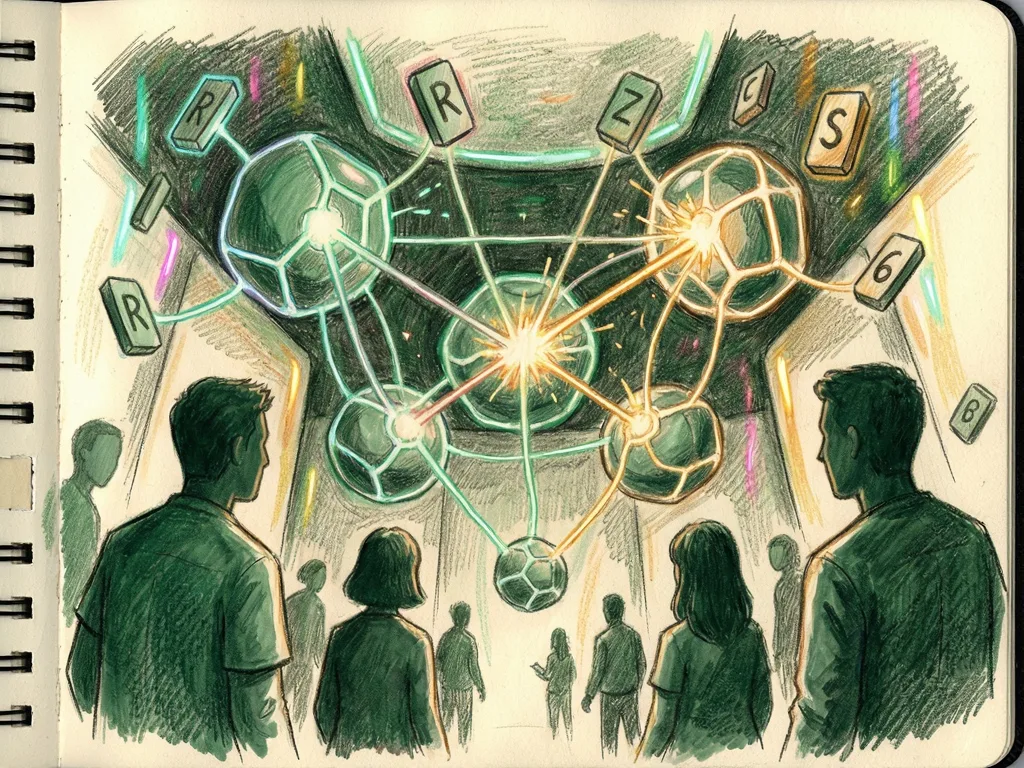
Debate and consensus patterns have agents evaluate the same input separately, then reconcile conclusions by majority, a judge agent, or escalation. Disagreement can be informative because agents do not see each other's reasoning first. But debate is the most expensive pattern; use it sparingly for high-stakes, low-volume decisions where being wrong costs more than deliberating. On perceptual tasks, it can buy latency rather than accuracy.
Reliability Math and Hybrid Design
The source warns that about 88 percent of AI pilots never reach production. Stanford HAI showed that two models can perform worse collaborating than either alone when coordination overhead exceeds the benefit. In the illustrative sequential chain with no retries, 10 steps that are each 95 percent reliable deliver 59.9 percent end-to-end reliability, and 20 steps deliver 35.8 percent. Each dependent handoff multiplies risk.
Most production systems should combine patterns. Use workflow patterns for predictable components, autonomous patterns where flexibility is essential, and task-management patterns for termination and delegation consistently. Complex agents may use different patterns internally. Architecture should also account for takt time, safety boundaries, edge data, and shift cycles.
Common Mistakes That Burn Budget
Five anti-patterns look reasonable at design time but later inflate token cost, miss takt-time windows, or drift from the plant floor.
A god agent is one prompt that owns overall equipment effectiveness analysis, programmable logic controller diagnostics, and maintenance, often with 15 or more tools. Tool selection degrades as tools grow, and failures become hard to attribute. Use bounded agents of five tools or fewer, such as separate analyst, diagnostician, and drafter.
Unbounded iteration lets agents retry without a hard stop. A four-agent system can burn a significantly higher number of tokens before a single retry. Retries multiply coordination failures rather than fixing them. Put a hard iteration ceiling in code, a per-agent token ceiling, and a budget alarm wired to an automatic stop. Infrastructure must enforce limits because the model will not stop itself.
Natural-language contracts pass free-text prose between agents with no schema. Interpretation hardens at every hop: "could indicate wear" can become "confirmed wear" and then a maintenance order. The drift happens between agents, where tracing is thinnest.
Premature multi-agent design adds agents when one agent with tool groups would do. Each agent adds a coordination tax that is not linear, and gains flatten around four. Most specialists are one model in different costumes. If one agent can handle the phases by switching tools, it is not a multi-agent problem. A real multi-agent case should involve at least two different models, different tool access, concurrent execution, and real interdependency.
Unguarded customer contact lets an agent trigger emails, service visits, or machine parameters with no approval step. Hallucinations cross into the physical world, irreversible actions compound, and liability escalates from a refund to product liability. Use defense in depth: recommendation, Amazon Bedrock Guardrails, schema validation, business rules, human approval, then execution. Every point where agent output reaches a customer or a safety system is a trust boundary.
Start with the least flexible pattern that fits the task, enforce limits before granting autonomy, and treat customer and safety boundaries as trust boundaries.
Comments (0)