
Everyone shapes the future of work.
Automation teams can bottleneck scaling. AI lowers barriers, so employees can build workflows safely with shared standards for process and data.
Key Takeaways
- n8n argues that a single centralized automation team becomes a bottleneck as automation demand scales, so companies should enable more employees to build automation themselves.
- AI-assisted tools and lower technical barriers make self-service automation practical, though regulated or security-sensitive organizations may still need centralized controls.
- To avoid chaos, standards must travel with capability: understand processes before automating, reuse proven tools, build maintainable workflows, and treat responsible data/AI use as non-negotiable.
- n8n is shifting its Automation team toward a guild-like support network with shared templates, office hours, and documentation, aiming to make automation part of basic technical literacy.
In a follow-up to an earlier piece about automation teams, n8n is describing a shift from one overloaded automation team to a model where more employees can build automation themselves. For leaders and staff deciding who should build automation inside a company, this article explains what that model is, why n8n says a centralized team can become a bottleneck, and what guardrails are needed to do it without chaos.
Why a single automation team can become the bottleneck
Many organizations still assign automation to a specialized team, usually small and stretched thin, that builds on behalf of everyone else. That instinct makes sense at the start: scarce technical skill is concentrated in one place, and the team can clear a real backlog fast.
The problem appears as the company and its automation vision scale. The central team that solved the backlog becomes the new bottleneck because the rest of the organization never had to build the capability itself.
The same pattern is compared to infrastructure before platform engineering existed. A central team provisioning servers on request is slower, creates a permanent dependency, and puts judgment about what is needed in the hands of people furthest from the problem. Platform engineering emerged as infrastructure teams stopped being gatekeepers and started building self-service paths. The piece argues that automation is a few years behind and is heading toward a similar shift.
Why building is becoming easier
Building is becoming radically easier at a pace faster than most leadership teams have adjusted to. The piece points to “flowgramming” using built-in AI assistants, software helpers that can assist with creating workflows, in n8n, or via Model Context Protocol, as an example. It says someone in finance can now build something in an afternoon that used to require a ticket, a queue, and several weeks of waiting. The barriers to entry are only getting lower.
This is not presented as a universal argument. For companies in regulated industries, or serving customers with strict security requirements, keeping build access centralized can be the right call even if it is not technically necessary. That is a legitimate choice tied to risk appetite, and each organization will have to decide where it lands on the speed versus risk equation.
For n8n, a scale-up in a fast moving space, the calculus is different and the risk runs the other way. Now that the technical barrier has significantly dropped and will continue to do so, the company argues that keeping automation concentrated in one team increases the risk of falling behind organizations working out how to open this up safely. There is also a specific reason tied to n8n: it builds the product meant to make this kind of building accessible to everyone everywhere, and it cannot credibly sell a future it has not lived itself. That is the whole idea behind “n8n on n8n:” getting it right internally is key to showing the world what is possible.
How n8n wants to avoid chaos
Two common responses to “let everyone build” are resisting it entirely, worried about chaos, or opening the floodgates with no structure, which lets chaos happen. Both miss a key opportunity. The future of work being built by everyone does not mean no standards. It means the standards have to travel with the capability, instead of living inside one team’s head.
At n8n, the things it wants to scale are the same standards its own team holds:
- Understand the process before automating it, so people are not just making a broken process move faster.
- Know when a proven tool beats building something yourself, so people are not quietly reinventing things that already exist or creating an unnecessary maintenance burden.
- Build things that outlast the person who made them, with enough documentation that someone else can actually pick them up.
- Treat responsible use of data and AI as non-negotiable, not something only a central team has to think about.
None of that requires a computer science degree. But it does require investments in upskilling, enablement, and architecture that will support more people thinking and building the way an automation engineer would.
What the shift means for the future of work
For n8n, this has meant moving the Automation team towards something closer to a guild than a service desk. The company is developing a network of people across departments who have picked up enough of this discipline to be the person their own team turns to first, backed by shared resources instead of everyone reinventing the same workflow from scratch. Those resources include reusable templates, office hours where people bring a working problem instead of a request, and a documentation standard that is still being rolled out and is meant to travel with every workflow regardless of who built it.
It is still early days and much of this remains aspirational. The standards are not consistent across every team that uses them. The Automation team is still struggling with a growing workflow maintenance burden, including workflows it is not yet in a position to fully hand over or redistribute to teams. The response is to name the problems and create solutions rather than simply increase headcount. That forces continued prioritization of the most business-critical work and the creation of incentive structures for learning and development in automation across the organization.
The broader argument is that companies that figure out how to give people real building capability, safely, are going to move much faster than companies that keep it locked inside one team. That gap will show up in how quickly a company can respond to a new competitor, a new regulation, or a tool that changes what is possible overnight.
The future of work, in this framing, is not a smaller number of very powerful specialists doing more with AI. It is an organization where building automation becomes part of basic technical literacy, the way using the internet itself did. The difference is pace. That internet shift took a generation to settle in. This one may not take as long, partly because the pace of change has been astounding, and partly because the benefits do not concentrate on one function: they show up everywhere at once, which means the upskilling has to happen function by function, and faster than before.
Getting there is not about handing everyone a tool. It is about deciding, deliberately, that this is worth teaching, worth standardizing, and worth building a real team around: one that sets the standards, builds the architecture everyone else builds on top of, still owns the highest-stakes and most business-critical systems itself, and makes everyone else capable of the rest.
Meta description: n8n is shifting automation from one central team to many employees, using shared standards, templates, office hours, documentation and a guild model.
Tags: automation, n8n, workflow, internal automation, future of work
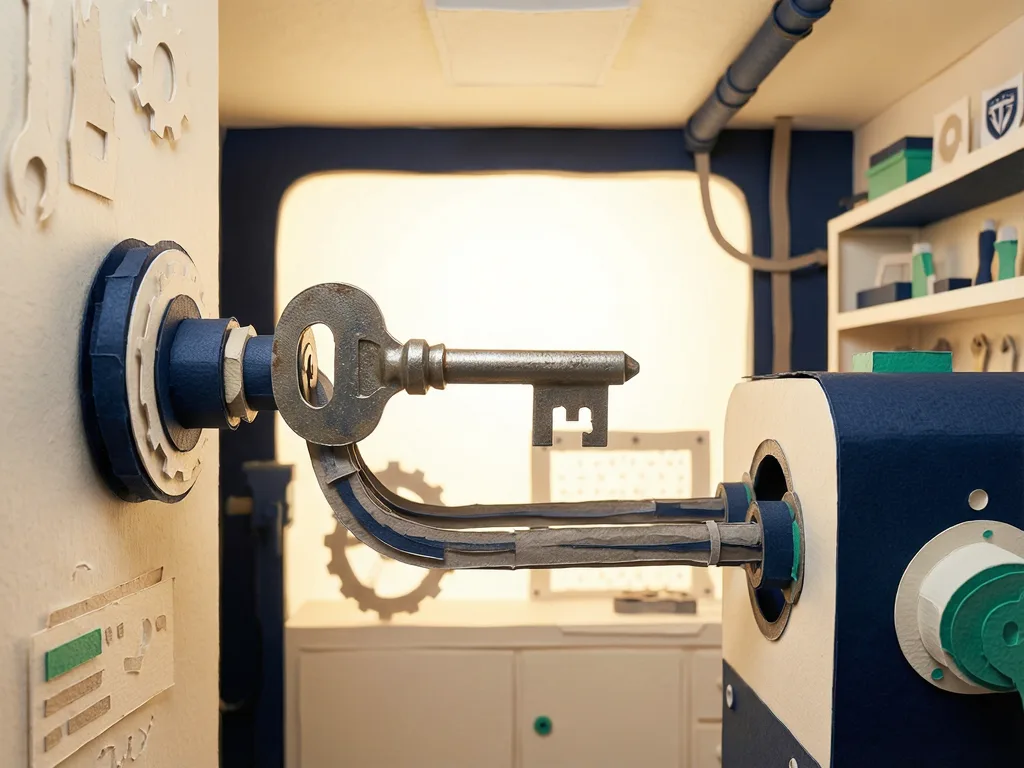
Featured image: Abstract friendly illustration of many people around a shared workflow canvas with reusable blocks, no real people, no logos, no text.
Comments (0)