
Warp makes a major push into open source development with GPT-5.5
Warp has evolved from a modern terminal into an intelligent development environment powered by GPT-5.5 and other OpenAI models. It enables developers to launch, manage, and coordinate multiple AI coding agents in parallel across local, cloud, and open-source workflows, turning AI assistance into full agent orchestration for faster, smarter software development.
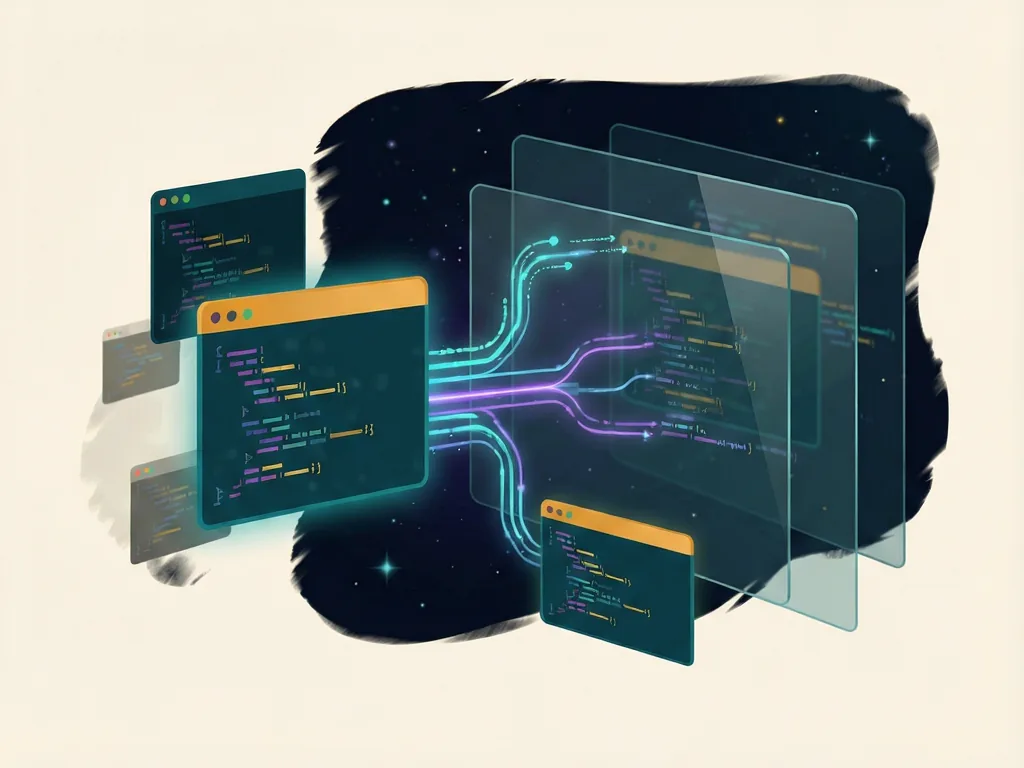
Warp is a developer tool that has become far more than a modern terminal. It now uses GPT-5.5 alongside other OpenAI models to help developers run and coordinate multiple coding agents at once. If you're a developer curious about how AI agents can fit into your daily workflow—or you're wondering whether Warp is worth adopting—this article walks you through what Warp does, how its agent coordination works, and why the combination of local, cloud, and open-source development environments matters. By the end, you'll have a clear picture of how Warp is positioning itself in the fast-moving world of AI-assisted software development.

What Is Warp?
Warp started life as a reimagined terminal, built to make the command line faster and friendlier. Over time, it has evolved into something broader: an intelligent development environment where AI plays a central role. Instead of simply suggesting commands or answering questions, Warp now acts as a place where coding agents—AI systems that can plan, write, and modify code—can be launched, managed, and combined.
The key idea behind this evolution is orchestration. Rather than treating an AI assistant as a single helper you chat with, Warp lets multiple agents work in parallel, each handling a piece of a larger task. One agent might refactor a module while another writes tests, and a third reviews the changes. GPT-5.5 and other OpenAI models supply the reasoning power behind these agents.
How Agent Coordination Works
Coordinating several coding agents is a genuinely hard problem. Each agent needs context about the codebase, clear boundaries so it doesn't clash with other agents, and a way to report its progress. Warp addresses this by using GPT-5.5 and OpenAI's models as the coordinating intelligence that directs how agents are assigned, sequenced, and merged.
In practice, this means a developer can describe a goal—say, migrating a feature to a new API—and Warp can break the work into pieces that different agents handle across different environments. The models help decide what each agent should do, in what order, and how to reconcile their outputs. The result is a workflow that feels less like managing a chat window and more like directing a small team.
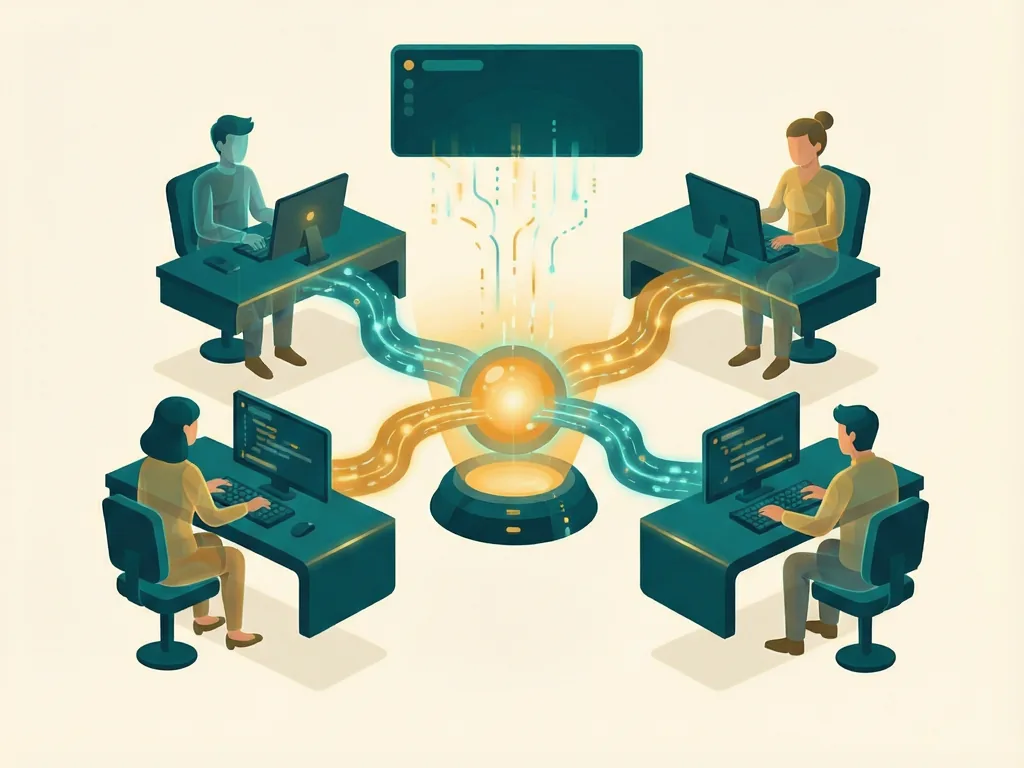
Local, Cloud, and Open-Source Workflows
One of the more distinctive aspects of Warp's approach is that it spans three kinds of development environments:
- Local development: Agents can run on your own machine, working directly with the code and tools you already have installed. This keeps everything on your hardware, which many developers prefer for speed and control.
- Cloud development: Work can also happen in the cloud, letting agents run on remote resources. This is useful for long-running tasks, heavy builds, or when you want to keep your local machine free.
- Open-source workflows: Warp also supports open-source development processes, where contributors work across repositories, forks, and shared codebases.
Because the same underlying models coordinate agents across all three settings, developers don't have to learn a different system for each environment. A task can start locally, continue in the cloud, and feed into an open-source project without the orchestration breaking down.
Why GPT-5.5 Matters Here
The choice of GPT-5.5 as a core model reflects what agent coordination demands. Running a single AI assistant is mostly about answering one question well. Running a fleet of agents requires models that can hold larger context, reason about dependencies between tasks, and make sensible decisions when instructions are ambiguous.
OpenAI's models, with GPT-5.5 at the front, are what allow Warp to move from "AI that suggests" to "AI that organizes." The model quality directly shapes how reliably agents can be delegated work, how well they avoid stepping on each other, and how accurately they report back. As models improve, tools like Warp tend to improve alongside them, since the orchestration layer and the reasoning layer reinforce each other.
What This Means for Developers
For everyday developers, the shift signals a change in how AI coding tools are used. Instead of one assistant answering questions in a sidebar, you get an environment where AI agents are first-class workers. The practical benefits include:
- Parallelizing work that used to be sequential
- Delegating repetitive tasks like test writing or dependency updates
- Moving seamlessly between local and cloud environments
- Applying the same workflow to personal projects and open-source contributions
There are also things to keep in mind. Coordinated agents still need human oversight—someone has to review what they produce, judge whether the plan made sense, and catch mistakes before they land in a codebase. Developers who treat agents as junior collaborators rather than autonomous replacements will get the most out of this style of tooling.
The Bigger Picture
Warp's use of GPT-5.5 and OpenAI models for multi-agent coordination is part of a wider trend: AI coding tools are moving from chat interfaces toward systems that plan and execute work across environments. Warp's particular strength is that it covers local, cloud, and open-source workflows under one roof, which reduces the friction of switching between them.
As agent-based development matures, tools like Warp will likely keep pushing toward more autonomy and better coordination, while developers adapt by focusing more on specification, review, and judgment—the parts of the job that humans are still best at.
Comments (0)