
The reasons behind hallucinations in language models
OpenAI research reveals that AI hallucinations are not random glitches but predictable outcomes of evaluation systems that reward guessing over admitting uncertainty. Like students guessing on multiple-choice exams with no penalties, language models learn that confidently answering—even incorrectly—scores better than saying 'I don't know.' The paper argues for redesigned benchmarks that penalize baseless confident answers and reward appropriate expressions of uncertainty, suggesting hallucination is a solvable design problem rather than an inherent flaw of neural networks.
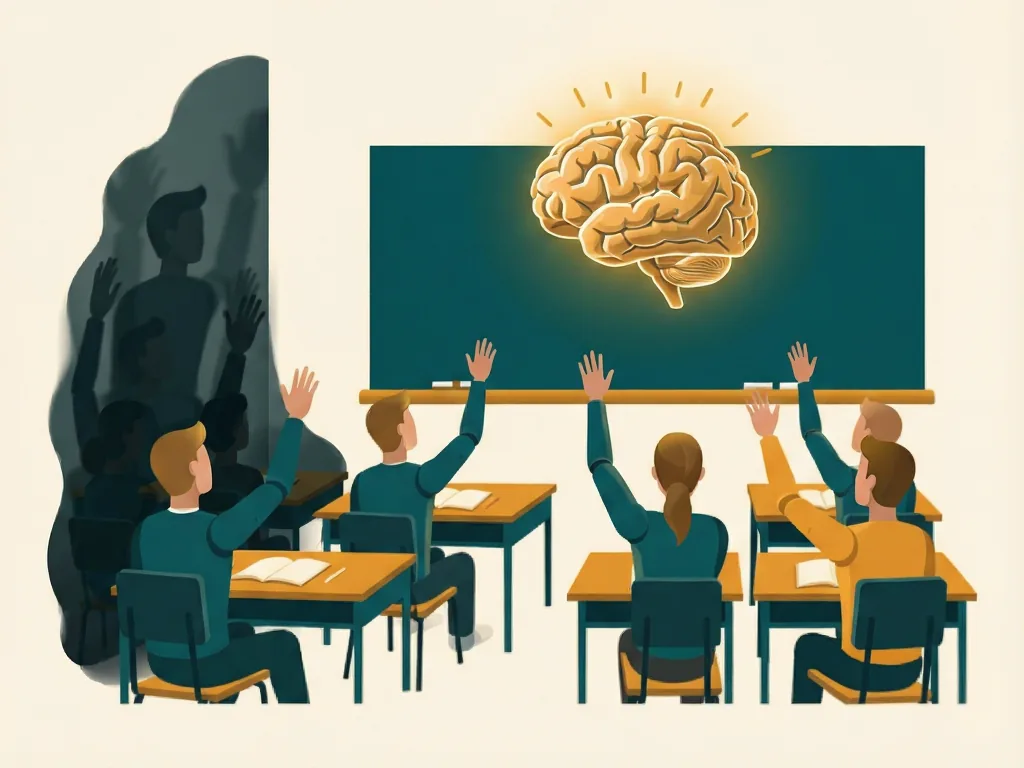
If you've ever asked an AI chatbot a question and received a confident but completely wrong answer, you've experienced a hallucination. A new research paper from OpenAI digs into why this happens — and the findings suggest that the problem may lie partly in how we grade these models, not just how we build them. Here's what the research says and why it matters for anyone who relies on AI tools.
What the research found
OpenAI's study looks at hallucinations from a fresh angle. Instead of treating made-up answers as a random glitch, the researchers argue that hallucinations emerge from the way models are trained and evaluated. In short: the current scoring systems used to test AI models often reward guessing over admitting uncertainty.
Think about how a student behaves on a multiple-choice exam. If there's no penalty for a wrong answer, the smart strategy is always to guess. Language models face a similar situation. During training and benchmarking, they're typically judged on whether they produce an answer — not whether they correctly signal "I don't know." A model that hedges or says it's unsure may score lower than one that confidently produces an answer, even when that answer is fabricated.
The result is a system that has learned, over many rounds of optimization, that gambling on an answer pays off more often than expressing doubt. Hallucinations aren't mysterious failures, in this view — they're the predictable outcome of the incentives baked into evaluation.
Why models guess instead of saying "I don't know"
The paper draws a useful distinction between two types of errors. Some mistakes happen because the model genuinely doesn't know something. Others happen because the model could have known it wasn't sure — the information needed to express uncertainty was available — but produced a definitive answer anyway.
The researchers point out that the second type of error is the one we should be able to reduce. If a model can't distinguish between what it knows and what it doesn't, hallucinations are hard to avoid. But if the model has some internal signal about its own uncertainty, and the evaluation process punishes it for using that signal, the fix isn't more training data — it's better scoring.

This reframing matters because it shifts responsibility. Rather than treating hallucination as an unsolvable quirk of neural networks, OpenAI's work suggests it's a design problem with a design solution.
Better evaluations could make AI more honest
The most practical takeaway from the research is a call to change how we benchmark language models. The paper argues that mainstream evaluations should stop giving full credit for lucky guesses and start rewarding appropriate expressions of uncertainty.
Concretely, this could mean:
- Penalizing confident answers on questions the model has no reliable basis for answering
- Giving credit when a model correctly abstains or flags low confidence
- Designing benchmarks where the expected-value math favors honesty over bluffing
If evaluations change, training will likely follow. Models optimized against honesty-aware scoring systems should, in theory, learn to say "I'm not certain" more often — which is exactly the behavior most users want from an AI assistant.
What this means for everyday AI users
For the average person using ChatGPT or similar tools, this research doesn't change anything overnight. Hallucinations will still happen. But it does offer a useful mental model: when an AI gives you a wrong answer, it's often not "lying" in a human sense — it's doing what its training rewarded, which is producing an answer rather than admitting a gap.
It also offers hope. If the incentives behind hallucination are understood, developers can align their systems toward candor. More honest models mean safer AI for everyone — fewer confidently wrong medical summaries, fewer invented citations, fewer fabricated facts slipping into work documents.
The researchers also acknowledge the challenge: changing evaluation standards across the industry is a slow process, and there are real trade-offs. A model that abstains too often becomes frustrating to use. The goal is balance — knowing when to answer and when to hold back.
The bigger picture
This work fits into a broader push across the AI field toward reliability and safety. As language models move into high-stakes settings like customer support, education, and software development, the cost of a confidently wrong answer keeps rising. Research like this — which treats hallucination as a measurable, fixable behavior rather than a mystery — is a step toward AI systems people can genuinely trust.
The core message is refreshingly simple: models hallucinate partly because we've been grading them in a way that makes hallucination rational. Change the grading, and the behavior should change too.
Note: This summary is based on OpenAI's published findings. For full technical details, consult the original paper directly.


Comments (0)