
The Double-Booked Operating Room: How Autonomous AI Schedulers Trigger Race Conditions
AI schedulers double-booked an OR by racing without distributed locks. Prompts can't serialize resources; a gateway must enforce atomic leases.

Key Takeaways
- The incident was caused by a distributed race condition: two AI scheduling agents read the same available room state and both committed bookings for Operating Room 3.
- The core problem is not model reasoning or prompt wording, but non-atomic read-check-write behavior on a finite physical resource.
- The recommended fix is an out-of-band deterministic concurrency gateway that enforces atomic lease locks before allowing bookings to commit.
- Hospitals should let AI agents propose schedules, but they should not give agents direct write authority over critical shared resources.
- The lesson for operations is to look past apparent human error; the lesson for engineering is to design locking, leases, and deterministic routing into the infrastructure.
For clinical operations leaders and platform engineering teams, this explains a multi-agent scheduling failure and the concurrency design needed to stop it. At 6:45 AM on a Wednesday, two autonomous scheduling bots evaluated the same hospital calendar at a 400-bed regional medical center and both reserved Operating Room 3 for 7:00 AM, producing a $42,000 institutional loss and 180 minutes of patient fasting distress.

The Collision Happened in 50 Milliseconds
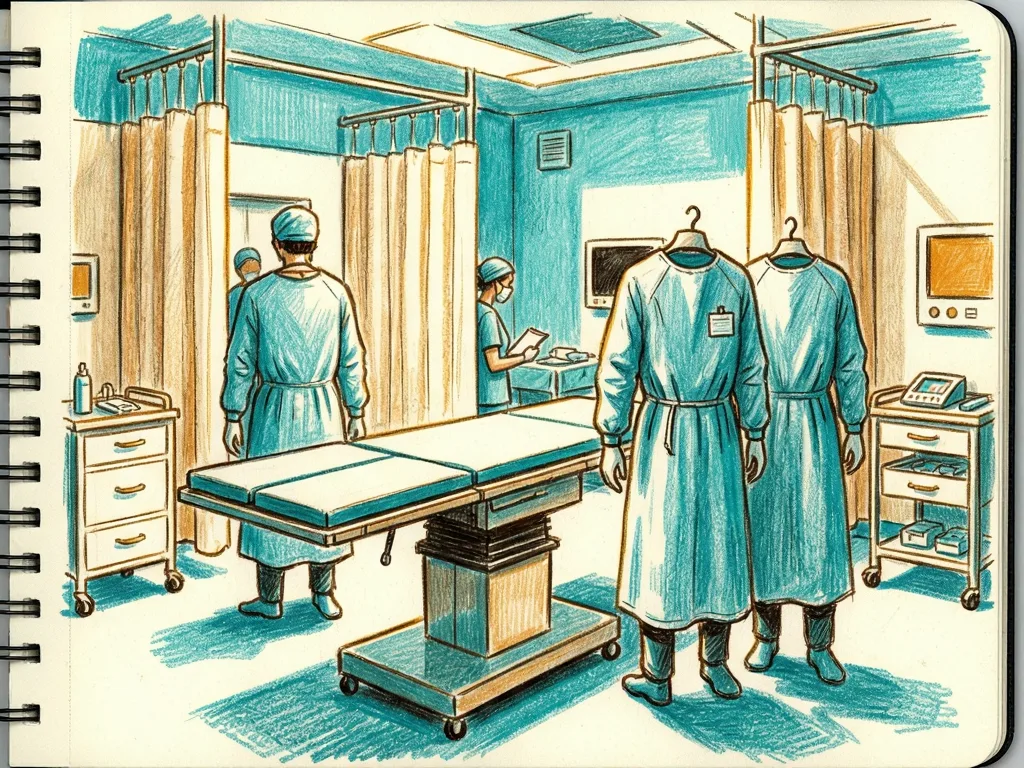
Team A consisted of an orthopedic surgeon, a physician assistant, a circulating nurse, and an anesthesiologist, scheduled for a total right hip arthroplasty. Team B consisted of a general surgeon, a surgical resident, and a specialized scrub technician, scheduled for an open incisional hernia repair. Both teams held verified, confirmed schedules generated by the hospital’s patient access software. Both surgical prep suites had prepared their patients, and both patients had fasted since midnight with IV lines established in pre-op holding.
The conflict became visible when both circulating nurses badged into Operating Room 3. The physical suite had been assigned to two full surgical teams at 7:00 AM sharp. In acute hospital operations, an empty or contested operating room costs the enterprise between $60 and $100 every minute in fixed overhead, idle specialized labor, and lost throughput. Resolving the conflict required bumping one procedure, finding an emergency standby suite, scrambling an unassigned anesthesia team, and delaying three downstream afternoon surgeries.
The failure was not a human scheduling error. It was caused by autonomous multi-agent scheduling bots running without distributed locking primitives. The technical sequence unfolded within a 50-millisecond execution window.
At t = 0 ms, Agent A, managing outpatient joint referrals, and Agent B, managing acute surgical intake, both sent GET /v1/rooms?date=2026-10-07 requests to the electronic health record scheduling API. At t = 12 ms, the shared clinical database returned the same state to both callers: OR_03: STATUS_AVAILABLE. Between t = 15 ms and 40 ms, both reasoning loops independently checked procedure duration, equipment needs, and physician credentialing. Agent A evaluated a fluoroscopy C-arm; Agent B evaluated a laparoscopic tower. Both concluded that Operating Room 3 satisfied all constraints.
At t = 45 ms, Agent A sent POST /v1/bookings. At t = 46 ms, Agent B sent the same kind of booking mutation. Because the underlying API appended booking records without evaluating atomic resource exclusivity, both rows committed: OR 3 to Ortho Team A and OR 3 to General Surgery Team B. Both agents received HTTP 200 OK, marked their tasks as resolved, and dispatched confirmation notices to the clinical teams.
Why a Better Prompt Does Not Solve It
A common first response is to tell the agent never to double-book a room. That instruction does not fix the failure. The issue is not whether the model can state a rule; it is whether the system can serialize competing writes to a finite physical resource.
LLM inference latency takes 400 to 2,000 milliseconds, while network packets can traverse a local cluster in under 5 milliseconds. If an agent reads a room status, reasons about it, and then writes a booking, the shared state may already have changed before the write arrives. Read-check-write is inherently non-atomic unless an explicit lock coordinator serializes the requests. A natural language prompt cannot inspect memory addresses, set distributed flags, or acquire database mutexes. This is a distributed systems race condition, not a semantic reasoning gap.
A Gateway That Locks the Room Before Committing
The safer architecture separates autonomous reasoning from resource allocation. Agents can propose allocations, calculate duration requirements, and match equipment constraints. The final commit must pass through an out-of-band deterministic runtime concurrency gateway that enforces atomic lease locking.
The gateway first verifies invariants such as surgeon credentials, patient consent, and equipment manifests. It then attempts to acquire an atomic distributed mutex using a system such as Redis via the Redlock algorithm, or an etcd or Consul Raft cluster. A key such as lock:resource:or_03:2026-10-07:0700 can represent one exclusive claim on Operating Room 3 for 7:00 AM on October 7, 2026. The lease uses a time-to-live, such as 30000ms, so a crashed or abandoned request does not hold the resource forever. Release can be handled with a Lua script that verifies the lock token before deleting the key.
If Agent A acquires the lock, the gateway executes the database transaction, writes the confirmed booking to the master EHR ledger, broadcasts a resource lock token, and confirms the schedule to Team A. When Agent B’s concurrent request hits the gateway one millisecond later, the atomic SET with NX and PX semantics returns failure. The gateway responds RESOURCE_LOCKED, severs the competing workflow, and can deterministically divert Agent B to another matching suite such as OR 5. In the intended path, the redirect happens in under 40 milliseconds, before any human surgical team receives a conflicting confirmation.
What This Means for Autonomous Scheduling
Hospitals can use agents to reduce manual scheduling work, but they should not grant models direct write authority over finite clinical assets. Any resource that cannot exist in two places at once needs an atomic gate outside the model. For operators, the lesson is practical: concurrency failures may look like human errors at the bedside, but they are usually infrastructure errors at the API layer. For engineers, the lesson is architectural: prompt engineering can improve judgment, while locking, lease management, and deterministic routing preserve truth in the calendar.

Who should use it / who should skip it
Use this pattern when agents touch finite physical assets, such as operating rooms, imaging suites, infusion equipment, staffed clinical space, or surgeon time. The commit path should be atomic, the lease should expire, and rejected requests should divert deterministically rather than fail silently.
Skip the full gateway only when the system is a non-production demo, a software-only calendar with no physical consequence, or a single-threaded environment where no concurrent write can occur. Even then, do not treat the demo as production-safe.
Meta Description: Learn how autonomous scheduling bots double-booked Operating Room 3, causing a $42,000 loss, and why distributed locks prevent multi-agent race conditions.
Tags: multi-agent scheduling, distributed locking, hospital operations, concurrency, healthcare AI
Featured Image: Abstract friendly illustration of two scheduling bots facing one locked operating room door, no real people, no logos, no text.




Comments (0)