
AI Citation Validation Receipts: Preventing Research Agents From Misusing Genuine Papers to Make False Claims
AI citation receipts turn research agent claims into inspectable evidence, recording checked sources, spans, findings, risks, and release status.

Key Points
- A valid citation or DOI alone is not enough: research agents should attach a durable AI citation verification receipt that records each claim, source version, exact evidence span, verifier verdict, unchecked items, and final release decision.
- Citation quality should be assessed across four checks: identity, support, currency, and scope, ensuring the source exists, backs the exact claim, is up to date, and matches the study’s limits.
- Build the receipt as a release artifact: freeze the report, split prose into atomic claims, resolve canonical source records, retrieve primary evidence spans, run deterministic and risk-based semantic checks, and emit append-only JSON with a human-readable view.
- Verdicts such as supported, partially supported, contradicted, unverified, out of scope, and not checked must be recorded honestly; “not checked” prevents green-looking receipts from hiding incomplete review.
- Version drift is a key risk, so the system must record whether the checked source was a preprint, published version, correction, or retraction, and recheck claims when prose or source versions change.
AI Citation Verification Receipts Turn Research Agent Claims Into Evidence
Meta description: Learn how AI citation verification receipts help research agents show which claims were checked, which sources were used, and what evidence supports them.
Tags: AI research agents, citation verification, evidence receipts, source review, claim tracking
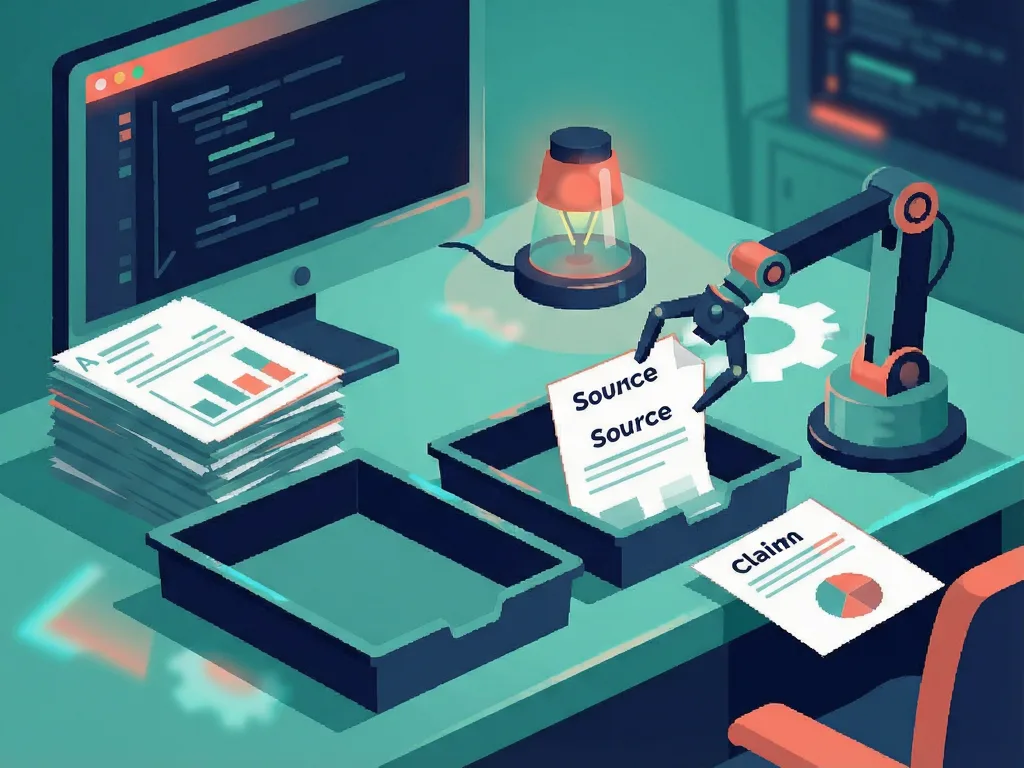
Featured image: Abstract illustration of a research report connected to source spans and checkmarks, friendly style, no people, no logos, no text.
For teams building AI research agents, the core task now is to attach a durable AI citation verification receipt to every report. The fix is not another instruction that says only cite real sources. A bibliography answers whether a paper can be found; the receipt answers what the report claimed, what exact evidence was inspected, and whether the system allowed the claim to ship. It records the claim checked, source version, evidence span, verifier finding, what was not checked, and who accepted remaining risk. Research agents need evidence links a reviewer can inspect, not a longer list of citations. As agents move from literature summaries into scientific and professional workflows, Anthropic's recent account of Claude-assisted biological discovery shows the upside of faster hypothesis generation. The downside is sharper: a report can have tidy prose, numbered references, and real papers while still treating a correlation as a result, quoting an abstract as if it were a full experiment, or attaching a real paper to a claim it never made.
First, Check What a Citation Can Prove
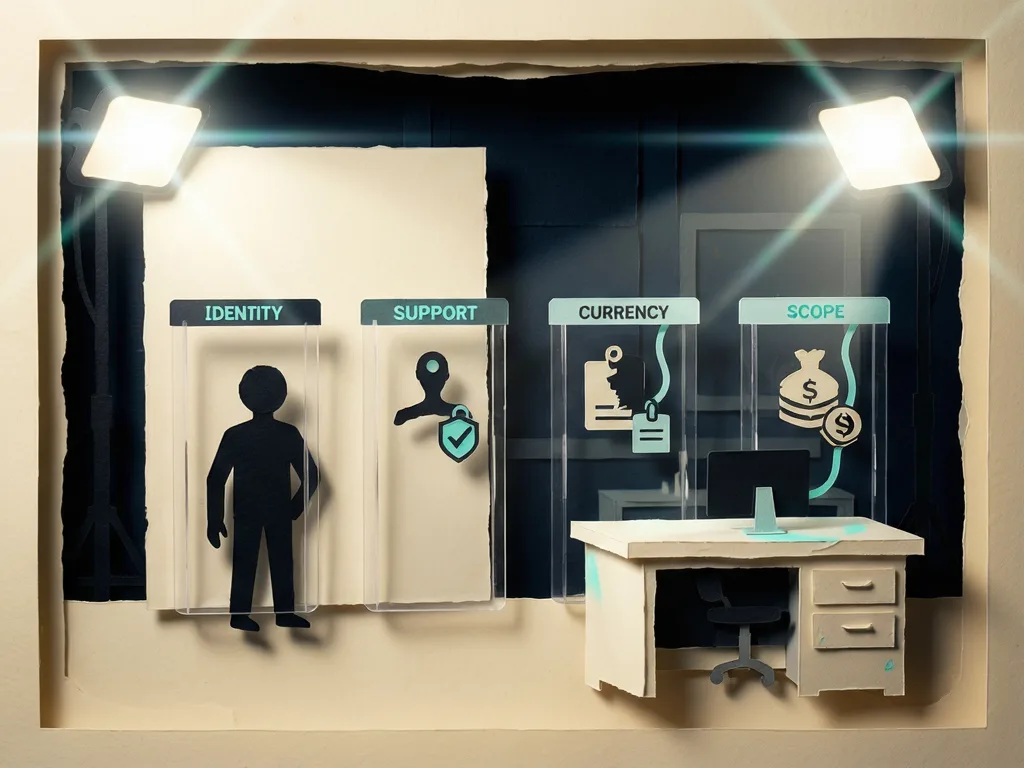
A real DOI is not proof that an AI agent read the paper, understood its limits, or used it to support the right sentence. Treat citation quality as four checks. Identity asks whether the work exists and whether title, author, date, DOI, or preprint identifier match. Support asks whether the source backs the exact claim, not a nearby weaker statement. Currency asks whether the source was retracted, superseded, corrected, or replaced by a published version. Scope asks whether the report preserves the study's population, method, uncertainty, and limits. A DOI may resolve perfectly while the agent misstates the finding. A paper may be current but only cover a narrow model, dataset, or laboratory condition. A polished answer can turn "this study observed" into "this is known." A second model saying "looks supported" can be one signal, but the review system needs inspected material and a repeatable next action.
Build the Receipt as a Release Artifact
Think of the receipt as a release artifact for knowledge, sitting beside the final report like test results beside a software release. It does not certify universal truth. It states what the pipeline checked before delivery.
- Freeze the report: text, source list, prompt or task contract, model identifier, run timestamp. Split prose into atomic claims. A long sentence may contain three claims: method, outcome, interpretation. Give each stable ID. If prose changes after verification, recheck the changed claim.
- Extract claim-citation pairs: exact sentence, claim ID, marker or source ID.
- Resolve identity: prefer identifiers; match title, authors, venue, year, version, not fuzzy title. Store canonical records: identifiers, source type, retrieval time, version, license or access note, content hash when lawful. Query Crossref, OpenAlex, PubMed, arXiv, and a publisher page when possible; each reveals failure modes.
- Fetch evidence: retrieve primary page or permitted full text, separate from model summary. Point high-stakes claims to spans: section, figure, table, result paragraph, or structured database field. Retain original evidence used to judge paraphrases.
- Run deterministic checks first: DOI resolution, retraction or correction status where available, source version, dates, cited span existence.
- Route semantic checks by risk: claim plus bounded evidence span. Effect size, safety result, or research conclusion needs stricter review than a definition.
- Apply ship gate: block, downgrade, rewrite, or escalate. Never silently turn a failed check into a footnote.
- Emit append-only JSON plus human view. A small team can start with JSONL records in object storage, a simple source resolver, and a review queue. This is a workflow pattern, not a demand for a huge platform.
Use verdicts: supported, partially_supported, contradicted, unverified, out_of_scope, not_checked. Not checked is vital; a green-looking receipt that hides sampling is worse than an honest incomplete one. Record policy and human decisions: policy version, reviewer, decision, explicit exception. For example, numerical health claims might require direct primary evidence and a human reviewer, while background definitions may allow a trusted review article. Do not let generated explanation become the audit trail.
A compact schema keeps developers using it. For example: receipt_id rcpt_01JQ..., report_sha256 and excerpt_hash as opaque values, policy_version research-evidence-v1, created_at 2026-09-26T00:00:00Z, claim_id c-014, text "The intervention improved outcome X in the studied cohort.", risk high, source doi 10.example/abc, version publisher, resolved true, retraction_status not_found, evidence locator "Results, paragraph 3", retrieved_at 2026-09-26T00:00:00Z, verdict partially_supported, reason "Outcome improved, but the source does not establish causality.", action rewrite_required, review required true, decision pending. The schema separates source match from support decision; a verified DOI should never automatically make the claim pass. The receipt does not say the paper is correct, the literature is complete, or a reviewer can skip reading.
Control Risk and Version Drift
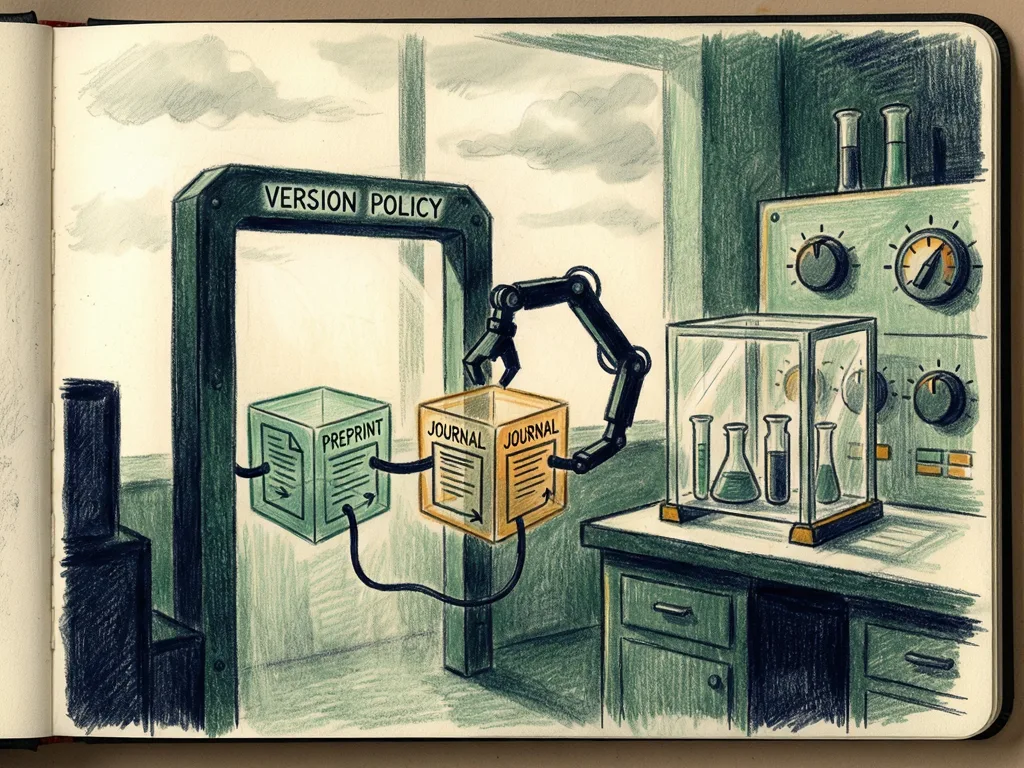
Version drift is easy to miss. An agent may retrieve a preprint, while a reviewer later opens a journal version with changed numbers, narrower conclusion, or added correction. Both records can be real but not interchangeable. Give the resolver a version policy. Record whether the report relies on publisher version, preprint, repository copy, abstract-only record, or database metadata. If the workflow falls back to an abstract because full text is unavailable, say so and block claims needing methods or result-level detail. A source link without an access boundary tempts the model to imply more certainty than it earned. The same rule applies to figures, supplementary files, dataset cards, and code. If a report says a result was reproduced, point to the execution artifact or label it as an untested assertion from the source. Do not let a citation to a paper impersonate evidence your own pipeline produced. When a source changes, find claims tied to its identifier and version, then re-run only those checks instead of regenerating the whole report.
Use policy tiers. Tier one: release blockers - numbers, comparative outcomes, causal language, clinical or safety implications, legal or financial assertions, claims that drive action. Check with evidence spans and human review when domain requires. Tier two: important explanatory claims - method summaries, architecture descriptions, key interpretation. Require source identity plus semantic support; sample manual review. Tier three: low-risk background - plain definitions, non-material context. Use trusted sources, deterministic checks, clear labels when unverified. Instead of one abstract citation accuracy score, track how often each tier is fully checked, claims downgraded, evidence retrieval time, and failures split between identity and support.
Separate the Writer From the Reviewer
Do not let the same model that wrote a report verify its own citations. It can catch obvious mistakes, but it knows the wording it intended and can rationalize a weak match. Separate responsibilities: one component drafts claims from a bounded evidence set, another resolves source metadata, and a third selects evidence spans or compares a claim against them. Deterministic code enforces identifier and schema checks. A human owns decisions on claims that materially affect scientific, professional, or customer outcomes. The separation does not require different vendors; it requires different permissions, inputs, and exit conditions. The writer should not mark its own unsupported claim as approved. Human review works best when the system presents the evidence and the exact unresolved question.
Make failure productive. A failed check should produce a controlled choice: replace the source with a verified source from the approved corpus, rewrite the sentence to match the evidence, downgrade the statement to a hypothesis or uncertainty, remove the claim, or escalate with conflicting evidence attached. Preserve the original failure in the receipt. If a later run fixes the problem, emit a new receipt that links back to the old one. Overwriting failure history makes it impossible to learn whether prompts, retrieval policy, or source normalization are improving.
Common mistakes
Start with one report type where a bad citation has a visible cost: an internal technical brief, a research digest, a customer-facing analysis, or a scientific literature review. The source text ends before naming that last type clearly, so treat it as a likely category rather than a confirmed item. The important move is to make every claim's status explicit. The most common mistakes are treating a real DOI as proof of support, letting the authoring model approve its own claims, hiding unverified claims behind polished prose, and overwriting failed checks instead of preserving them. For readers, the value is not another citation list. It is an evidence trail that shows whether an AI research report can be trusted sentence by sentence.


Comments (0)