
Agentic Context Engineering (ACE): Language Models That Improve Themselves
ACE improves AI agents by editing context and playbooks, not model weights, enabling inspectable, incremental, low-cost learning for builders.
Key Takeaways
- ACE improves AI agents by editing the context they read—prompts, playbooks, notes, and examples—while keeping model weights unchanged.
- Incremental playbook updates are safer than full context rewrites because they preserve useful rules and avoid reintroducing old mistakes.
- Context-based learning is most useful when failures come from missing, stale, or poorly organized knowledge, not from model capability limits.
- For builders, ACE turns agent improvement into inspectable knowledge management: versioned context changes, audit trails, and regression testing.
Meta description: Agentic Context Engineering lets AI agents improve by editing context and playbooks without changing model weights. See what it means for builders.

Tags: Agentic Context Engineering, AI agents, context learning, model weights, Analytics Vidhya
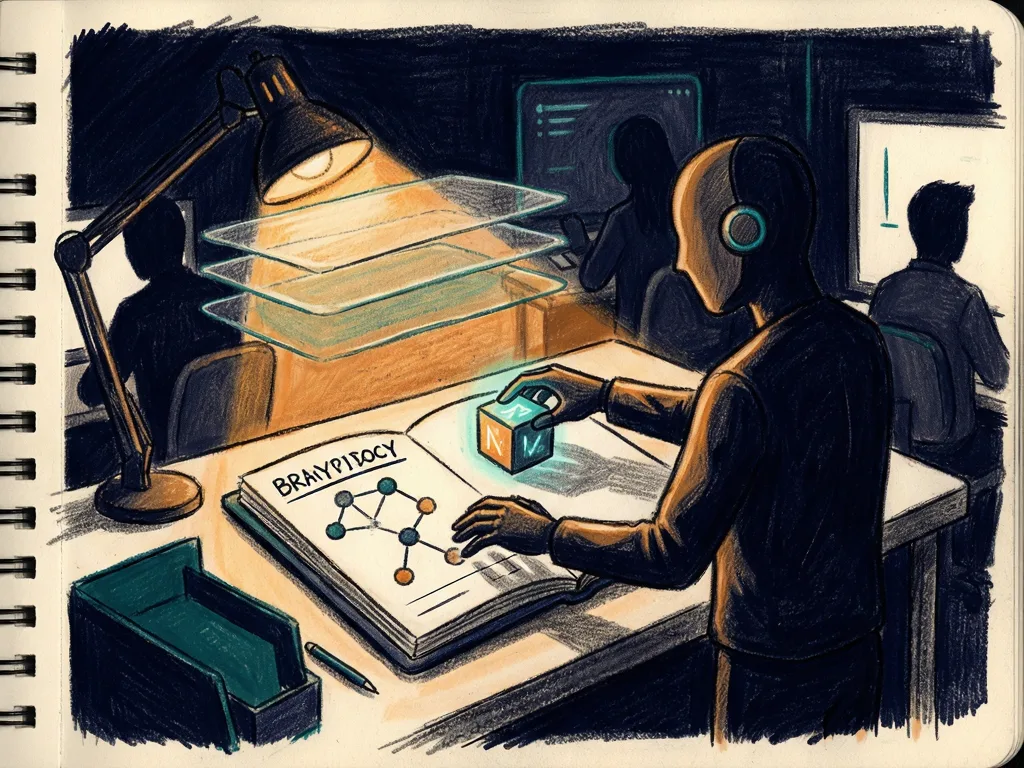
Featured image: Abstract, friendly illustration of an AI agent editing a playbook and context window while model weights stay fixed; no people, no logos, no text.
Analytics Vidhya published an article titled Agentic Context Engineering (ACE): Self-Improving Language Models. It presents Agentic Context Learning, or ACE, as a learning paradigm for AI agents. The core idea is that an agent can improve across tasks by editing the context it reads, while the model weights remain unchanged. This is useful for developers, agent builders, and product teams who want to understand how self-improving agents can work without retraining the underlying model.
What changes when the context, not the weights, is edited
In a large language model, model weights are the learned numbers inside the model. Changing them usually means training or fine-tuning. Context is the material the model reads during use: prompts, retrieved documents, instructions, examples, conversation history, tool outputs, and notes. ACE focuses on editing that context instead of the model weights.
The idea matters because many agents already depend on context to complete work. An agent may read a task brief, a knowledge base, prior errors, or a list of steps that worked before. If those materials become more accurate, the agent can do better on future tasks even though the model itself has not changed. The article presents this as a way to improve across tasks while keeping model weights unchanged.
For builders, this turns improvement into context curation. A team may refine a playbook, update examples, remove stale notes, or save a lesson after a task succeeds. The model remains the engine, while the context becomes the adjustable control surface.

Why full rewrites can fail and why playbook updates matter
The paper described in the article discusses why full rewrites fail. A full rewrite replaces the whole context, such as a long instruction file or a memory document, with a new version. That can look tidy, but it may discard useful details, reintroduce old mistakes, or remove small rules that helped previous tasks.
A playbook update is narrower. A playbook is a working list of procedures: what to check, how to handle common cases, which errors to avoid, and what steps have proven useful. ACE-style learning can edit that playbook incrementally. It may add a rule, correct an instruction, remove an outdated step, or attach a better example.
This approach fits real agent workflows. A support agent may learn that one error message needs a specific check. A coding agent may learn that a project uses a particular test command. A research agent may learn that some sources are more reliable for a certain question. Those small lessons are easier to preserve when context is updated piece by piece.
The article's framing is that agents can improve by editing the context they read, rather than by changing the model itself. That makes the learning process easier to inspect, because context can be read, versioned, and reviewed. It may also avoid some retraining costs, such as preparing large datasets, waiting for training cycles, or risking changes to other model capabilities.
Where the measured gains may hold up
The paper also addresses measured gains and where they hold up. The excerpt does not list benchmark numbers, so the safe takeaway is directional rather than quantitative. ACE is described as a cross-task learning method based on context editing, and the paper evaluates whether the gains persist.
That distinction matters. Context editing may help most when the problem is missing, stale, or poorly organized knowledge. It may help less when the model cannot solve the task, when a tool is broken, or when the task needs capabilities that the base model does not provide.
Builders should treat ACE as a design pattern to test, not as a replacement for stronger models, better tools, or cleaner data. The useful question is not only whether the agent can learn, but whether the edited context makes the next task better without causing regressions.

What builders should watch next
If agents edit their own context, teams need a way to track changes. Each playbook update should show what changed, why it changed, and whether the result improved. A simple audit trail could include the task that triggered the update, the old text, the new text, and the outcome after the change.
There are limits to consider. Context can grow too large, become contradictory, or carry assumptions that do not transfer across tasks. A rule that helps one domain may harm another. Incremental updates are discussed as more stable than full rewrites, but they still need review.
For non-experts, the larger point is that agent improvement can look like knowledge management. The agent gets better when its instructions, notes, examples, and playbooks stay current. For teams building AI agents, practical next steps include storing lessons in a structured format, reviewing context changes regularly, and measuring whether updated context improves future tasks.
Analytics Vidhya frames Agentic Context Engineering as a path to self-improving language models. The key idea is not that model weights do not matter, but that editing context may become a first lever for improving agents across tasks. If the playbook-update method holds up, it could make agent learning easier to manage, debug, and extend in real products.
Who should use it / who should skip it
Teams that already maintain prompts, playbooks, or retrieval documents may get value from ACE-style context editing because it is easy to inspect and revise. Builders running agents across similar tasks may also benefit, since small playbook updates can carry lessons forward without retraining.
Teams should be cautious if their agents depend on very small context windows, strict security rules, or regulated wording that cannot be changed automatically. This approach is also a poor fit when the main bottleneck is model capability, tool reliability, or bad source data. In those cases, editing context may organize the problem better, but it will not create missing reasoning or missing information.




Comments (0)