
Tracking Embedding Drift in Production Scikit-LLM Pipelines
Embedding drift can reduce retrieval quality in Scikit-LLM pipelines. Monitor baseline cosine similarity and refresh affected embeddings.

Key Takeaways
- Embedding drift is a gradual shift in vector distributions caused by model updates, new data, or changing language patterns, which can silently reduce search and retrieval quality.
- Teams should monitor drift by maintaining a stable baseline, re-embedding content regularly, and tracking cosine similarity changes across different data segments.
- When drift is detected, affected embeddings should be refreshed or recalibrated, the vector index updated, and the changes validated against the baseline.
- Common mistakes include treating embeddings as fixed, mixing vectors from incompatible model versions, and waiting for user complaints before investigating retrieval issues.
For teams running large language models (LLMs) in production, embedding drift can quietly degrade search and retrieval quality. This article explains what embedding drift is and shows two practical techniques: monitoring similarity over time and refreshing or recalibrating embeddings.
What embedding drift changes in production
An embedding is a list of numbers that represents the meaning of text in a vector space. In many production large language model systems, documents, user questions, summaries, or retrieved snippets are converted into embeddings so the system can find similar items quickly. A vector database or retrieval layer compares these numbers, often using a similarity measure such as cosine similarity, which looks at the angle between two vectors rather than their exact length.
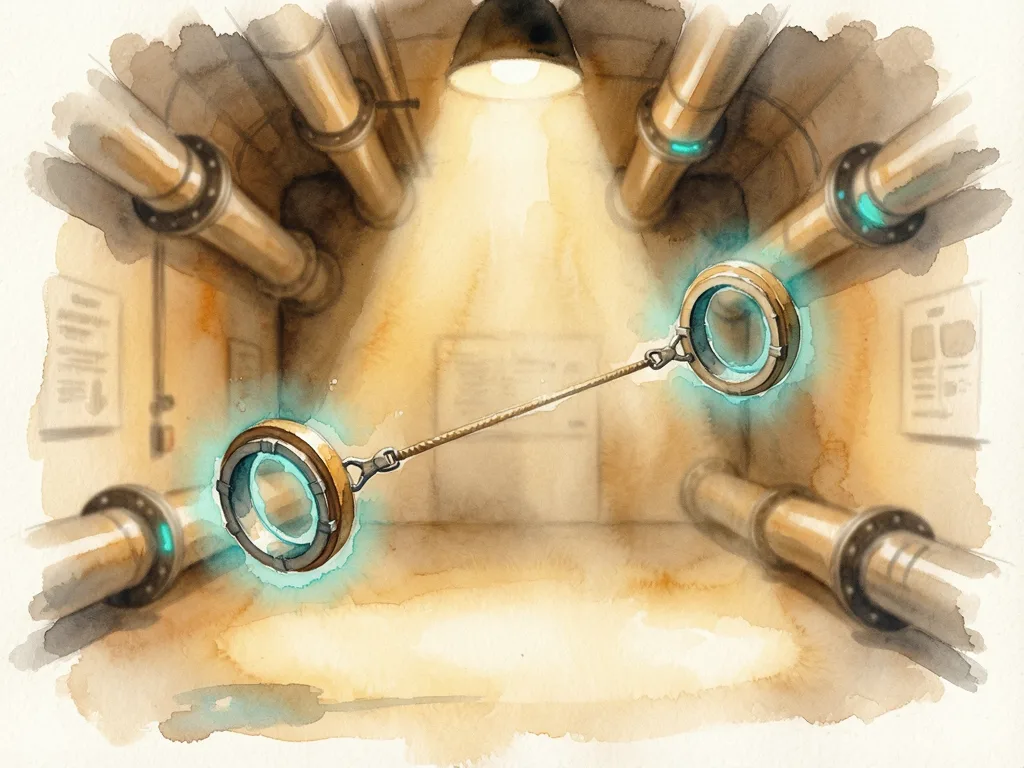
Embedding drift is a gradual change in the distribution of those vectors. It can happen when an embedding model is updated, when new data enters the system, when user language changes, or when upstream prompts alter the text that gets embedded. The model may continue returning answers, but the hidden comparison layer can become less reliable. Queries may match older or less relevant documents, and retrieval quality can fall without a visible error message.
For production teams, this matters because embedding drift can affect answer accuracy, search ranking, personalization, and the consistency of tools that depend on vector similarity. It is not always a single failure. It is more like a slow mismatch between the way text is represented and the way the live system uses those representations.

Technique 1: track embedding similarity over time
The first practical technique is to monitor how embedding vectors behave across time. The goal is not to prove that the model is wrong, but to notice when the relationship between queries, documents, and past results starts to move.
- Select a stable baseline set. Choose a small set of representative texts that should remain meaningful across updates, such as common user questions, important product documents, or a sample of past retrieved snippets. Keep this set unchanged for comparison.
- Store the baseline embeddings. When the system is considered healthy, record the vectors for the baseline set and the main document or query collection. If your stack already logs embeddings, use a known healthy date as the baseline.
- Re-embed on a regular schedule. Depending on how often data changes, teams may check daily, weekly, or after an embedding model update. The important point is consistency, not frequency.
- Compare new vectors to the baseline. Measure cosine similarity between current and baseline vectors for the same text. Also compare query vectors against document vectors to see whether retrieval candidates are moving farther apart.
- Watch segment-level changes. Do not rely only on an average score. Check separate groups such as new documents, older documents, short queries, long queries, or different data sources. Drift can appear in one segment before the whole system looks unstable.
- Set review triggers. Because healthy variability depends on the data and embedding model, use historical monitoring to decide when a change deserves investigation. Avoid assuming one universal threshold.
Technique 2: refresh or recalibrate embeddings
The second practical technique is to refresh the vector space when drift is detected or when the underlying model changes. This is not about retraining the large language model itself. It is about updating the embeddings so that the retrieval layer matches the current text and current model behavior.
- Identify what changed. Note whether the embedding model version changed, a new document pipeline started, or query patterns shifted. This helps decide whether to refresh all data or only affected sections.
- Re-embed the affected content. Generate new vectors for the updated documents, recent queries, or baseline texts. If the embedding model version changed, do not mix old and new vectors in the same index unless you have a clear compatibility strategy.
- Update the index or retrieval store. Replace old vectors with new ones in the vector database, search index, or in-memory cache. Keep a version record so you can roll back if quality drops.
- Validate against the baseline. Run the same similarity comparisons used in monitoring. Check whether the refreshed vectors restore expected distances for stable texts and whether retrieval results look more relevant.
- Monitor after deployment. Refreshing embeddings can improve one segment while changing another. Continue tracking similarity and retrieval behavior for a few cycles before deciding the issue is resolved.
Common mistakes
Teams often treat embeddings as if they are fixed. Once a document has a vector, they reuse it for months even though the model, prompts, or data may have changed. Another mistake is comparing vectors from different embedding model versions as if they live in the same space. Cosine similarity can look stable even when the semantic relationships have shifted.

Some teams only monitor final answer quality and wait for user complaints. By then, retrieval errors may already be widespread. Others refresh embeddings without a baseline, so they cannot tell whether the change helped or simply moved the problem somewhere else. A safer approach is to monitor, refresh, and validate with the same small set of stable examples.
Embedding drift is manageable when it is treated as an ongoing production signal. Tracking similarity over time shows when the vector space is moving, and refreshing or recalibrating embeddings restores alignment between stored data and current queries.
Meta description: Learn what embedding drift means for production large language models, why it affects search and retrieval quality, and how to apply two practical techniques.
Tags: embedding drift, LLM operations, model monitoring, production AI, vector databases
Featured image: abstract illustration of vector embeddings drifting over time, no real people, no logos, no text.




Comments (0)