
How Virgin Atlantic Leverages AI to Elevate Every Stage of the Journey
Virgin Atlantic CFO Oliver Byers explains how the airline deploys AI across three key areas: accelerating development work with generative AI tools, enabling faster data-driven decision-making, and improving customer experience by automating routine tasks. He emphasizes AI as a business-wide strategy delivering returns through lower costs, reduced waste, and stronger customer loyalty, rather than a mere IT project.
Artificial intelligence is no longer a side experiment for airlines — it is becoming woven into how they build, decide, and serve passengers. Virgin Atlantic is a case in point. In a recent conversation, the airline's Chief Financial Officer, Oliver Byers, described how AI is being deployed across the business to accelerate development work, sharpen decision-making, and improve the experience travelers actually feel. This article is for business leaders, aviation enthusiasts, and anyone curious about how a major airline puts AI to work in practice.
AI as an Accelerator for Development
One of the clearest themes in Byers' remarks is speed. Like many large companies, Virgin Atlantic has been exploring how generative AI tools can help its teams move faster on development and engineering tasks. Rather than treating AI as a novelty, the airline is using it to compress the time between an idea and a working solution.
For an airline, that matters. Software touches nearly everything: booking systems, flight operations, crew scheduling, and customer-facing apps. If AI tools help developers and analysts produce better first drafts — whether that's code, documentation, or data analysis — teams can spend their time refining and improving rather than starting from a blank page.
Byers framed this as a practical shift, not a futuristic one. The goal is not to replace skilled people but to remove friction from their day-to-day work so that projects that once took months can move more quickly.
Better Decisions, Backed by Data
The second pillar of Virgin Atlantic's approach is decision-making. Airlines generate enormous amounts of data — on flights, fuel, pricing, demand patterns, and operations. Turning that data into timely, confident decisions has always been a challenge.
AI changes the equation by making it easier to query, summarize, and interpret complex information. Byers pointed to the value of AI in helping leadership and operational teams get answers faster, whether for financial planning, operational choices, or strategic questions. Instead of waiting days for a report, teams can increasingly get useful insights in near real time.
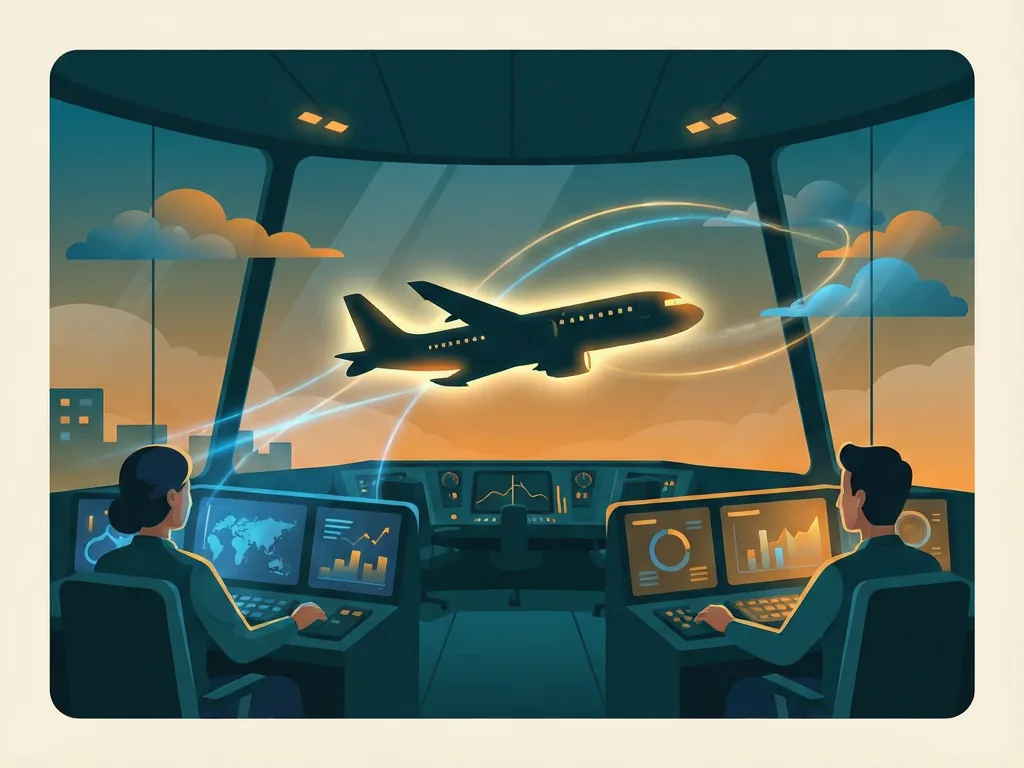
This does not mean the CFO is handing over judgment to a machine. Rather, AI acts as an analytical assistant — surfacing information and highlighting patterns so that human decision-makers can focus on the choices that matter.
Elevating the Customer Experience
The third area Byers highlighted is the one passengers notice most: customer experience. Airlines live and die by how travelers feel about their journeys, from booking to landing.
Virgin Atlantic is applying AI to smooth out friction points in that journey. That includes improving how the airline communicates with customers, handling routine questions more efficiently, and freeing up staff to deal with the complex, human moments where personal attention really counts.
Byers' point is that AI should feel invisible in the best sense — the technology works in the background so that interactions feel faster and more personal, not more robotic. When routine tasks are automated, human teams can concentrate on hospitality, problem-solving, and the touchpoints that define the Virgin Atlantic brand.
A Finance Leader's Perspective
It is telling that this vision comes from the CFO rather than a chief technology officer. Byers' involvement signals that Virgin Atlantic views AI as a business-wide strategy, not just an IT project.

From a financial standpoint, the case for AI rests on return: faster development lowers costs, better decisions reduce waste and risk, and happier customers protect revenue over the long term. Byers' message is that these three benefits reinforce each other. Speed creates capacity, better data use creates confidence, and both feed into an experience that keeps travelers coming back.
For other executives watching from outside the industry, the takeaway is that successful AI adoption tends to come from the top. When finance leadership is engaged, AI initiatives are tied to real business outcomes rather than experimentation for its own sake.
What Comes Next
Virgin Atlantic's approach suggests a pattern other companies can learn from: start with practical use cases, measure the impact on speed and quality, and keep humans firmly in the loop. Byers did not position AI as a finished transformation but as an ongoing capability the airline will keep building on.
As tools mature and teams gain experience, the airline expects to find more places where AI can reduce friction — inside the business and for the travelers it serves. For now, the airline's formula is straightforward: move faster, decide smarter, and make every journey feel a little more effortless.
Note: this article summarizes remarks from a public interview with Virgin Atlantic CFO Oliver Byers. Details of specific tools, deployments, and timelines reflect what was shared in that discussion and may evolve.


Comments (0)