
Businesses leverage OpenAI to drive agentic workflows within Cloudflare Agent Cloud
Cloudflare has added OpenAI's GPT-5.4 and Codex to its Agent Cloud platform, letting enterprises build, deploy, and scale AI agents in one secure, high-performance environment. GPT-5.4 powers conversational reasoning and multi-step problem solving, while Codex enables code generation and debugging. Backed by Cloudflare's global network, businesses gain speed, reliability, and infrastructure-level security—ideal for customer support, workflow automation, and developer tools.

If your company has been curious about building AI agents but worried about the heavy lifting involved—servers, security, scaling—this news is worth your attention. Cloudflare has announced that OpenAI's GPT-5.4 and Codex are now available on its Agent Cloud platform, giving businesses a faster and safer way to create, launch, and grow AI agents that handle real work, not just demos. In this article, we'll break down what this means, who benefits, and why the combination of these two companies matters.
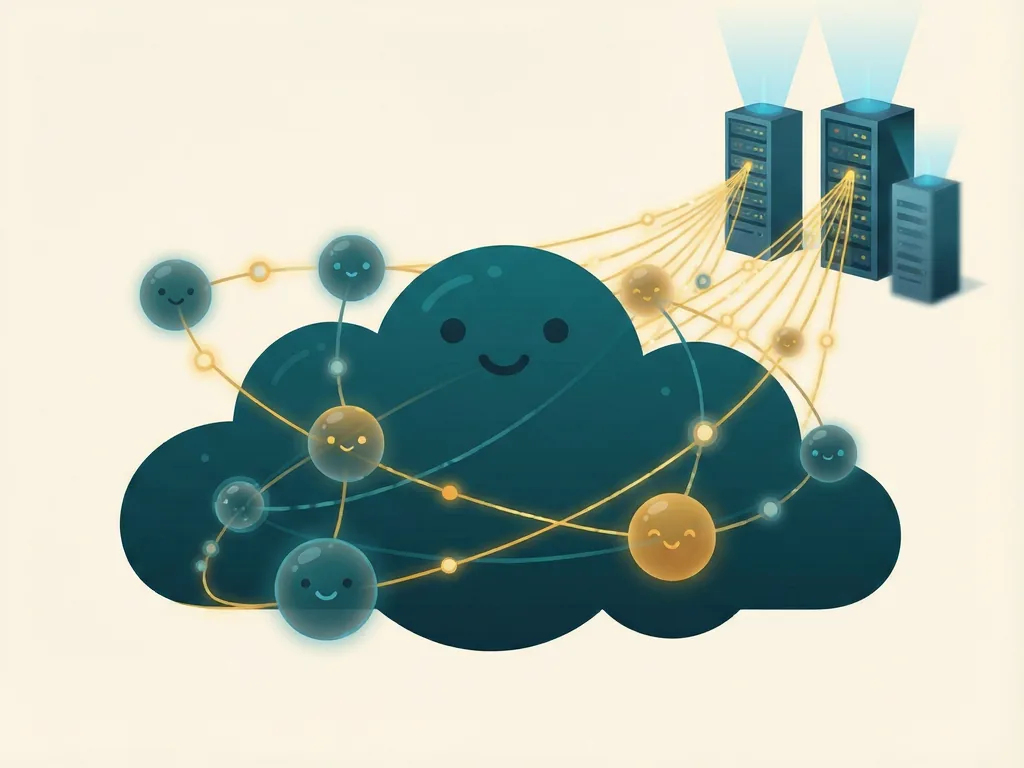
What Is Cloudflare's Agent Cloud?
Agent Cloud is Cloudflare's platform designed specifically for running AI agents. Unlike traditional cloud services that treat AI workloads like any other software, Agent Cloud is built around the unique needs of agents: they need to call tools, remember context, act autonomously, and do so reliably around the clock.
Cloudflare's strength has always been its massive global network. With servers positioned close to users in nearly every corner of the world, applications running on Cloudflare tend to be fast and resilient. By extending this infrastructure to AI agents, Cloudflare is betting that companies will want their agents hosted somewhere secure and dependable—especially when those agents are handling customer requests, processing data, or automating workflows.
Until now, teams building agents often had to stitch together multiple services: one provider for the AI model, another for hosting, another for security. Agent Cloud aims to bundle all of that into one place.
What GPT-5.4 and Codex Bring to the Table
The addition of OpenAI's GPT-5.4 means developers can now tap into one of the most capable general-purpose language models directly within Cloudflare's environment. For enterprises, this translates into agents that can understand complex instructions, reason through multi-step problems, and communicate naturally with users.
Codex, OpenAI's coding-focused model, is the other major piece. Agents powered by Codex can write and debug code, which opens the door to automation tasks that were previously out of reach—things like fixing software bugs, generating scripts, or helping developers ship features faster. For engineering teams, having Codex accessible through Agent Cloud means coding assistants can run close to their existing infrastructure rather than being bolted on afterward.

Together, these models cover two of the most in-demand use cases: conversational reasoning and software development.
Why Speed and Security Are the Real Story
The announcement emphasizes two words that matter a lot to enterprise buyers: speed and security.
Speed comes from two directions. First, GPT-5.4 and Codex are among the fastest models OpenAI has released, which reduces the lag users feel when interacting with an agent. Second, Cloudflare's network removes much of the distance between the agent and its users, cutting down round-trip delays.
Security is where Cloudflare has built its reputation over decades. Companies are understandably nervous about AI agents—software that acts on its own—having access to sensitive systems. Running those agents within Cloudflare's managed environment means enterprises inherit built-in protections rather than having to assemble their own defenses. For regulated industries like finance and healthcare, this kind of infrastructure-level assurance can be the difference between deploying an agent or shelving the idea entirely.
What Enterprises Can Actually Do With This
For a business, the practical outcomes look something like this:
- Customer support agents that resolve questions end-to-end, escalating to humans only when necessary
- Internal developer tools powered by Codex that review code, suggest fixes, and automate repetitive engineering chores
- Workflow automation where agents pull data from multiple systems, summarize it, and take action
- Scalable deployments that handle a handful of requests today and a flood of them tomorrow without rearchitecting anything
The key phrase from Cloudflare's announcement is "real-world tasks"—a nod to the fact that many AI agent projects have remained stuck in prototype stage. The pitch here is that with powerful models and solid infrastructure in one package, moving from prototype to production becomes far more realistic.

The Bigger Picture
This partnership reflects a broader trend: AI model makers and cloud infrastructure providers are teaming up so enterprises don't have to choose between cutting-edge intelligence and enterprise-grade reliability. OpenAI supplies the brains; Cloudflare supplies the nervous system and body armor.
For developers, the message is simple—building serious AI agents just got easier. And for Cloudflare, this move positions Agent Cloud as a serious contender in a market where every major cloud player wants to be the home base for the next generation of autonomous software.
Tags: Cloudflare, OpenAI, GPT-5.4, AI agents, enterprise AI
Meta description: Cloudflare adds OpenAI's GPT-5.4 and Codex to Agent Cloud, letting enterprises build, deploy, and scale AI agents with speed and security.
Featured image: Abstract, friendly illustration of interconnected cloud shapes and glowing nodes forming an agent network, in soft blues and oranges, no people or logos.
Comments (0)