
AI-driven transformation of advertising
OpenAI is launching ad-supported experiences, headlined by Sponsored Agents—AI brand representatives that appear naturally within ChatGPT conversations, clearly labeled as sponsored. Unlike traditional search ads, these integrate into the answer experience itself. OpenAI is also building marketer tools and direct integrations with HubSpot and Shopify, connecting customer and commerce data to AI campaigns. Early adopters may gain an advantage, but businesses should treat these unproven formats as measured experiments while maintaining high-quality, accurate product content.
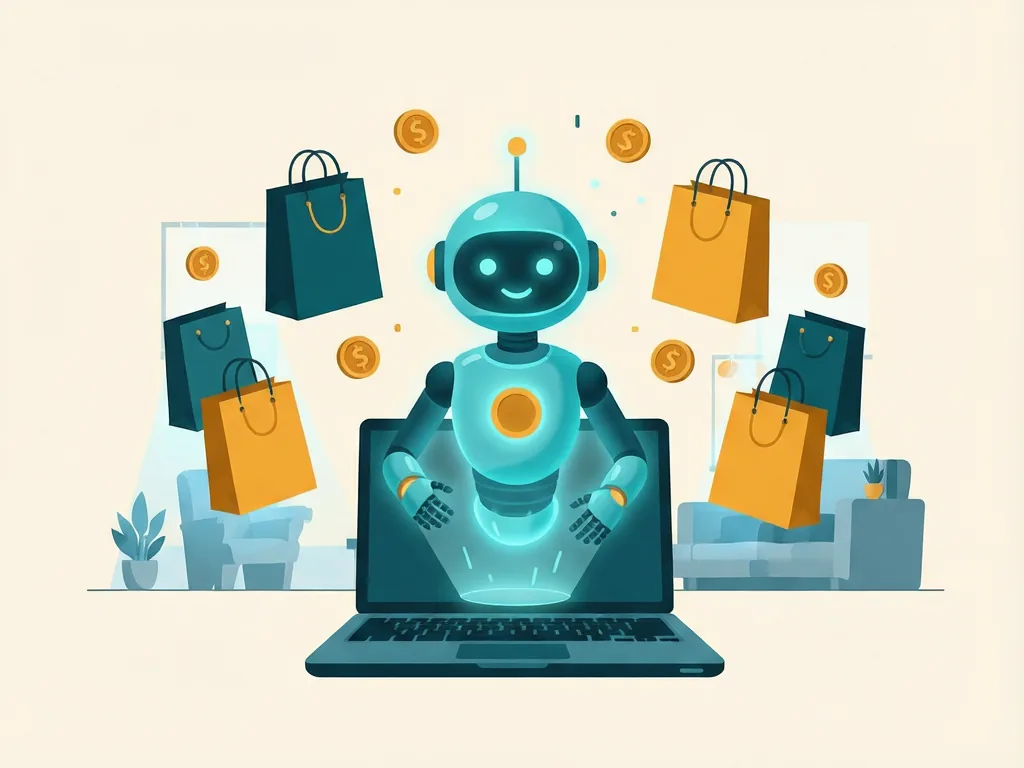
If you follow AI and digital marketing, OpenAI's move into advertising is something you'll want to understand now rather than later. The company is rolling out new ad-supported experiences inside its products, including a format called Sponsored Agents, along with tools designed for marketers and direct integrations with HubSpot and Shopify. This article breaks down what's been announced, how it works, and what it could mean for businesses of different sizes.

What Are Sponsored Agents?
Sponsored Agents are OpenAI's take on advertising within conversational AI. Instead of traditional banner ads or pop-ups, brands can have an AI agent appear in a conversation in a way that's clearly labeled as sponsored. The idea is that when someone asks ChatGPT for a recommendation, a relevant brand's sponsored agent could participate in that moment rather than interrupting it.
The key difference from search ads is context. A search ad sits next to results; a sponsored agent is meant to be part of the answer experience itself. OpenAI has indicated that sponsored content will be labeled so users know when a brand is paying to be present. That transparency matters, both for user trust and for how regulators may view these formats.
For marketers, this opens a channel that didn't exist before: reaching people at the exact moment they're asking a question your product could answer. The tradeoff is that the experience is still new, and best practices are still being figured out.
Tools Built for Marketers
Alongside Sponsored Agents, OpenAI is developing tools aimed at the people who plan and run campaigns. While the full details are still emerging, the general direction is to give advertisers ways to manage how their brands appear in AI conversations, measure performance, and create ad experiences suited to a chat-based environment rather than a webpage.
This matters because conversational advertising doesn't follow the same rules as search or social. There's no keyword auction page to optimize in the traditional sense. Instead, brands need to think about how an AI represents their products when users ask open-ended questions. Having dedicated tools to monitor and influence that presence is a significant shift in how marketing teams will need to work.
Integrations with HubSpot and Shopify
Two partnerships stand out in this announcement: HubSpot and Shopify.
The HubSpot integration points toward connecting advertising and marketing data with OpenAI's tools. For teams already running on HubSpot, this could mean campaigns informed by customer relationship data without stitching together separate systems by hand.
The Shopify integration is aimed at commerce. Millions of online stores run on Shopify, and an integration with OpenAI suggests product information and store data could feed into AI-powered advertising experiences. For small and mid-sized merchants, that could lower the barrier to reaching customers through AI channels that were previously dominated by companies with big ad teams.
Both integrations signal a clear strategy: rather than building advertising in isolation, OpenAI is plugging into platforms businesses already use.
What This Means for Businesses
If you run marketing for a company, here's the practical takeaway:
- Early adopters may gain an edge. New ad formats often reward brands that learn them first, before competition drives up costs.
- Content quality still matters. AI assistants draw on information about your brand, so accurate, well-structured product content is more important than ever.
- Watch the measurement story. As tools mature, understanding what you're paying for and what results you get will be essential before scaling spend.
It's also worth staying cautious. Advertising inside AI products is unproven, and user reaction to sponsored content in conversations is still unknown. Treat early efforts as experiments with clear budgets, not as replacements for channels that already work.
The Bigger Picture
OpenAI's move into advertising reflects a broader shift: AI assistants are becoming a place where people research products and make decisions, which naturally attracts ad dollars. With Sponsored Agents, marketer tooling, and integrations with HubSpot and Shopify, OpenAI is building the infrastructure for that future now.
For businesses, the smartest approach is to stay informed, test carefully, and make sure your brand is well represented in AI conversations regardless of whether you buy ads there.
Meta description: OpenAI introduces Sponsored Agents, new marketing tools, and HubSpot and Shopify integrations. Here's what businesses need to know.
Tags: OpenAI, AI advertising, Sponsored Agents, digital marketing, Shopify
Featured image: A friendly abstract illustration of a chat bubble conversation with a subtle glowing sponsor tag, soft blues and purples, floating geometric shapes, no people or logos.
Comments (0)